Book Review: The Well-Tempered City

Hello Nature-Led Friends!

Sometimes life is rough. We just have to do the best we can. Through dark times I have two mantras to help get me through it: “It won’t always be like this.” For better and for worse, change is inevitable. The second thing I remind myself of is “As long as there is another day, it is a chance to make things better.” Sometimes, you just have to put a bad day to rest and start anew the next day. If you are going through tough times right now, believe me when I say that I care about you and that I wish you the best.


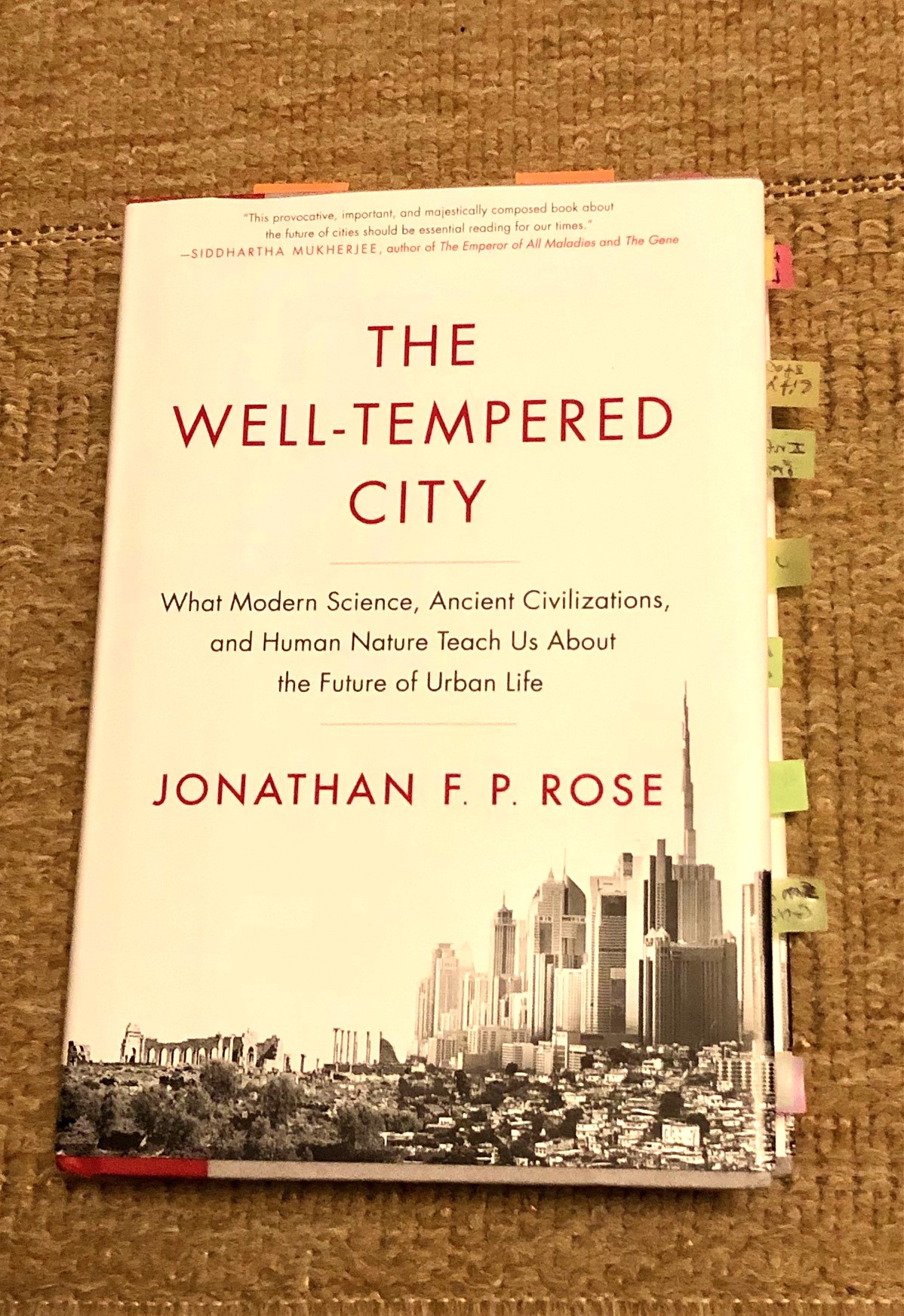
The Well-Tempered City: What Modern Science, Ancient Civilizations, and Human Nature Teach Us About the Future of Urban Life By Jonathan F.P. Rose, Printed 2016

Book Review: The Well-Tempered City: What Modern Science, Ancient Civilizations, and Human Nature Teach Us About the Future of Urban Life by Jonathan F.P. Rose

This book starts with an introduction into what we can learn about ancient civilizations and includes a concept called meh, loosely translated as “an activating energy and the source of rules that guided the spiritual, social and moral basis of [what was] the Ubaid culture” allowing it to become the first society to develop a framework of integrative systems that we now call Urbanism.

I smiled every time I read the word meh, because I have a friend who’s a one-word guy most of the time and that word is “Meh.” Intonation of the word could imply that a proposed idea is good enough that he is willing to do it (i.e. go to a specific restaurant or movie.) He is neither excited nor unexcited about the idea. If you ask him how something was, and he says “Meh.” that usually means it could have been better. If you are fortunate enough to propose an idea that he really likes you are rewarded not with a “Meh.” but with a “Definitely.”

I feel that a lot of urban initiatives these days are met more with the kind of “meh” my friend prefers, a “wait-and-see” energy of approach then an “activating energy” for integrative social rules. Maybe it’s a bit of both. Anyone whose had more than a few rotations around the sun learns to approach things with cautious optimism.


Photo by Pixabay on Pexels.com

The five qualities of a well-tempered city (p.20):

  1. Coherence – an integrated framework that unifies a city governing sections of departments, programs and goals.
  2. Circularity – transforming linear systems into regenerative ones.
  3. Resilience – the ability to navigate forward when stressed.
  4. Community – social networks that strengthen the individual in mind, body, and spirit.
  5. Compassion – creating a healthy balance between individuals and the collective well-being of the community at large.

Folded within these key qualities is how they relate to the nine “C’s” that made early human evolution to civilization possible:

Cognition, cooperation, complexity, culture, calories (food), commerce, control, concentration and connectivity.


Overall, a really good book that offered relative case studies to make each point. I learned so much! It felt like a college course wrapped in a book. I took a lot of notes and tabbed a lot of key sections that pertained to areas I was most interested in as you can tell from the book picture above.

Here are three things I learned about that really interested me:


Photo by Pixabay on Pexels.com

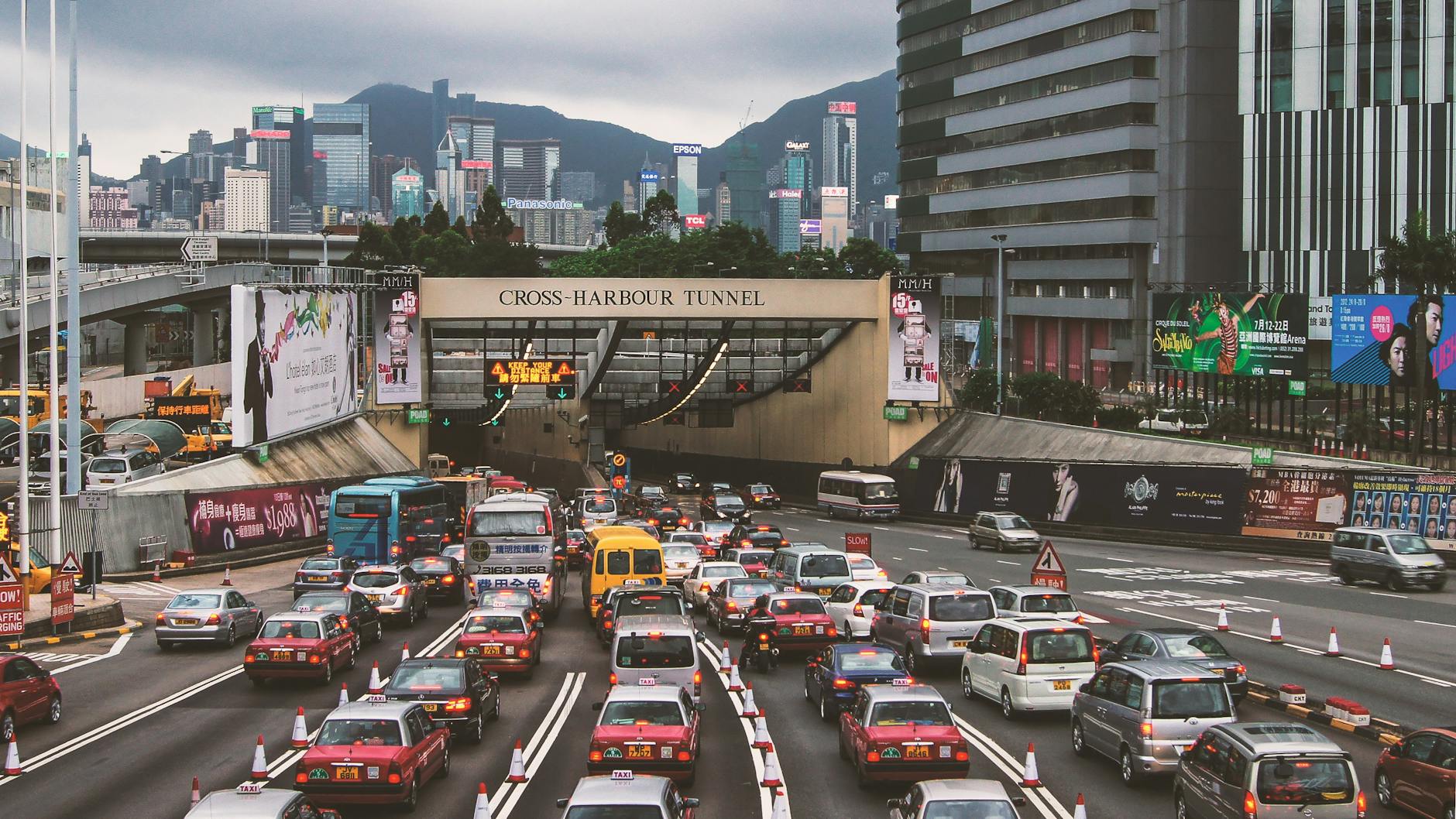
The Traffic Paradox (p.235)

More lanes create less efficiency, not more due to the Braess Paradox and the Nash equilibrium theory.

The basis of this is that drivers have a self-serving interest to take the shortest route possible from point A to B until so many people take that route that it is no longer shorter for anyone.

For a three-minute visual explanation of how this works visit this YouTube link: https://youtu.be/O8Wi1ZC_yL8?si=0HUdAC7tfLoHfcZx


This paradox is an excellent reason for why cities need to provide alternate means of transportation for city infrastructure. I’ve never been the kind of person interested in fancy job titles. It was always important to me to find a tolerable job with a tolerable commute. I spent the first half of my working life commuting to jobs that I could do by walking or taking a bus that rivaled or beat the commute time of a single passenger vehicles. Given the option, a safe walking route is always my preferred method of travel. One need not expend a lot of time or money working exercise and fresh air into their day when it’s imbedded into their daily routine. It also increases the opportunity for social interactions outside of school or work.


Photo by Eva Bronzini on Pexels.com

From Entropy to Emergy (p.238)

Eugene Odum and his brother Howard wrote the first Ecology book in 1953 describing ecosystems as communities of organic and inorganic elements. In this kind of closed circular system, the eventual entropy of one thing leads to the emergy or creation of newly stored information. “While entropy is always wearing down a system, emergy helps build it back up.”


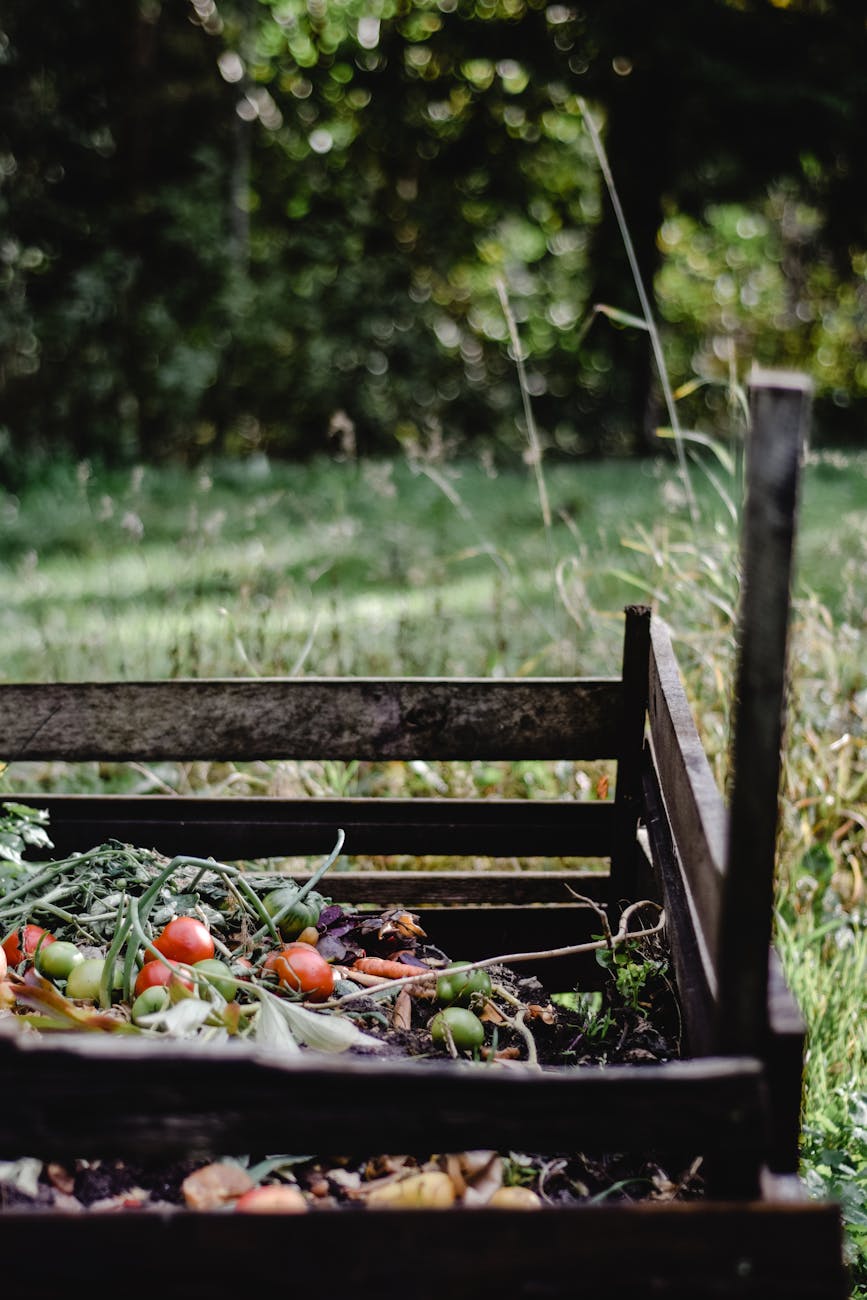
Gardeners know this process well by gathering dead plant matter and wood chips to decompose, thereby releasing there nutrients as “newly stored information” in the form of compost to spread around young or existing plants.

Humans have learned to do this with paper products such as cardboard, but we need to do better at incentivizing more circulatory systems that benefit both humans and nature. My personal opinion is that one our biggest failings as modern societies is allowing plastics to be extracted and used so excessively for a lot of things that ultimately end up being cheap pieces of crap that can’t be recycled. The oil and plastics industries have powerful lobbying groups that allow our shared future resources to be exploited for meaningless crap. As a consumer, you speak with your purchasing power. In a market economy founded on supply and demand use your money as your voice wisely. If you don’t like something, make it unprofitable to support. It’s clear we can’t wait for governments to regulate appropriate solutions.


Photo by John Guccione http://www.advergroup.com on Pexels.com

Easterlin Paradox (p.345)

Richard Easterlin a USC Professor wrote “The Economics of Happiness” in 1974 which found that more money increased happiness in those previously in low income or poverty situations, but that more money does not increase happiness for the affluent.


I’ve witnessed this firsthand having grown up low income and later working in an exclusive member-only club where members were required to make no less than $80,000/year (in 1998) and be sponsored by two existing members of the club. I started the job in 1998 at the height of the dotcom bubble in Seattle, WA where tech was making new millionaires seemingly overnight. The “new money” were often young tech entrepreneurs launching their first IPOs and expecting everyone to know who they were and have people cater to their every whim. They were loud, obnoxious and often travel entourages. The “old money” were people who were more often born into wealth. They were polite and reserved. Time was a luxury. If they couldn’t be bothered to wait for your assistance they would come back later or have someone else take care of it on their behalf. They had no need to yell.

The club had hotel rooms, and I worked the front desk. The rooms often sold-out months in advance especially during Huskie football season. I was handing one of our long-time members his morning paper when a young techie came up expecting my full and immediate attention. I asked the long-time member if he needed anything else. The young guy huffed impatiently. I gave him a sharp look and said, “You will wait your turn.” The older guy chuckled, tucked his paper under his arm and told me to have a nice day as he walked away. The young guy didn’t even last a year at the club. The dotcom bubble burst not long after. Nearly every new member that year was purged from the member roles before New Year’s. The young guy had no idea he’d rudely interrupted one of the richest men in the world and one of our longest-standing members.

I’ve had the opportunity to ask multiple people with famous names; “What bothers you most about being rich and famous?” They’ve all said in some variation that it’s hard to trust people. They said that everyone wants or expects something from you all the time. You can go anywhere in the world, but you can’t trust that anyone genuinely cares about you as a person. It seems reasonable to assume then that what you gain in monetary significance can cost you in a kind of spiritual deficit (i.e. honest connections with other people.) Some people aren’t bothered by the tradeoff, but it would bother me.

Final Thoughts:

I definitely recommend this book! There’s really so much to it that what I’ve provided here is only a small sampling. If you’ve read this book, I would love to hear your thoughts on it!


Thank you for visiting!

Focus on What You DO Want

Photo by Raine Nectar on Pexels.com

When I was fourteen, I started volunteering at the Spokane Humane Society animal shelter in the 1980s. It took me two early morning buses and a one mile walk from the last bus stop to get there. On my first day I was to start helping out in the puppy room as all new volunteers did. At one point I was asked to get a bucket and a mop from the second door down the hall on the left. Somehow in that short walk I forgot which door to go into though, the first or the second? I went in the first door.

It was the incinerator room. In the center of the room was a pile of dogs and cats. They looked like they were sleeping. I wanted to run out of the building crying and never look back, but my feet wouldn’t let me. When my feet finally did move, they took me down the hall to the next door to grab the bucket and the mop. My only thought being, “If I run away now, I can’t help the animals that are still living.”

My family struggled with a lot of things. My city struggled with a lot of things and still does to this day. Back then, if you didn’t like it, well then, “Suck it up, Buttercup.” or “Welcome to Spokane, Sugarplum.” We felt few people were as tough as us, except maybe someone from Detroit or DC. I’d developed a high tolerance for what I was willing to put up with in life, but I wasn’t willing to accept the death of so many animals. “What are you going to do about it, little girl?” The antagonistic red-neck voice in my head sneered. “I’m going to lower the body count.” I thought matter-of-factly.

I went back to the puppy room determined to learn how to make a difference. When you grow up in a tough environment you learn to think on your feet real fast. If you can’t be stronger, be faster, and if you can’t be faster, be smarter! I quickly learned the ins and outs of the shelter’s operations. During that whole summer I worked 7 days a week from 7am to 7pm same as the shelter’s open hours. I was dependable and consistent. No one looked at me and saw a fourteen-year-old girl or a half-slack volunteer. I earned an equal amount of respect and responsibility as the people that work there. I just didn’t get paid for it.

Photo by Tima Miroshnichenko on Pexels.com

I’ve always been pretty good at reading people. It’s a survival skill, but you can only learn so much by looking at someone. I started asking the people what they were looking for in a dog or cat. Do they work a lot? Do they have a house or live in an apartment? The more questions I asked, the more I was able to determine which animals at the shelter would fit the person’s personality and living conditions. I spent a lot of time with these animals. I knew their personalities, their strengths, and their weaknesses. I taught dogs to be potty-trained. I trimmed excess hair away from their eyes so they could use their “puppy eyes” to their full advantage. I taught them how to “shake hands”, “bow” or put their paw over their nose when I asked, “Who farted?” Was it a little gimmicky? Yeah, but everybody wanted a dog like Benji or Lassie at the time, not a Cujo.

For the cats, I kept them clean and immediately quarantined any with the slightest hint of upper respiratory infection. The cats were housed in one room free to roam and the infection is highly contagious. If the room full of cats got the infection, the whole room was put down. We had neither the money nor the manpower to treat them, despite it being as treatable as the common cold in humans.

I drafted out “Adopter profiles” on a yellow legal pad and gave it to the Shelter Director. I gave her additional notes on what I’d learned about what people wanted and how to help the animals meet those needs so that no one left the shelter without an animal. Summer was quickly coming to an end and so was my volunteer time. I couldn’t do both school and volunteer work. As a student with dyslexia who never received support or special allowances, I struggled with schoolwork, low grades, and low self-esteem. At the shelter, I never felt dumb, and I knew what I was doing mattered. The Shelter Director was genuinely grateful for my contribution, and I remember her and the other people I worked with fondly. Of all the animals I’d personally helped get adopted out only one was returned and I still found a home for her before her time ran out. They also hadn’t had to euthanize the entire cat room since my intervention. I’d dramatically reduced the body count. I wish I could have saved them all, but — “I didn’t do nothing.”  I did something!

Years later I’d be living here in Western Washington, married, owning a home, and taking advantage of a free dog training class with my newly adopted dog at the Bellevue Humane Society. They had us fill out a questionnaire about our living situation and lifestyle and it made me think of those “Adopter profiles” I’d made so long ago.

During the dog training class the trainer talked about positive reinforcement. No more shoving a dog’s nose in poop to let them know they’d done wrong. I’d never subscribed to abusive training tactics, but I didn’t know there was a name for the opposite of it. You know how sometimes you feel a certain way or have an idea about something, but you don’t have a name for it? It’s really satisfying when you do learn the feeling or the concept has a name. Positive reinforcement, is something I believe in.


The trainer said something really meaningful that has stayed with me:

Focus on the behaviors you want; not the ones you don’t want.

When you think about it, it’s not just about dog training, but parenting, negotiating with difficult people and our attempts to realize own goals.

I’ve internalized the concept even farther:

Focus on what you want; not on what you don’t want.


How can you change what’s bothering you if you don’t know what you want in life? How can you realize a goal if you don’t know what the goal? I think of goal setting as a mountain path. If you’re working through a complex problem, you often need to start with smaller steps to reach the bigger ones. Sometimes you’ll have to step off the path to gather resources, mentors and/or acolytes but always keep the path and the goal within your sight.

We’ve come a long way when it comes to animal welfare in the United States. We’ve strengthened animal abuse laws, we’ve made it culturally unacceptable to abuse or neglect animals, and we’ve reduced the number of euthanasia in animal shelters. In 2019, the U.S. pet care industry was worth $95.7 Billion dollars! * I don’t think that’s an entirely good thing by itself, but it does demonstrate a cultural shift in our behaviors and beliefs about animal care. Other countries are also making progress in both human and animal welfare, it certainly isn’t limited to just one country!

When it comes to improving the future of humanity and the planet itself, we can’t wait decades to shape holistic climate change policies. We need to find our own paths up the mountain. What are we as individuals and societies willing to consider acceptable in the future? I believe we’re at the forefront of a new zeitgeist of environmental consciousness. For generations the science fiction genre of apocalypse scenarios  has been popular and has tried to warn us of what “could be.” None of us actually want to live through an apocalypse though! These stories remind us that humanity has always struggled and that we as individuals have always had to fight for what we believe in one way or the other. That’s what makes a hero. Stop waiting for someone else to be the hero. It’s you.

What should the narrative about the future of earth and humanity look like?

If you don’t want to live through an apocalypse, then what kind of future do you want?

How do we focus on the behaviors we want to see in ourselves and others? What kind of civilizations do we want to live in?

Please think about these questions. I would love to see some answers in the comments, but I understand if you’re the kind of person that prefer to do “quiet work.” I prefer to do quiet work, but I’m frustrated by what I perceive to be a lack of mentors. We see stories in the media everyday about what’s wrong and “worst case scenarios”, but where are the stories about how to change these things? I’m concerned that our collective fears and feelings of being overwhelmed could turn into acceptance and apathy of a self-fulfilling prophecy.

I refuse to accept the deaths of millions of lives on events that haven’t happened yet.

Photo by Nandhu Kumar on Pexels.com

Footnote: * 55 Pet Industry Statistics: 2020/2021 Industry Growth, Market Data & Forecasts | CompareCamp.com

Our New Green Overlords

Leaf Sheep Sea Slug, costasiella kuroshimae, supplements it’s diet of algae by photosynthesis. Image found online. Original photo credit unknown.

Back in the years circa 2004 to 2007 there were several scientific journals discussing the potential uses of algae. Something most of us think about with distain. We often think of algae as something that either inconveniences us by making a surface slick or something that can make us sick. Fortunately, the Science-minded people also ask, how can we harness the properties of algae?

I’ll be the first to admit that sometimes Science-minded people come up with terrible ideas. They can get so carried away with “Can I?” that they don’t stop long enough to ask the question, “Should I?” This the basic premise behind the 1896 novel The Island of Dr Moreau by H.G. Wells. (For context, The Origin of Species was published by Charles Darwin in 1859 and the subsequent theories of Darwinism were at the forefront of the social minds of the day.)

I’m consciously using the term “Science-minded” because I don’t believe that a person needs to hold a degree from a prestigious university to be a “science-minded” person. You only have to be willing to explore your ideas with a sensible set of standards that can be shared and replicated by another person. By this perspective, science is not so different from art in many ways. I know not everyone shares this perspective though.

When I first moved to Seattle in 1998 to attend the University of Washington, I lived in a house with six other college roommates. One of my roommates was a Danish fellow studying material science. In the beginning, he always had this smile on his face as if everything I said amused him. So, I “dragged the cat out of the bush” as we poor rural American folk might say and asked him if all Danes were elitist snobs or just him? He was surprised at first then said, “Well you are studying a ‘Soft Science’ major.” Apparently, Social Science (aka Sociology) is not real science because it’s not “hard science.”

We had many good discussions after this first exchange. It was important to me to illustrate that anything that worked towards the betterment and/or understanding of the human race was no less important than the flesh and bone that we are made of. It has been my passion since then to be a bridge builder between different personalities and schools of thought for a common cause. My new mission is to marry all that with the belief that nature is not our adversary, but our ally in making the world better for all species and the health of the planet itself.

Why can’t electric cars be solar-powered?

Because they don’t have enough surface space for the photovoltaic cells to collect enough solar energy for the battery to be reasonably recharged.

Science-minded researchers then must ask themselves questions like; How can we take advantage of the full surface of the vehicle then? Most obvious solutions would be either by the paint or the material the vehicle is made of. In the links below you can see that algae has been added to bricks to store carbon and as a pigment for natural dyes, but not currently for solar storage or transference.

I have two hypothesis based on the current uses of algae: 1. What if it could be used to help collect solar energy for electric vehicles by adding some sort of film or layer? And 2. What if it could help insulate people in desert regions from extreme heat? Something similar in idea to Frank Herbert’s Stillsuits in his 1965 novel Dune.

Sometimes I think of the realm of magic and fiction writing as science concepts we don’t yet understand. There are charlatans that claim to be scientists and charlatans who claim they can tell you your future. Remember when bloodletting was a thing? Or when germs were thought to be a superstition? Invisible bugs you say? Hogwash! We are flesh and bone and blood. We are hair and teeth and nails. We are mucus and sperm and eggs. We are mind, body and spirit. We are a lot of things and so too are many elements in the natural world including photosynthetic eukaryotic organisms (Chlorophyta, i.e. algae) and heterotrophic eukaryotic organisms (fungus, i.e. mushrooms). Our own digestive systems are unique biomes unto themself with their own specialized organisms in the form of bacterial flora!

What I like about using algae or fungi to help solve global problems is that it does not require digging into mountains for more metal alloys. It is nurturing truly sustainable options that have what environmentalists call a “cradle to the grave” lifecycle. We are not left with polluted waters or land and deplorable working conditions to extract or attempt to recycle it.

I for one look forward to our new green overlords.

What if we could learn to photosynthesize to supplement our diets?

Algae links:

The Leaf Sheep: Meet The Sea Slugs That Can Photosynthesize – Planet News

Cutting Construction’s Climate Impact with Algae Bricks | TIME

Studying ways to maximize environmental benefits of green algae (phys.org)

Brilliant Planet – A company working to sequester gigatons of carbon by absorbing it through algae and burying it.

Scientists Power Computer Continuously For A Year Using Algae (unilad.com)

These robots are powered by algae balls living inside (fastcompany.com)

Researchers created eco-friendly, biodegradable flip flops made from algae | CNN

How Pond Scum Could Lead to Eco-Friendly Fabric and Paint | WIRED