
You may be concerned about the state of the world these days. It’s understandable. Things are changing with every rotation around the sun. We can’t go back. There’s nothing to go back too. Time marches forward and no one gets to change what happened yesterday. You can try to recreate what was, but it can never be exactly the same. Nostalgia is an unreliable narrative.
The time for individual convalescence and introspection is over.
In my time I’ve survived two recessions, a volcanic eruption, lived in poverty, ate fish from rivers contaminated by silver mines and aluminum plants. I’ve been physically and sexually assaulted, fought with neo-Nazis, and kicked out of my nice Christian church at the age of 16 when I confronted the Sheriff, a fellow parishioner, about his words aired on live tv the night before where he stated that women being raped should “lay back and enjoy it and not fight back.”
I’ve survived an earthquake, a “once-in-a-century” firestorm, a “once-in-a-century” icestorm and a “once-in-a-century” windstorm. Guess what? They lied; these storms are no longer rare. They seem to come once a decade at least, if not more.
My family, friends, and I have been poisoned by the U.S. government in the name of national security. We’re not the only ones. We’re called “Downwinders”, those who were affected by releases of radioactive material in the air and in the failing storage tanks that still leak into the groundwater and rivers. They made “Fat Man” and “Little Boy” here and dropped one of them on the hometown of one whom would eventually become one of my dearest friends, Hiroshima.
We suffer cancers, hypothyroidism and various hormone disruptions at high rates, but maybe it wasn’t the radioactivity; maybe it was the leeching of arsenic and mercury from the slag pits at the silver mines, or the “acceptable levels” of chemical wash from the aluminum plant. Maybe it was the glyphosate in Roundup or other pesticide ingredients in the farmers’ fields. Can you prove it? Can you show which atrocity caused your cancer in the name of civilized progress?
What of generational pain? The depression-era and WWII surviving grandparents, great aunts, and great uncles that talk to you as if it all just ended some months ago. Who teaches you to wash the aluminum foil and fold it neatly for reuse, who still weep for the ones that didn’t come home, and the one who lost his whole platoon and three fingers in the Pacific theatre. The bitterness of the Korean war and the spite of the Vietnam war bleeds down from parents to children and grandchildren. So many causes for alcoholism and violence in a blue-collar town.
I survived all this, but the list of grievances isn’t nearly complete. However, this is not an AA meeting where we feel obligated to compete for who’s had the worst life thus far. Your grievances are valid. You and I have endured because of who we are and sometimes in spite of who we are.
I want you to take stock of the many things that you have survived in your life and then reflect on all the things you still managed to accomplish.
For me, meaningful relationships have been fractured at times. Some people are hard to love. Some people express their love in weird and unfamiliar ways. Sometimes we struggle to accept it for fear of betrayal or abandonment…again. I made it out of my hometown that I hated more than I loved. I love where I live now, and the flaws are more like beauty marks in my eyes. Cities live and die by the people who inhabit them. We are the breath and cells when a city is viewed as a living organism.
I still believe in Martin Luther King Jr.’s “I have a dream” speech, though it might take longer and likely not be in any way we might have envisioned it for the future.
I grieve for the losses other people seem to forget or don’t talk about anymore; missing people who were never found, natural beauty destroyed, buildings and places of refuge that no longer exist like a favorite store or coffee shop.
Often times we, humans, are framed as separate from nature, but we are a part of it! We are fragile creatures with the ability to shape the land, the seas, and the communities around us be they made of humans, plants, animals or invertebrates. We shape the world through both our peace and violence, creation and destruction. You have so much more power than you realize! Start small in the goals you want to achieve. Get involved with groups and organizations with shared goals and provide what assistance you can within your means. Don’t overdo it in your desire to help. Be strategic.
Last year was a tough, but I’m back now with a renewed effort to focus on my writing and professional endeavors. This page will never be powered by a chatbot! I remain committed to my goal of making this page a community space for those of us who love nature and care about the well-being of ourselves and others.
I’m always open to ideas and suggestions so tell me, what would you like to see more of here? Do you like book reviews? Do you want tips and tricks about nature and saving money? Do you want focused posts about interesting places, people, animals, etc.? Let me know your thoughts down in the comments!
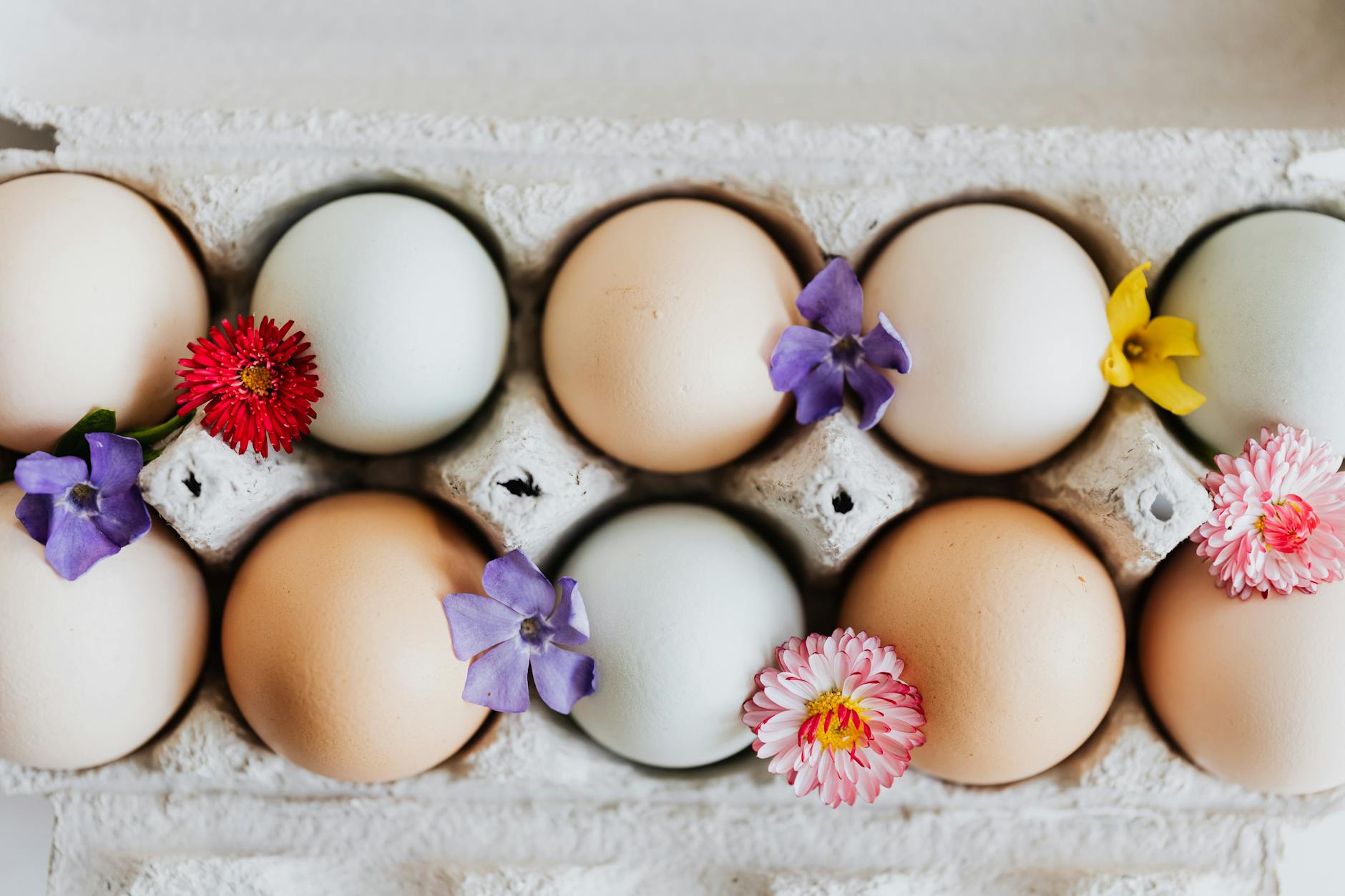
I love scouring the internet for useful and interesting information!
For example: The Avian Flu has currently spiked egg prices in the U.S. (again), if you’re looking for less expensive alternative egg substitutes the University of Maine Cooperative Extension program has you covered!
| Product | Equivalent Amount | Price per Serving | Pros | Cons |
| Eggs | 1 egg = 1/4 cup | $0.44 | Most reliable for color, flavor, and appearance | Highest cost |
| Flax Seed | 1 Tbsp flax and 3 Tbsp water = 1 egg | $0.06 | Doesn’t affect flavor Good source of protein, fiber, and omega-3 fatty acids Shelf-stable prior to mixing up | Flax seeds visible in batter |
| Applesauce | 1/4 cup = 1 egg | $0.25 | Doesn’t provide as much leavening as other options | Affects flavor and texture of baked good—best used in quickbreads |
| Seltzer water | 1/4 cup = 1 egg | $0.05 | Inexpensive Best texture and flavor of all the substitutes we tried Shelf-stable | Pale color |
Table Excerpt from: Using Egg Substitutes in Baking and Cooking – Cooperative Extension: Food & Health – University of Maine Cooperative Extension By Kate McCarty, Food Systems Professional, University of Maine Cooperative Extension Feb 16, 2023



 The Nature-led Life