There are so many Nature-Led topics to write about. Help me out by letting me know what topics you’re most interested in. If you are new to the Nature-Led website, welcome! Don’t be shy about joining the vote! I try to deliver one freshly-pressed post each week. This weeks post is this survey. Let’s get started:
Here is a short list of topic titles currently on my mind. Please rank the topics from most interesting to least interesting: Hold your left mouse button to drag a title up or down the list in order of your interest from highest to lowest. If you would like to suggest a topic please do so in the “Other Topic?” comment box provided. Click “Finish Survey” button to submit your feedback.
Thank you for participating! I can’t wait to see how this how this works out!
Survey results will be revealed next Monday October 11th, 2021 by 5pm Pacific Standard Time.
The survey itself has no official closing date. Should you arrive here after the Oct 11, 2021 deadline please feel free to submit your feedback anyways, especially if you have any additional topics of interest you would like to see. Thank you!
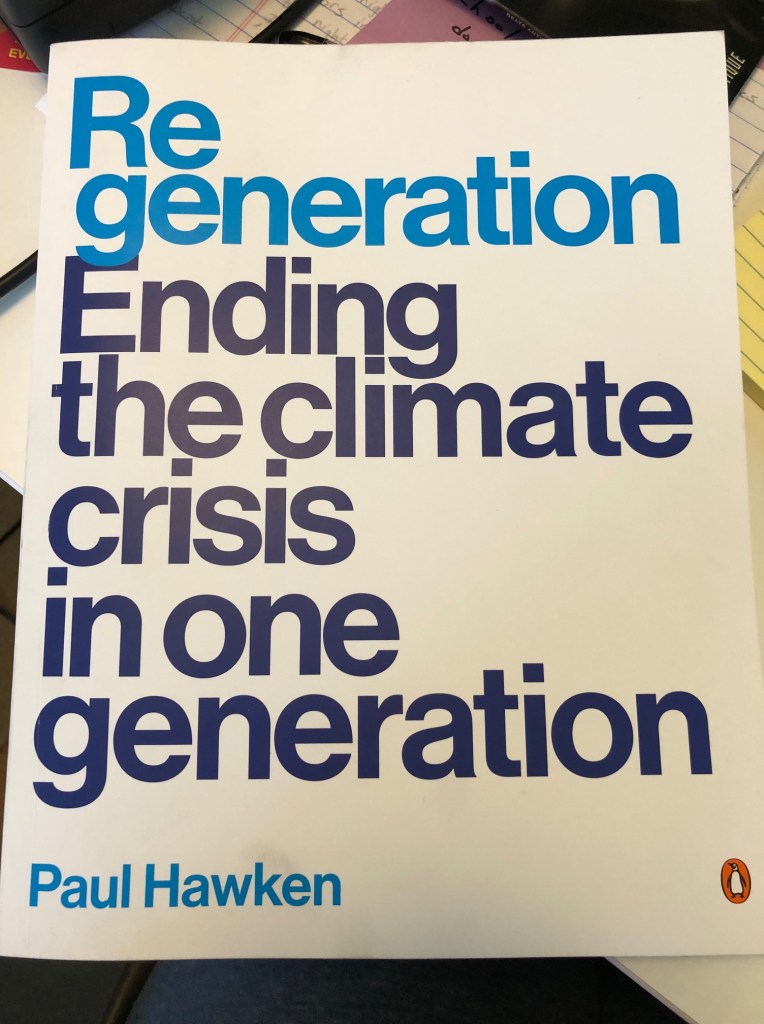
I picked up this book after reading a review of it, although I would say the review was more about the Author’s body of work more than the book itself. I’m currently in a phase of looking for books and websites that are action-oriented when it comes to climate change and global warming. I know what the problems are. Nearly all of us have some grasp about the issues because it now makes the news on a daily basis. Global Warming and Climate Change have finally become mainstream issues happening now instead something to contemplate in the distant future.
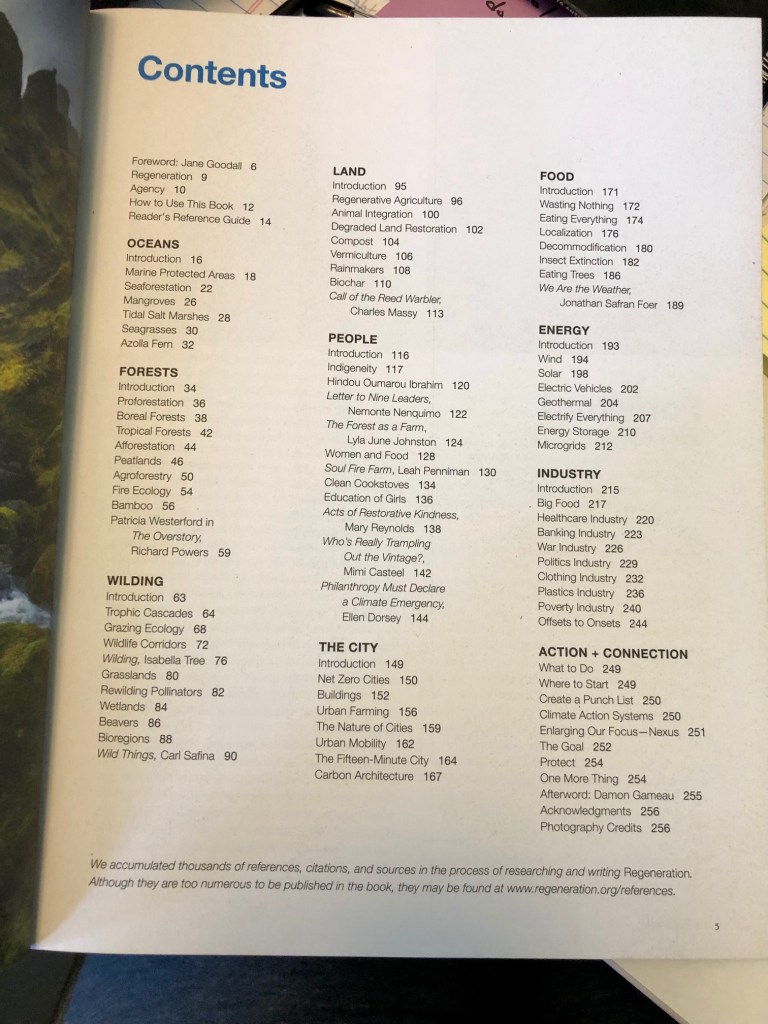
Here are three quick pictures I took of the first three pages. (My apologies for the poor quality on the latter two.) For more and better quality images see the Amazon link below and use the “Look Inside” feature.
From the cover I expected a standard book written by one author, but upon opening the book I find a attribution page similar to what I would normally see as a Certified Technical Writer. This book is essentially a report compiled by subject matter experts for the public as the end user. Traditionally, “white papers” as they’re called, are used as manuals for specific topics or items in government and business. Most white papers are written by science and technology-related businesses to market and educate other businesses and/or government agencies how to use their service or product. For my certification program I wrote a white paper on how to install a living roof system as my final project.
The second page is the table of contents page. I don’t judge a book by its cover, I judge a book by its index and table of contents (TOC) page. This book has no index, so the TOC has to do the work for both. Overall, I give this book an 8/10. In a list at the end of the book they mention the “Azolla Fern” as an important place for carbon sequestering. When I went back to find it in the TOC I didn’t see it, so I went online to understand that it’s an aquatic plant that can cover the surface of ponds, lakes and slow moving rivers. Going back, I now see the plant listed under “Oceans.” After reading the way the topic is covered in the book, “Wilding” or “Food” would have been a better place for it.
What really caught my eye about the contents page is seeing “Poverty Industry” under the Industry heading. I’ve never thought of poverty as an industry. I would have expected to see it under the People heading. After reading the section my first thought is, “How to talk about greed without using the word greed.” If we boil the subject down to its primal essence, aren’t we really talking about greed?
Pro:
Layout – Each topic gets a gorgeous picture representing the topic and about two pages of text on average. Its like a modern, limited encyclopedia of climate issues. This makes it easy to pick up and browse the topics that interest you the most.
Con:
Title – The title implies action items we can do to make a difference in one generation. I was expecting a “how-to” book that tells the reader what they can do to start combating climate change issues now. This is not the heart of the book though. The action section of the book is seven pages and relies heavily on encouraging the reader to visit the website. The website is beautiful and worth a visit.
Ironically, the final paragraph entitled “One more thing” within the Action + Connection Chapter starts with: “It’s not your job to save the planet.” Followed a few sentences later with: “We cannot do this [end the climate crisis} if we believe or assume others will do it for us.”
So we were off the hook, only to be put back on the hook all in the span of a paragraph.
I’m making it my job to help save the planet. I think it should be part of everyone’s job as a human being to do better. I know we’re capable of taking on complex challenges when we work together and put in the effort. I also know I’m not alone in this growing concern and frustration. This blog and so many others are rising up to give a voice to our climate change anxieties and seeking out solutions. We know in our hearts things have to change.
When I’m working through something complex I gravitate towards certain songs. I play them over and over as if the cadence can help me weave or unweave the threads of an idea. I find myself in this mode right now. The three songs I currently have on repeat are “Dream On” by Aerosmith, “Indomitable” By DJ Shub and the North Cree Singers, and “You Can Never Go Home” By Ganstagrass.
What’s interesting is that I had to look up who sings “Dream On” because even though I knew it was one of Aerosmith’s earliest hits it doesn’t sound like the Steven Tyler were used to hearing. I looked up the Wikipedia page on the song. It references an authorized biography of the band called Walk This Way By Stephen Davis. In it Steven Tyler describes how he liked to lay under his father’s piano while he father played when he was a small child and something in that experience prompted the first catalyst for the song.
As a child, I too loved to lay under my Grandmother’s baby grand piano while she played! What a funny thing to have in common with a Rockstar! Both Steven Tyler’s father and my Grandmother were classically trained pianists. The final elements of the song came together when he was 14. In the biography he says the song is sung in his “real voice” which he was insecure about on how it sounded on tape. This is also interesting to me. I always try to get under or around “the Public face” that we all tend to wear when we’re out and about in society. Authenticity has always been important to me. I find it easier to bond with people when we’re both being “real” with each other. So now I know why this song appeals to me so much.
The next song I’ve been playing a lot is called “Indomitable” By DJ Shub and the North Cree Singers. This attraction feels natural to me. Growing up some of my very closest friends are Indigenous Americans and our friendship continues to this day. As an Ally, I care deeply about Indigenous issues like the Murder and Missing Indigenous Women whose cases don’t get the same attention as Gabby Petito. Once again mainstream media deserves to be called out for its own systemic habits of “missing white woman syndrome.” If my best friend goes missing you better damn well give her case the attention it deserves! By choosing which stories get the most national attention, the media signals what our collective values are supposed to be. Indigenous people are still here! Many live in cities, not on reservations, and yet the broader collective consciousness of our nation sidelines their voices to historical archetypes or reservation/tribal “issues” as if what happens there doesn’t have relevance to influence the rest of the country, but it does. Who took bold action against the XL Keystone pipeline project? The Standing Rock Sioux tribe! That’s who! This is one of many examples of how environmental and social justice issues are woven together.
Finally, we have the last song I’ve been listening to a lot by a band called “Ganstagrass.” The name and band is a combination of Gangster Rap (urban music) and Bluegrass (rural music.) I really like one of the comments someone named Patrick Riot made, “When the hood and the woods unite, we’re unstoppable.” That’s what I believe too! I’m frustrated and disheartened by the current US political climate and animosity in the public sphere, but I have to believe that we can still bring people of different backgrounds together. Our democracy is at risk and what are we without our democracy? I’m trying to think of a framework for a new path forward that is relevant to people’s lives where they can feel heard and push through the politically divisive rhetoric. Can it be done? I don’t know, but I’m willing to try.
I’m ready for action! I’m now obsessed with the idea of creating a “regenerative society” as a path forward. This prompts the questions: How can we create a “Regenerative society?” and What would a “Regenerative Society” look like?
Call it serendipity or stream of consciousness, but of course I’m not the only one to pull these two words together. My short working definition is – a society that works towards restoring the basic needs of the people and the environment; Food, clean water, shelter, access to healthcare, sanitation, education, and a sense of community.
I feel that a regenerative society would have equality and social justice as intrinsic values built into its DNA. Education for all. Period. Not just the rich, not just the men, not just the people in the cities…etcetera, etcetera,.. everybody! Educated people doing meaningful work on behalf of themselves and their communities. Working with purpose and being valued for your place in the world because of it! By “educated” I mean a society where everyone has a basic primary education (reading, writing, and basic math skills) with opportunities to do advanced academics, trade schools or apprenticeships to find your social-environmental niche. Any society can work towards being a regenerative society. Several countries are already ahead of the U.S. on that. The area where I grew up was poisoned by a government project but we, the people, are expected to pay out of pocket for the health consequences of it until the day we die. More on that in a future post.
I was debating with a friend who argued greed was good because it motivated people to competitively innovate and take risks. My point was, why should greed be the motivator though? I’m motivated to innovate and take risks to make life better for me, my family, my human community, my wildlife community, my plant community, and my soil community. She told me I was being delusional. I told her she was being lazy if greed was her only motivation for existing. We laughed and left it at that.
What would a Regenerative Society look like to you?
Please share your thoughts below oremailme.
Here are the songs mentioned via links to YouTube:
Dream On – Aerosmith:
DJ Shub and the Northern Cree Singers – Indomitable:


 The Nature-led Life