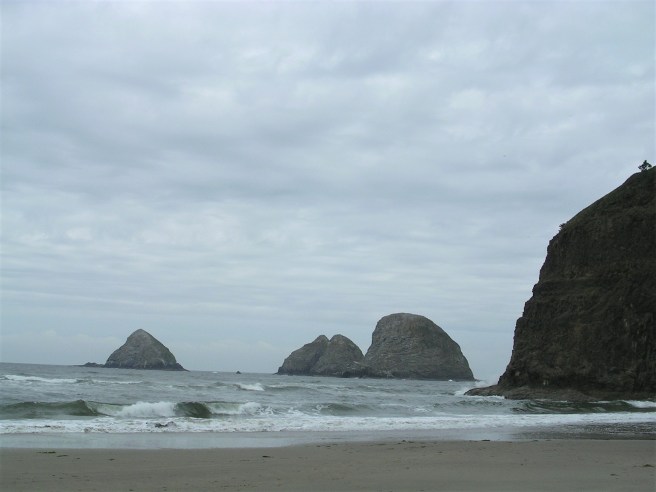
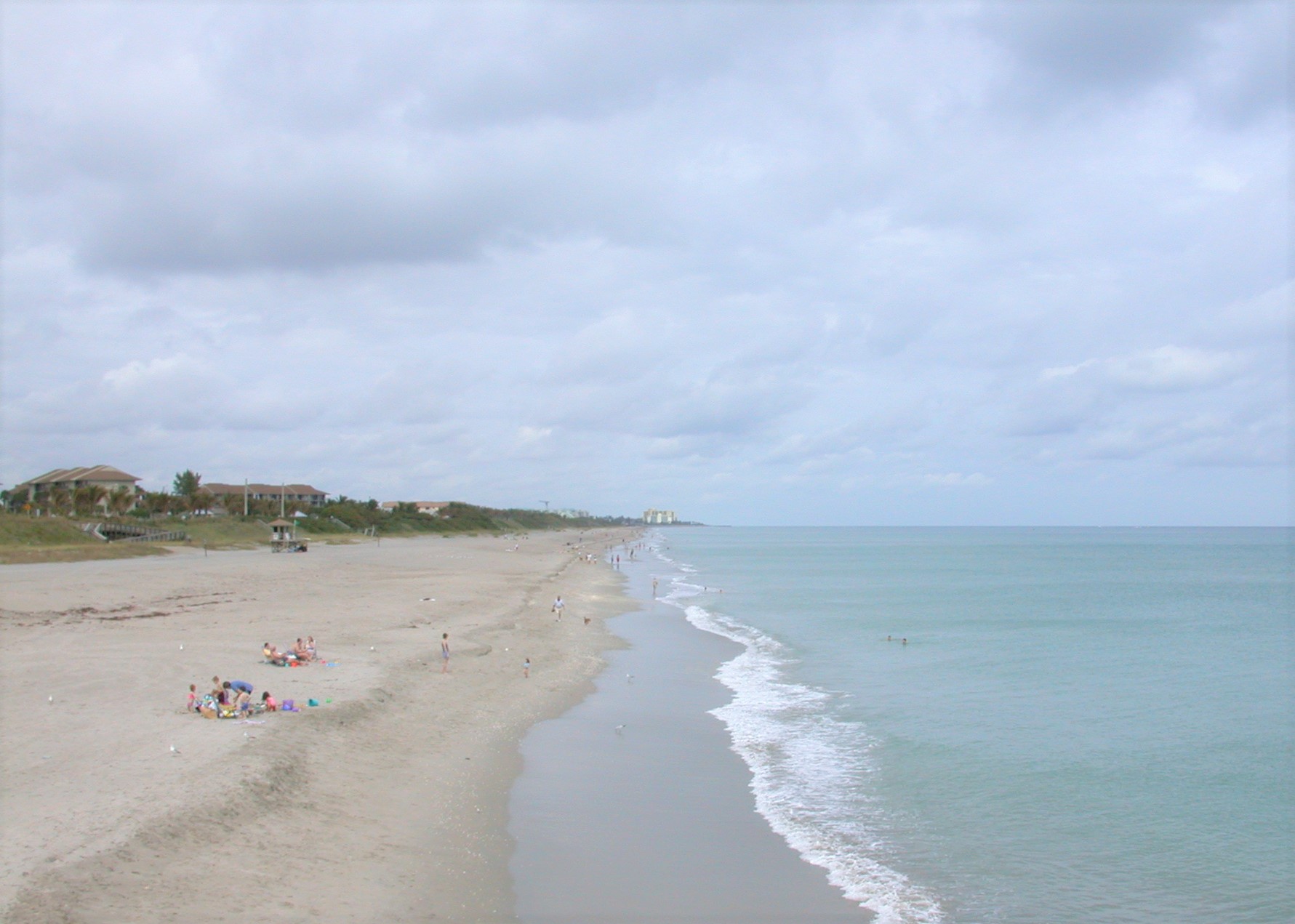
If vacation advertising is to be believed, most people think of beaches as long white sandy strips full of sunbathers and volleyball. I think of jagged rocks, stiff salty wind, whales, and shore birds. More often than not, you need a light jacket to visit our beaches and a sense of wonder. To me, a long strip of sandy beach sounds boring. I don’t want to lay on a towel and take in the sun. I need to explore. Our rugged coasts are less of a leisure pursuit and more of an adventure. Come hardy explorers to perch among the rocks. What has the tide brought us? What lurks under the driftwood and in the tidepools?
For many years I went to the coast with my father’s family. It was back during a time when a kid could rise, eat breakfast, and disappear for hours until hunger brought you back. Being back before dinner was the only real requirement. The wild child must be present and presentable for dinner at the nice restaurant. A skirt must be worn for women and girls and a tie and jacket for the boys and men. This rule was in place well into the mid-1990’s.
On a particularly nice day when I was 15 or 16, I was enjoying a bit of “bodysurfing”, but on this occasion the undercurrent was stronger than usual. The sand beneath my feet evaporated. I only got one quick gasp of air before being pulled under and out. I kicked as hard as I could propelling myself in the direction I thought was up. It was only a guess. I kicked and kicked, my lungs burning, begging for air when finally, I broke the surface. The shoreline was so small, the people were the size of ants and no one seemed to notice me out there. I panicked. It’s one of the few times where I thought I might actually die.
There are signs posted near the resorts about what to do if you get pulled into a riptide. I had studied them often out of kid bored, waiting for my dad to check us in or out of a place, pay at a restaurant or while getting gas. I never thought I would have to follow the step in a live scenario. Step 1: “Don’t panic.” Well, too late for that! I did my best to put the emotion aside and focused on step two. Step 2: “Swim at an angle towards the shore.” Mental visualization of the diagram, showing a stick figure swimming parallel or at a slight angle from the shore. I was at least a mile from shore, possibly two. I dare not think it could have been farther.
It took at least two hours of breaststroke and back swimming. I tried to drift in like flotsam at times. When I finally made it shore, I arrived with no fanfare. No one had noticed. I was exhausted. I headed up to the rental and walked in the door. “You’re late!” My dad boomed. “Sorry, I got caught in a riptide.” I grumbled. “Well, get changed! We have to leave for dinner right now!” So, I changed and off to dinner we went. I’ll never know if he didn’t hear me right, didn’t believe me or didn’t understand the implications of what I’d just said.
More to Explore:
Science of Riptides: Rip Current Science (weather.gov) It’s interesting because this and other sites I found say “Riptides don’t pull you under.” I beg to differ. I was definitely pulled under. I suspect it has something to do with the firmness of the sand.
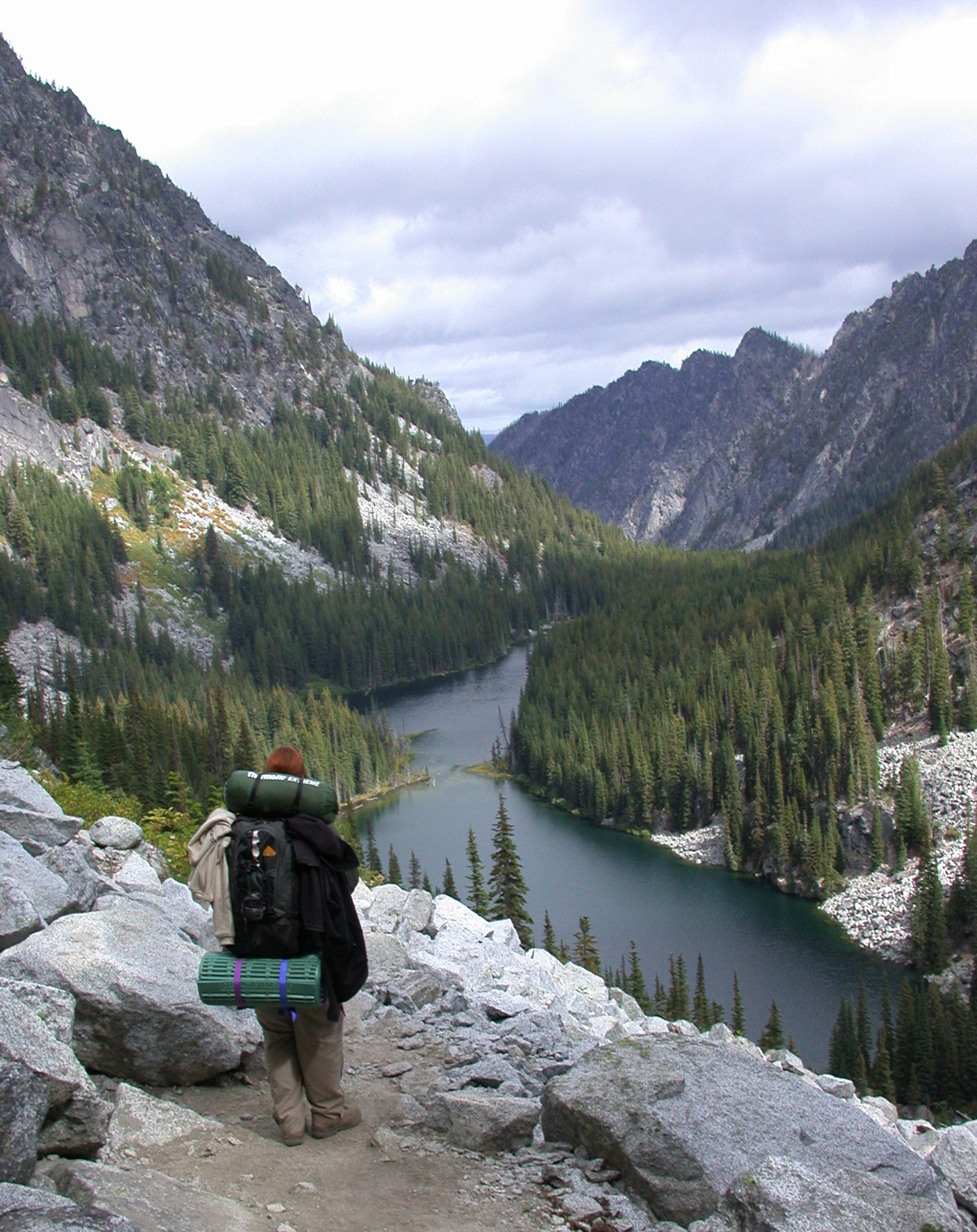
I’m of the mountains and valleys. On a hike I’ll often say; “Just a little bit further, let’s see over yonder.” I follow paths sometimes only I can see. They have secrets I want to explore. Discoveries to make. Sometimes it’s a waterfall in a slot canyon, a vantage point to spy on animal or a really impressive tree. I once found an old miner’s cabin and on a solo trip an entire lake! It was only Tuesday when I discovered the possibility of a new adventure. I remember it felt like forever for my day off to arrive. I took my cat, who thought she was a dog.
I drove up an old service road, then walked, shimmed, and crawled through the thickets until I crested a small ridge. The lake was small, more like a large pond, but I could see the outlines of what it had been. It was a place of eagles. I made a pouch for my cat out of my long shirt and tied it to my waist with her head sticking out. I didn’t want her to become a sacrifice. I fished the lake to see what was in it, only perch it seemed. I tossed them back in. The eagles can keep their perch and their secret lake. I’ll never go back or share the location. It’s for the eagles. I was only a guest. They were still on the endangered species list at the time, trying to recover from the long shadow of DDT pesticide use.
Sometimes, we humans, kill things with kindness. As I write this now in the year 2021, the Pine Siskin and other songbird populations are crashing. The Pine Siskins are going through an irruption and salmonella is spreading from bird feeder to bird feeder. It’s time to take them down, at least for now. Nature can rebalance when we let it. It needs space and time to heal, just as a wounded person.
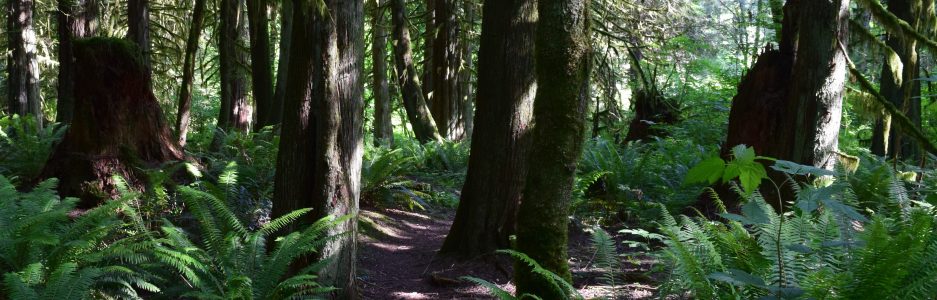
When you kill a forest, you kill the magic within it. It destroys a sacred song. Until more people learn to harmonize better, some things will never be known to you. I’ve never feared for my safety in the forest; The monsters live in houses.
I used to practice getting lost, but my senses guide me to water and lower elevations. The trees never stop talking. There’s always something manmade to bump into unless you keep to the higher ridges and that is a conscious thought. It incurs intent.
The first time I flew from Washington to Florida the land below me became an ironed out Shar-pei, with Florida as it’s leg. (Shar-pei being both a wrinkled dog breed and Chinese for “sand-coated”) It was here that I felt lost. It was so flat! I felt like a mouse in a field looking for a place to hide. My future father-in-law said he knew the feeling; it was the feeling of “too much sky.” My future brothers-in-law took me to a terribly unfortunate named place called “the Devil’s Hopper” for elevation. It was there that I felt at home. What can I do but embrace my oddity? I’m the kind of person that feels at home in the bottom of a sinkhole. It seems ironically befitting. I’m a cat who needs a box, a fox who needs a hole, a dog who needs a den and an ant who needs a hill.
When I lay on my back under a clear night sky I am again overwhelmed with the feeling of “too much sky.” We are tiny creatures clinging to a rock. I’m grateful the sun rises every day and hides it all away from me.
(First published on August 21, 2020 By Dan Nelson aka recreationalnaturalist)
Ridgefield NWR, Carty Unit
I chose the Ridgefield refuge as the subject of my first blog because that was where the seeds were first germinated that eventually produced this recreational naturalist. It was a little over 40 years ago that I went to work there as a member of the YACC (Young Adult Conservation Corps) and met my oldest and best friend Craig Sondergaard, who is the best general naturalist I know, with a library that would be the envy of many a community college biology department, and whom I hope to convince to write a monthly column on ecology for this site. Craig tried to teach me then, and I was a willing student, but due to partying a bit too heartily I lacked the focus, discipline, detail orientation, and mental acuity for the obsession to really bloom, although it did put down roots.
Not surprisingly there have been changes in the last 40 years here at the Carty Unit of the Ridgefield NWR. For one thing they have built a sturdy new steel and concrete footbridge over the railroad tracks, replacing the one which vibrated and swayed when trains rumbled underneath it, which swaying, especially when exacerbated by their prankster father, was dismaying to my children. One of them has more or less forgiven me for that.
Speaking of the Cathlapotle, another big change on the Carty Unit is that they have built a reproduction of a Cathlapotle Plankhouse just north of those oak trees, which is open to the public and well stocked with appropriate informational signs.
From here the trail passes between a pond on your left which is ringed by the ubiquitous Phalaris arundinacea (Reed Canary Grass), and a woodland on your right. I saw the daisylike flowers of Anthemis cotula (Stinking Mayweed), and some stands of Solidago lepida (Western Goldenrod). But no ducks on the pond, nor much of any other birds. That wasn’t particularly surprising though, since it was the middle of the afternoon on an 84* day.
The right hand side of the trail is a bank of Symphoricarpos albus (Snowberry), winter desperation food for birds and good cover for small mammals, although I didn’t see any. Kind of the essence of good cover, I suppose. It is also the primary larval host of the Snowberry Checkerspot Butterfly, but I didn’t see any of them either. Then the first blooming Anaphilas margaritacea (Pearly Everlasting) I’ve seen this year, a sure sign we are in the dog days of summer.
The biggest change from the point of view of a recreational naturalist is that, in an effort to restore habitat for the Oregon White Oaks, they have cut down many of the conifers, mostly Pseudotsuga menziesii (Douglas Firs), which surrounded the Oaks-to-Wetlands Trail. This process is known as an ‘oak release’, because the faster growing conifers have crowded and shaded the oaks, preventing their growth. No doubt this will pay great habitat dividends in years to come, but for now the area is just a clearcut dominated by stumps and non-native invasive species.
These situations where a familiar habitat has been denuded or destroyed are always shocking. But I’ve found that (unless it is a lost cause because the powers that be have decreed that that land should grow apartments or strip malls rather than forests and wildflowers) the quicker I can move through the grief to acceptance (a process made much easier in this case by knowing that eventually this would be be restored to some semblance of a native habitat) the sooner I can happily explore what is there now. Because there is always something finding a way to exist there now.
For most of my life I’d have looked at this artificial clearing and seen a wasteland. But once I started looking closely at places like this, differentiating the plants, learning some names and a bit of natural history, seeing all of the birds and bugs feeding, breeding, and hunting there, it started to come alive for me, gaining validity as a habitat.
Near a copse of young oaks I saw a few Robins, and then a slightly larger bird pecking at the ground, which proved to be a Northern Flicker (Colaptes auratus) as it flashed its white rump escaping into the trees. Then a couple of Bombycilla cedar-rum (Cedar Waxwings) flew into a nearby tree, bouncing from limb to limb, their reddish brown crest silhouetted against the pale sky and backlit leaves, with occasional glimpses of their black mask and yellow tail feather tips.
I love Cedar Waxwings! They are a very animated bird, which makes for difficult photo ops, but they appear to be having fun in a way that is unusual for birds. I’m probably committing the sin of anthropomorphizing here, but they seem to glory in flying pell mell into perches that won’t support their weight and riding them down, like the trees were just random jungle gyms.
Typical of my attempts to photograph Cedar Waxwings (Bombycilla cedrorum)
As I was rejoining the main trail from which this loop had sprung, much shorter now during the restoration and encompassing far less diversity of habitat than in the ‘old days’ when I worked here or wandered it with my kids, I spoke with a couple who told me that they had spotted an adult and a juvenile Bald Eagle(Haliaeetus leucocephalus) feeding on the carcass of a carp down by the bridge over Gee Creek. So I drifted that way. I missed the feeding and the adult, but with the help of a fellow photographer I finally spotted the mottled form of the juvenile amidst the mottled shadows in the crown of a huge old oak tree. I watched it for awhile, grateful for the recovery of this species, whose population had dwindled to the point that when I worked here in 1980 a Bald Eagle sighting was big news, snapped a few photos and, content, walked back to my van.



 The Nature-led Life