The Art of Tracking: Search & Rescue

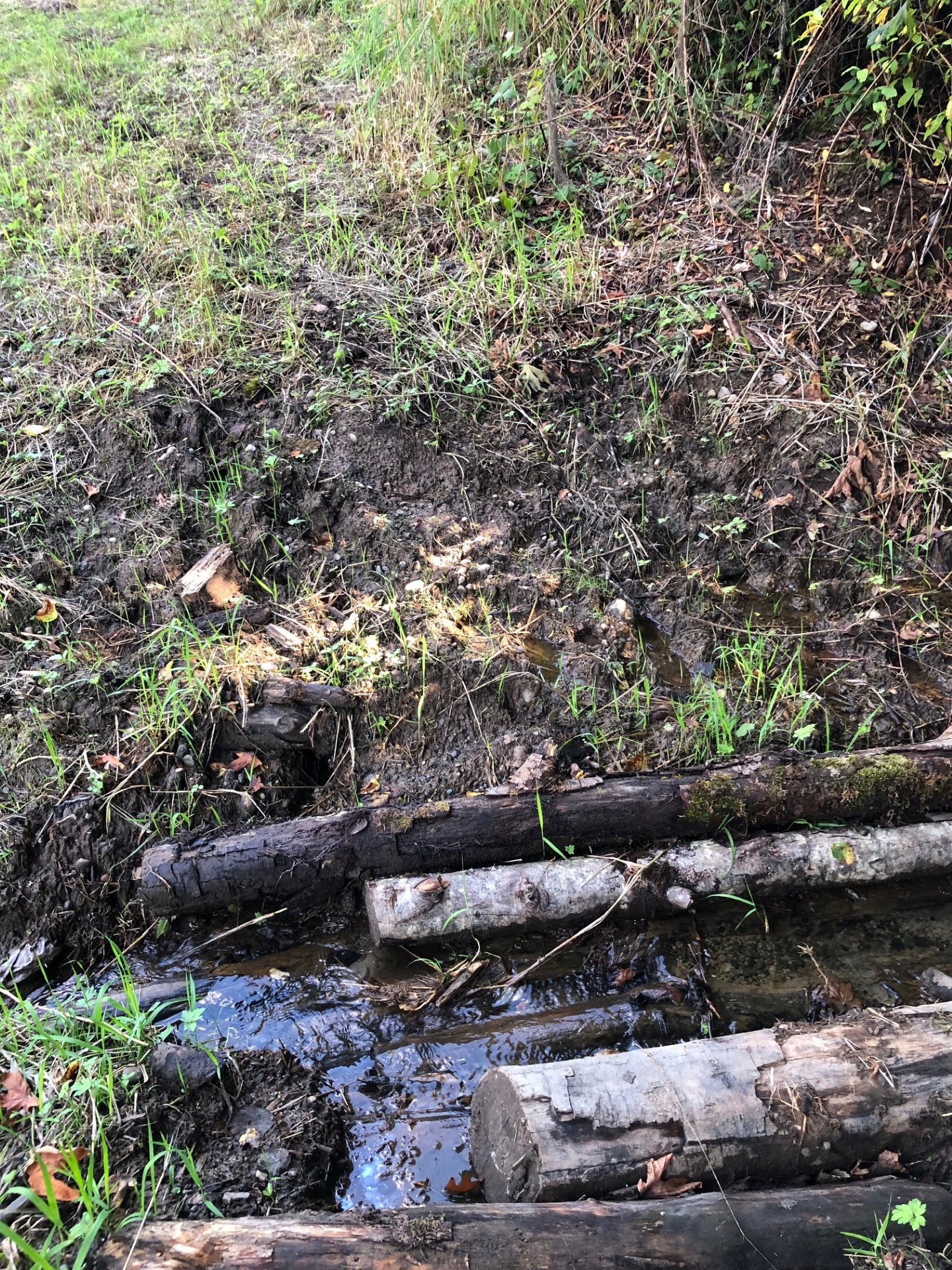
Small spring with mudprints

The Art of Tracking: Search & Rescue

By Melanie Reynolds

Yesterday was a good day. On Wednesday (Aug. 21st) a 66-year-old man with Parkinson’s Disease and Dementia had gone missing from a nearby city. Three days went by with no luck and Friday had been nearly non-stop rain all day and night. The situation was becoming desperate. The Sheriff’s helicopter and search and rescue team hadn’t found him. A few drones had been used, but still no luck. They called off their search. The family reached out by social media asking for any and all willing neighbors to come out and help.

It seemed like most people only had thoughts and prayers to offer. That wasn’t good. I know I shouldn’t be judgmental. I don’t know their lives, responsibilities or commitments, but for me, thoughts and prayers will never be good enough. I hold myself to a high level of expectations that I don’t expect from others. My friend Takeshi once said I was the most Samurai person he’d ever met; to which I consider the highest form of a compliment I’ve ever received.

I would make time for a man whose time was running out. It was something I needed to do. When I was a bored rural kid in Eastern Washington tracking animals and trying to “get lost” were my hobbies. As I got older, I took some survival training courses and as of a few years ago joined a local volunteer program called Community Emergency Response Team (CERT) with a nearby Fire department. I have three emergency bags: one for home, one for van and one for hiking. I keep five tourniquets in my minivan alone. Some people even got tourniquets for Christmas five years ago. At least my stepbrother thought it was the best gift ever.

At the start of my search, I checked in at the table the family had set up in a grocery store parking lot. I asked if they wanted me to look anywhere in particular. They said he could be anywhere at this point, a needle in a haystack. I offered to start on the outer edge of the search boundary from the light industrial park back to the place where he was last seen. She told me to trust my intuition.  I took two steps away then blurted out, I have tracking experience. I’ve been self-conscious of how much of a hillbilly I really am compared to the posh metropolitan areas of Seattle since I moved here twenty years ago.

To my surprise her eyes brightened. She introduced herself as the missing man’s daughter. She asked me to come back to the table, showed me a map and pointed at the last known sighting near a water tower in a heavily wooded area. “They (the Police) looked here, but its so thick with brush, please go back and look again.”
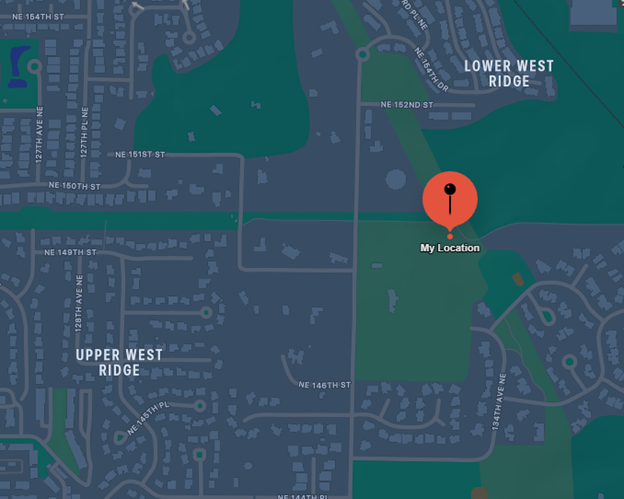
I dropped a pin on my phone and headed to the location. I noticed a police cruiser parked in a cul de sac facing the direction of the water tower. I parked, took my small backpack of essentials (food, water, a towel and first aid kit) and walked around the water tower to pick up a trail. In the US, our water towers are monitored by 24 -hour video surveillance and alarms to prevent tampering. I was very aware I was on camera and kept my body looking away from the tower and not at it.

The fact that it had rained so heavily on Friday was helpful. Both human and animal tracks were well-formed in the drying soil. I look for pressed down grasses that make a trail, broken branches, and any kind of human debris. I found bits of torn twill, but I’m quite sure our man wasn’t wearing a veil when he ran off into the woods. I found a bit of white jacket lining (polyfil), but he hadn’t been wearing a puffy jacket. I found two rabbits, a garter snake. Then I found a strong lead. A little stream that someone had tried to cross on Friday when the ground was the wettest. The mud was solidifying and holding the shape of deeply imprinted shoe tracks of someone who had gotten stuck and struggled to drag themselves out. His daughter had mentioned he was wearing black tennis shoes the same size as mine.
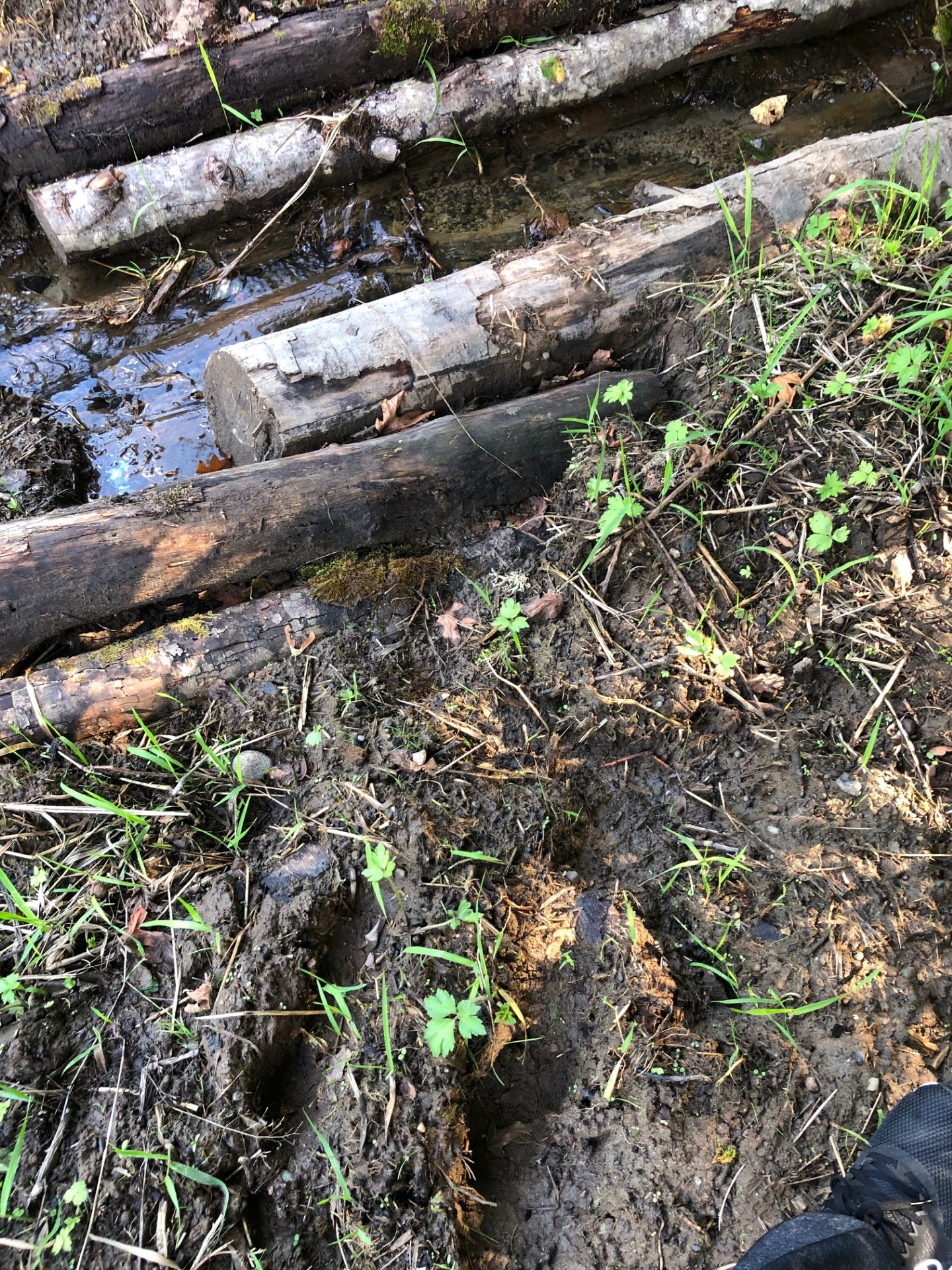
Mudprints closeup

I followed clumps of mud up a hill in a pressed grass path. I felt like a hound catching the sent of its quarry. At the top of the hill the mud clumps had stopped, and I was intersecting the main walking trail. In the mind of a tracker, trampled and contaminated. I had four possible trails from that spot, so I started a pronged approach right to left looking for new clues to follow.

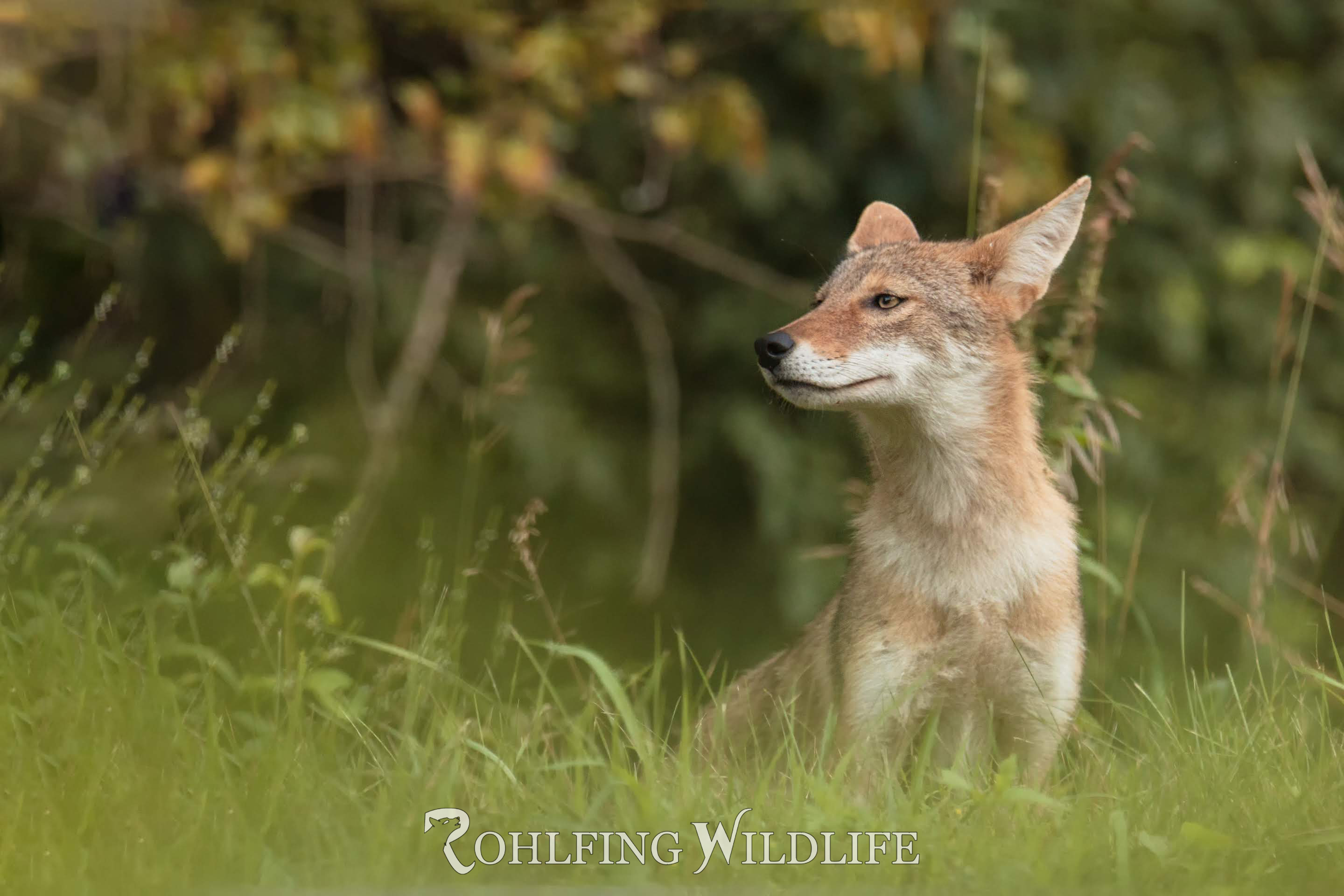
On the first prong I got about 35 feet when I came upon a heavily wooded hill that backed up to a neighborhood. Near the top of the hill was a coyote. I said, “Hey coyote, you seen a man around here?” The coyote was surprised to see me. I forget how quiet I can be. I was solely focused on listening for breathing, moans, growls and other things creeping about besides me. I also had the advantage of being downwind.

The coyote came within a few feet in front of me and sat tall. Polite coyote body language for “You shall not pass.” Behind her a pup ran from one side of the trail to the other. “Ah, I’m sorry to intrude. I’ll go back the way I came.” I made it clear I was leaving with no intent to come back. She didn’t follow. Prong two was a quick and short dead end with tall unpressed grass. Prong three and four weaved closely together and I found a couch and a bunch of bags of clothes that someone had dumped.

Mossy Waterpipe

Prong four, my last good trail that was not the main trail led me to a cool giant mossy waterpipe. This was a great place to hide from the elements and dry off, but it was right at the edge of a steep and heavily wooded ravine. There were no fresh tracks under the waterpipe, but there was a wide swath of pressed down vegetation heading down into the ravine. He could have come here for shelter, slipped and rolled down into the ravine. It was at that moment I regretted wearing shoes and not my boots. My ankles wouldn’t have the stability needed to safely traverse down and climbing ropes would have been helpful too.

There was one offshoot trail from here. I took a quick look and discovered it was a black bear’s favorite path for stealing the neighborhood garbage and chose not to proceed any further. I walked back to my point on the main trail. My one-hour search had become two hours already. I wanted to keep going, keep looking. It’s hard to stop, it feels like giving up, but you have to know when to call it a day. In my mind I was mapping out a four-hour search pattern I would start from that point the next day. Around the same time, I started to hear a lot of people excitedly talking but I couldn’t understand what they were saying without getting closer.

I wrote it off as most likely a BBQ in one of the backyards of a house that abuts the main trail. By the time I reached my minivan I heard the sirens of emergency vehicles and the coyote family howling along with them. Could those sirens be for him? When I drove to the grocery store parking lot to ask a few questions no one was at the table. Hope began to bloom. By the time I got home and checked the search page it had just been updated that he’d been found! He was found breathing, but unresponsive just down from where I had stopped.

I’m happy to report that as of this morning he’s in stable condition in the ICU. It’s a good sign that he made it through the night. Part of me wishes I’d paid attention to the human commotion down the trail. That I could have been there to see the moments of his discovery, but I have a natural inclination to avoid crowds and linger on the edges. I was solely focused on finding one man who I expected to find among the bushes and his name was David.

Toxic Masculinity vs Nontoxic Masculinity

Photo by Andres Ayrton on Pexels.com

I’ve been seeing a lot of stories about Toxic Masculinity lately. The main theme of these stories is about boys and young men who become followers of male health and fitness influencers that offer a dose of misogyny on the side when talking about what it means to be a man. Why are these influencers finding so much success with boys and young men?

Because it dovetails with another problem in our society right now; boys and young men who feel ignored and left behind by the rest of society.

I think a lot of people tend to underestimate the power of perception. What social psychologists call Frame of Reference: the set of assumptions or criteria by which a person or group judge’s ideas, actions, and experiences. (APA Dictionary of Psychology)

Add that with the constant bombardment by advertising and marketing and media that tell us what we should aspire to be, think, or behave for the good of a sale. They sell ideas, fantasies, and wishful thinking. They invent a problem you don’t have so they can sell you a product or service to fix it. We are consumers.

It’s exhausting! It can make any of us grumpy and depressed in ways that we can’t always articulate.

As far as I know, all of my readers here are grown adults, so I would like to remind you that these young people don’t have the mental armor developed to fend off the constant noise of everything pushed upon them by society. It gets built up over time like a callus. It’s easy for us to say get off your screen and go play outside, but they were born into this. Being outside in nature, is an unnatural state of being for many kids nowadays.

I tried to inoculate my own child from this by putting him in a 2-year Farm & Nature-based Preschool and spending as much time as possible on playgrounds or out in our yard, but once his public-school education started that nature-based part of his life become nothing more than a fragmented dream sequence. The extent of his nature exposure now is reduced to his half-mile walk to school and next year he’ll have to ride the bus.

Every generation has its challenges. What we could all use is more empathy and less judgement.


Photo by Pixabay on Pexels.com

Let’s put ourselves in the shoes of a hypothetical U.S. Cisgender White boy in middle school (ages 10-14) right now in 2024 and what that might feel like:

You’re struggling with your schoolwork.

You feel demoralized because very little of what you do feels like it matters.

The world is dying; it’s your fault or maybe it’s not, but you have to live with the consequences either way.

Everything around you is deeply politicized. You’re afraid to offer an opinion because, first of all, no asked you and secondly, you don’t want to say the wrong thing.

You can’t have an opinion about the 2nd Amendment or guns because if it’s even mildly positive people might think you’re planning on being the next school shooter. You might be worried about dying in a school shooting, but adults keep telling you “It’s fine” and not to worry about it. Nothing changes.

You can’t have an opinion about DEI: diversity, equity and inclusion, race, or LBTGQ issues.

You get criticized for playing video games.

Every new dumb TikTok challenge is somehow your fault or at the very least adults in your life feel obligated to tell you not to do said dumb TikTok challenge because they don’t want to be judged and vilified for being bad parents if they don’t. 

At the end of the day, I hope you weren’t planning to cry, get upset, or feel frustrated about any of the above topics because someone, some visible or invisible person, representing the whole of society might judge you for it.

How do you feel?

Abandoned?

Alone?

Ignored?

You turn to a screen to watch YouTube, Instagram or TikTok channels about your favorite video games or watch game streamers. You get ads to join the military, protein shakes to get big and lean, tactical hoodies, and investment scams depicting images of well-dressed men with a beautiful woman, fancy cars, and travel to exotic destinations by private plane or first-class. (These are real ads my son and I see when watching movie and video game videos on YouTube.)

The algorithms start to recommend more than just video game content because “people like you” also like health & fitness topics, car modifications, weapons, survivalism, and dooms day prepping. Why just play games and watch shows about zombie apocalypses when you can prepare for one? Don’t you want to buy cool gear? Don’t you want to show your friends this cool new thing?

You thought you were abandoned, alone and ignored, but there’s a group of people talking directly to you, and they have an agenda. Guess what? It’s still not about you, but what you can do for them by liking their content, buying their products, and sharing it.

Photo by Ethan Sees on Pexels.com

————-

We all get filter by algorithms, but most adults tend to be more cynical or aware of how much we’re being marketed too. You might not be as aware of how much you’re being manipulated though through what’s called mere exposure effect: ‘a phenomenon in which people like something more as a result of repeated previous exposure to it, however brief and fleeting.’ It’s used to market products to you and sway buy-in for political or social ideas and/or beliefs.

The ages of 10-18 are important formative years where we tend to try on different personas and opinions to figure out who we want to be as we enter adulthood. Despite being nearly fifty, I still remember how me, and my friends struggled through those years to define who we wanted to be. I feel fortunate that I always had a fairly balanced mix of male and female friends, friends who were straight and gay, and friends who were ethnically diverse. My core values as an adult were built upon our shared experiences. It’s hard to be a racist when you’ve cried with your friends about the injustices, they or their family has been through and what you have personally witnessed.

One time my best friend Anna and I were returning from Canada and the U.S. Border & Customs agent threatened to deport her, an indigenous tribal member of the Colville Confederated tribes, because he wasn’t willing to recognize her tribal id card as valid identification. How do you deport someone who’s family has lived in the United States longer than it’s existed? Deport her to where?

We refused to be separated or get out of the car. I was ready to back up and drive the two hours to the next port of entry in hopes of getting a non-racist border agent. (This happened circa 1992) Fortunately, after some back and forth I said something to the effect of, “Can I just extradite her back to the Rez myself and save us all the paperwork?” I guess the threat of paperwork was good enough because he let us pass. She didn’t even live on the Rez, she was my roommate and had already spent most of her life in the city like most Indigenous Americans, but racists aren’t usually interested in fun facts like that. (Rez is short for American Indian reservations.)

We need to lift up the next generation of nontoxic role models that encompass the compassion, strength and love of learning that we’ve seen in the past male role models like Mister Rogers, Bob Ross, Bob Vila, LaVar Burton, and Steve Irwin.

For all the men that make the news for their toxic masculinity remember that there are billions of nontoxic men across the world! It’s media and algorithms that favor the outliers who are so outrageous they drive up the traffic on media sites, likes, comments, and view. Our boys aren’t broken, the system is failing them. It’s failing our girls. It’s failing ALL OF US!

I hope that if you have young men in your life that you’re asking them what they think and feel about current issues without being judgmental or dismissive. We all need safe people in our life that we can talk to. We all need the opportunity to explore different thoughts and feelings in healthy ways.

My 14yo son said last month that he wanted to be masculine, “but in a nontoxic way.” I said, “So no Andrew Tate then huh?” and he rolled his eyes and said, “God no!” (If you don’t already know, Andrew Tate is one of the current poster boys for Toxic Masculinity and was recently arrested in Romania for sex trafficking.)

If you’re concerned about where someone is headed in life you need to talk to them directly. I once received an unusually dark and cryptic text from a male friend. I immediately picked up the phone and said, “I need to know you’re okay. I need to know you’re not a danger to yourself or to others.”

He chuckled softly and said, “I forgot you was you.” And I knew by the way he said it that it mattered that I hadn’t hesitated to pick up the phone and call him. We talked for a long time, and we were both better for it by the time we hung up.

I’d be weirded out if one of my friends were prone to weeping all the time. That’s not healthy. It’s not about a person’s gender, it means you might need professional counseling.

Here’s brief list of core values:

Dependability                  Integrity              Generosity        Courage              Adaptability      Assertiveness  Open-Mindedness      Compassion     Gratitude           Strength

None of these are gendered unless you choose to make them about gender. There is strength in going through cancer treatment and still trying to make the most of each day despite limitations. It also takes strength to continue on a personal journey that may be physically or emotionally challenging. Courage can also mean a lot of different things. Why would you strike up the courage to fight a bear? Just leave the poor bear alone! As someone who has a lot of bears coming through my neighborhood right now. I can tell you they just want to be left alone and find some grub.

Have the courage to define yourself on your own terms and not someone else’s.

Let’s clear up a popular myth:

“the Alpha Male” – a man that is the leader of the pack, supposedly playing off the idea that wolves have a social hierarchy with an alpha male and alpha female at the top. Sure “alpha male” may sound sexy, but that wolf is just dad. The younger wolves might be looking up at him and cringing because of all the bad “dad jokes” he’s telling. The study that is often cited to give the “alpha male” trope credibility was based off of wolves in captivity in 1947 and in less-than-ideal conditions. (See story link below.)

Make no mistake, women can also be toxic. Anyone holding up a funhouse mirror telling you that you need to be a certain type of way should not be allowed to possess a lot of space in your brain or your heart.

When my son was a toddler, I took him to one of those age-appropriate indoor place places that’s basically a big, padded room with a bunch of padded and inflatable slides to play on. He was getting along great with a boy and a girl who were also there without siblings. They liked taking their turns and laughing as each one tried to roll down the slide sillier than the last person who went.

In walks a mom with two toddler girls and my son, apparently vying for Mister Congeniality, decided to go over and greet the girls and invite them to play. The girls shied away from him as the mom made a bunch of drama blocking him from them and saying; “Ew, stinky boy.”, “Boys are gross.”, “We don’t like boys!” and the girls parroting her. My son was confused. I was livid.

I happened to be sitting and chatting next to the father of the girl my son had been playing with moment before. He and I gave a quick, “What the heck?” look before I stood and told the woman, “Excuse me! The only stinky, nasty person here is you! I hope your girls grow up and see how small-minded you are! I hope they kick themselves out of that doll box you’re trying to keep them in!”

My new dad-bro friend clapped, and the toxic mom grabbed her daughters and left in a huff. She hadn’t been there any longer than two minutes. I still feel sorry for those girls. I hope they’re growing up okay despite that woman. I told my son to go back and continue playing with his ‘nice friends.’

Whoever you are reading this right now, make sure you spend time with your ‘nice friends’ who raise you up not put you down.


If you have the time, here’s an excellent YouTube video on the subject:

Related Links:

APA Dictionary of Psychology – Frame of Reference

The Mere Exposure Effect in Marketing & Advertising | Built In

https://phys.org/news/2021-04-wolf-dont-alpha-males-females.html

*This post was 100% written by a tired human. If there are mistakes, they are mine. I own them, but feel free to adopt them.

My Neighbor Coyote

Now that we’ve entered the month of March, I’m looking forward to seeing some of my new young neighbors. I live in what’s called a “wildland-urban interface (WUI) zone in Western Washington. When we lived one city over “down the road” in an apartment we would occasionally see news stories about black bears and the odd cougar witnessed in the area of where we live now. A selling point for us, not so much for more timid people though! In 2007, we finally achieved our dream of owning a home here. We live about 200ft from a primary east-west throughfare that connects a chain of small cities to a major freeway.

After a few months I began to observe a parallel throughfare right through our property in what I affectionately call “the wildlife highway.” These last few years of development have been particularly difficult in fracturing this once invisible highway. The more people move in, the more reports of sightings increase. Most realtors seem a bit coy when telling new homeowners what kind of animals they’ll be living with. This often leads to panicked Facebook posts in the neighborhood group or calls to the police, who will politely tell the people to leave the animal alone and call them back if it threatens someone. This is of little consolation to any proud urbanite that had, until now, believed that all large predators live way up high in the mountains. 

I’ve become a local soothsayer of sorts in my understanding of our wild and non-wild neighbors. The human neighbors call me “Snow White” and call, text or email me when they have questions or concerns about local wildlife or want native plant recommendations. People slow down to take pictures of me gardening alongside deer, rabbits, birds, and the occasional coyote basking in the sun a few feet away as if it were my dog.

I’m now the adjunct guardian of this waystation on the wildlife highway. A sanctuary where they can rest without fear or harassment. The coyotes come for field snacks (mice) and stay for the curiosity of a woman so deeply imbedded in nature. They’ve been vilified for generations by us two-legged creatures. In our media they’re often cast as either evil creatures or dumb, pathetic things. They get no fair representation. They’re guilty of all crimes, most notably for eating all the cats. That non-native domestic species European Colonists brought with them that now decimate BILLIONS of native birds and mammals annually.1 Don’t get me wrong. I love cats as much as any other animal, but we have a responsibility to care for any animal that we’ve historically bred as pets. I empathize with any pet owner who loses a furry family member to an attack of any sort!

In Coyote America: A Natural & Supernatural History by Dan Flores2we learn how the war with the coyotes and wolves began as part of the western expansion of colonialism. As the white settlers cleared out the majority of wolves along the east coast and moved westward coyotes were able to infill where their larger cousins had once dominated. In the coyotes’ native range, he is the Creator and trickster to many plains dwelling indigenous tribes, but by the time he reaches the far western coast, home to the Coastal Salish tribes, he takes a place of no particular esteem behind their animistic creators and relatives.3

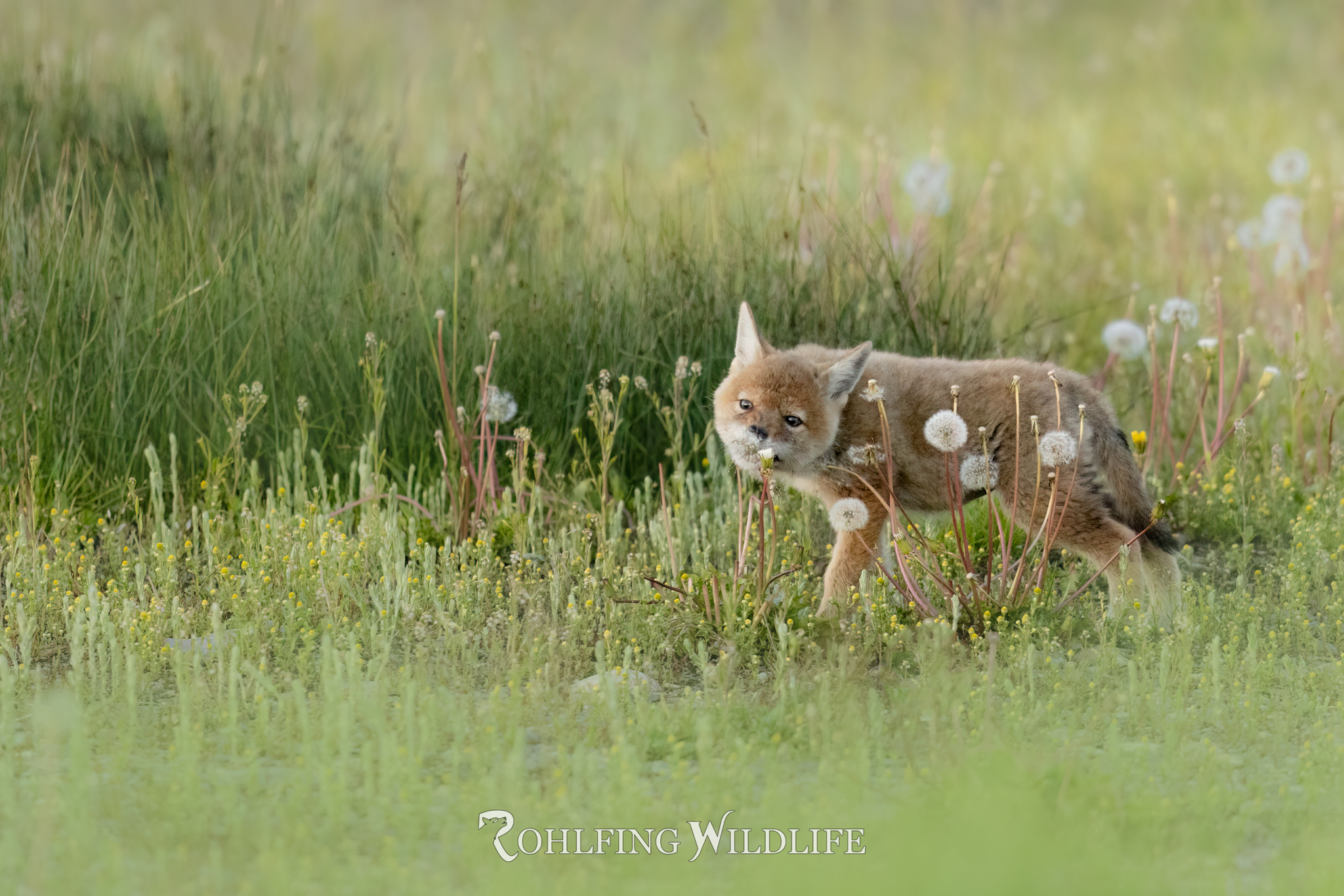
Coyotes are a lot like us in their ability to adapt. What Dan Flores refers to as “Fission-Fusion”: the ability to be both social and/or solitary. My first neighbor coyote familiarity began with a female that hunted during daylight hours in an effort to provide for her pups. She and I became known to each other. I never threatened her, and she never threatened me or my dog. We watched each other with both interest and a careful eye. One day, one of her pups strayed too far from the den and came into the yard through the driveway, only to find himself trapped in a section of the old horse pasture that, for whatever reason, had some hog wire fencing attached to it.

It wasn’t until I stepped out onto the porch for a better look that I realized it was a coyote pup and not a lost dog pup. I sat down to watch knowing that my approach would only cause undue stress. It appeared healthy and wasn’t in any immediate danger. I think that is the moment I embraced my role as the neighborhood guardian and liaison between wild and human neighbors. My policy is no intervention unless absolutely necessary.

He eventually calmed himself, worked his way back to roughly where he’d come and returned to the den across the street in the wetland. The next weekend I ripped out all of the fencing. Mother coyote got skinnier and skinnier until I didn’t see her anymore. One of her sons took up the territory. I can’t say if it was the one I’d seen as a pup or his sibling.

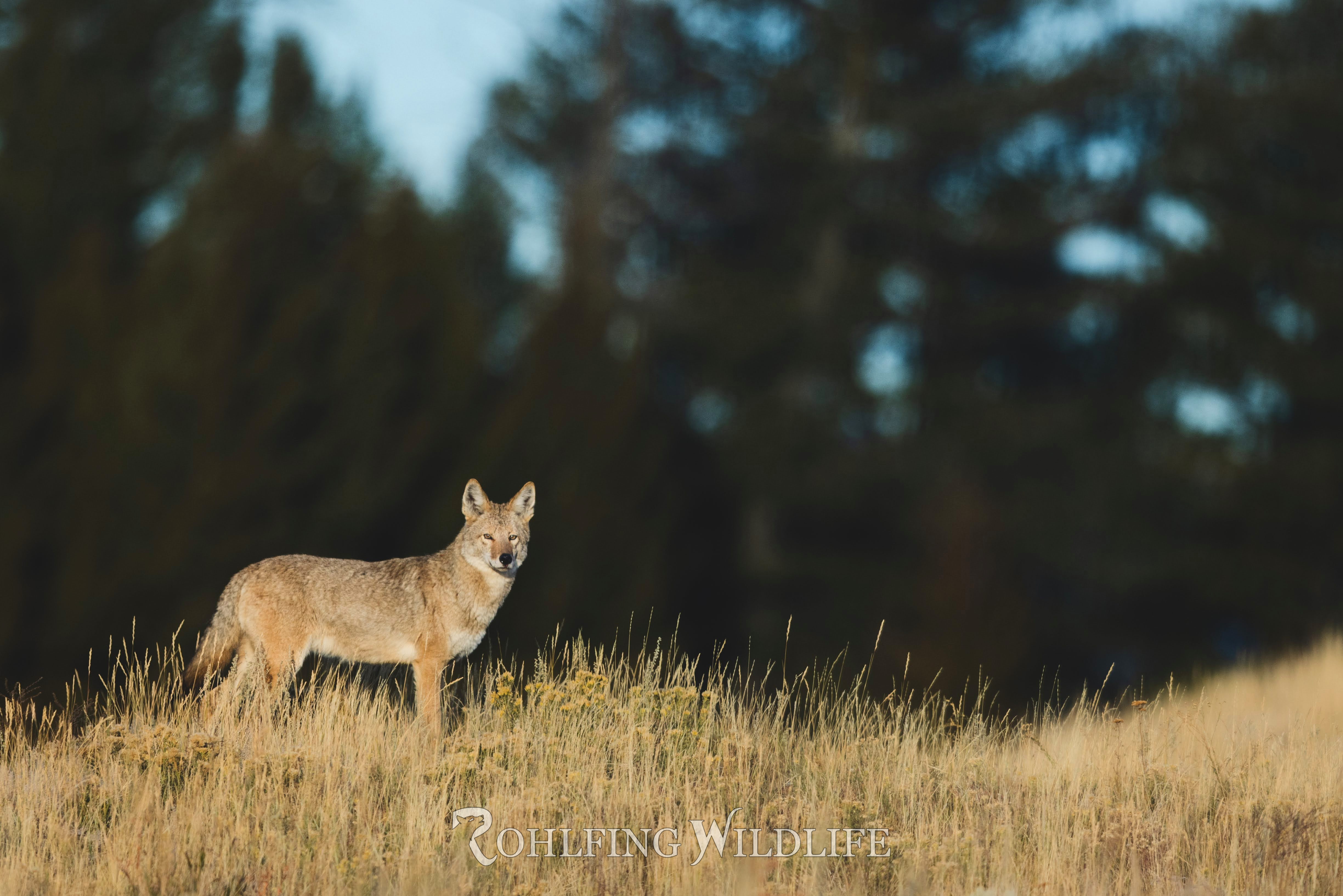
This male coyote is the one I had known the longest. My scent was on the landscape when he was born. As generations of animals have been born around me, they too imprint a connection of my scent with the landscape they call home. I look upon them as friends of the family. I started to worry that he would try to get too comfortable around other humans and that they would fear him. I also worried that if the Washington State Fish & Wildlife department received too many calls about a coyote, they might shoot it for their own convenience to stop receiving calls about it. As I dwelled in these thoughts there was a morning where it was very windy, and I was walking my dog when we and the coyote startled each other by our sudden abrupt closeness alongside a hedge. It was in that moment I decided a bit of light hazing might be good. I clapped my hands and told it to “Go on git!”

It was startled and as it trotted off it looked back at me with an expression I read as, “I thought we were friends.” I try so hard not to anthropomorphize wild animals, but his behavior afterwards conveyed what felt to me like a response to a perceived betrayal. He no longer came around me. I only knew he was still in the neighborhood when I caught a glimpse of him before he could see or smell me, but mostly he stuck to night hunting as I witnessed on my game camera. I reflect upon that moment when our friendship fractured with regret.

Sadly, this coyote got mange, which was first introduced to the North American landscape in 1905 as part of the eradication and removal plan by the US Biological Survey (now the US Fish & Wildlife Service) for coyotes and the remaining wolves. Several neighbors, who had once been apprehensive of living with coyotes, now looked upon his sorry state with sadness. I received texts late at night as they watched his suffering through their Ring doorbell cameras. I did research online and found that there was a kind of fringe movement where one could purchase anti-mange medication to put in food. The caveat was that you had to be certain the right animal would eat it. The recommendation was to trap, feed, and release. Something I couldn’t do without the risk of getting raccoons, a dog, or a bobcat by accident. The coyotes are not the most prolific hunters here but a bobcat that rarely passes me by without a large meal hanging from its mouth.

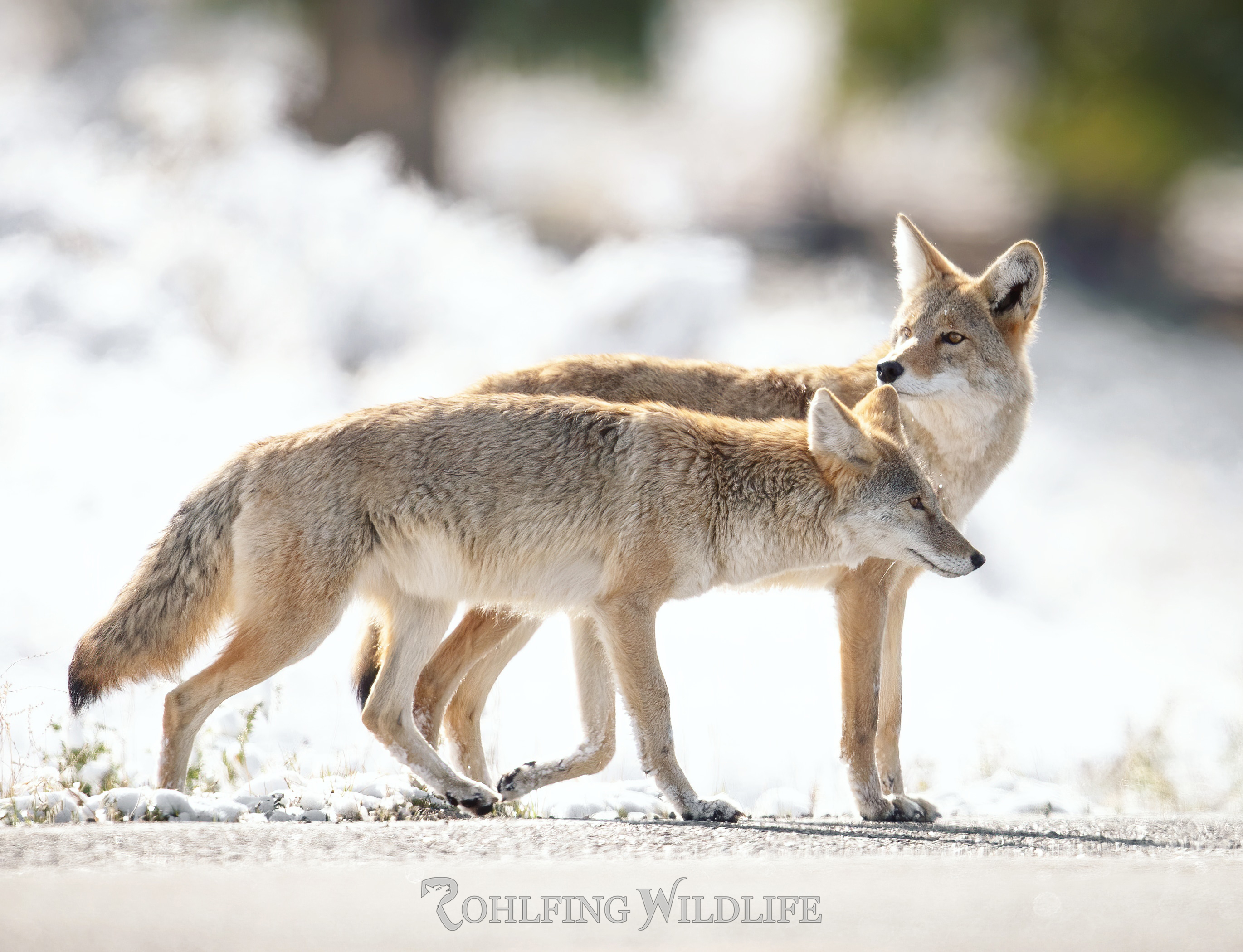
Our new young coyote neighbor was quite brazen when he was younger. Standing so close to the road with no interest in moving for cars that the neighbors, no longer with a sense of fear, would clap or yell at him to move along. “Get out of the road you idiot!” He has since learned that we prefer more personal space, about 25ft or so. This is his first year of having a family of his own. He met his mate this last November for mating season.

I find it was quite amusing that he hasn’t lost his interest in experimentation. One night after three of them had greeted each other in the field like a group of crazy middle school kids they decided to pretend being dogs by barking. They practiced for over an hour until they could match each other in similar tone and range. It reminded me of how crow families develop their own personal language cues.

A few days later during a morning walk I heard a dog bark and then another dog bark in a game of call and response. I know all the dog barks in the neighborhood. I can visual the dog, the owner, and the house, just by a bark alone. Even when I don’t know a barking dog personally, I can usually make a pretty good assumption about its breed and size. It’s the coyotes I thought. One was close by, so I stopped and waited because I was between them. Sure enough, creative coyote pops out onto the road, in a fast trot but immediately slowed to a casual walk when he saw it was me and my dog. As if to say “Oh, it’s just you.” The thought of it still makes me smile.

I hope you can understand that coyotes, like any other animal, are individuals with family dynamics that encourage what kind of personality they develop. There are some coyotes that can be aggressive, just as any other creature has the ability to be. I’ve never been threatened by a wild animal, of which I’ve met many, including black bears and moose. I’ve had two separate attempted attacks (both at night) one by a man and one by two dogs that tried to attack me and my dog. In both instances I walloped them with a swift kick up the side of their head. I’m fearless in many ways, but not careless. I know what I’m capable of and it’s a lot. I think the coyote and I have this in common. What do we fear? The gaze of a very hungry mountain lion.

~ A Special Thank You ~

This post was made possible with the generous contribution of Kyle Rohlfing Photography for allowing me permission to share his fine photography with you. You can see more of his wildlife photography at:

Rohlfing Wildlife

RohlfingWildlife – Etsy

Socials:

Instagram: https://www.instagram.com/rohlfingwildlife

Facebook: https://www.facebook.com/RohlfingWildlife

These images are copyrighted. All rights belong to Kyle Rohlfing.

———————————————————————————————————————————

References:

  1. The impact of free-ranging domestic cats on wildlife of the United States | Nature Communications , 2013