I’m back with a quick post to let you know how the egg substitution went using only seltzer water as a replacement.
Overall result: Success!
Baking is not my forte, but I like baked goods and sometimes you just have to bake it yourself. Fortunately, I’m perfectly happy with the many box mixes available here in the United States.
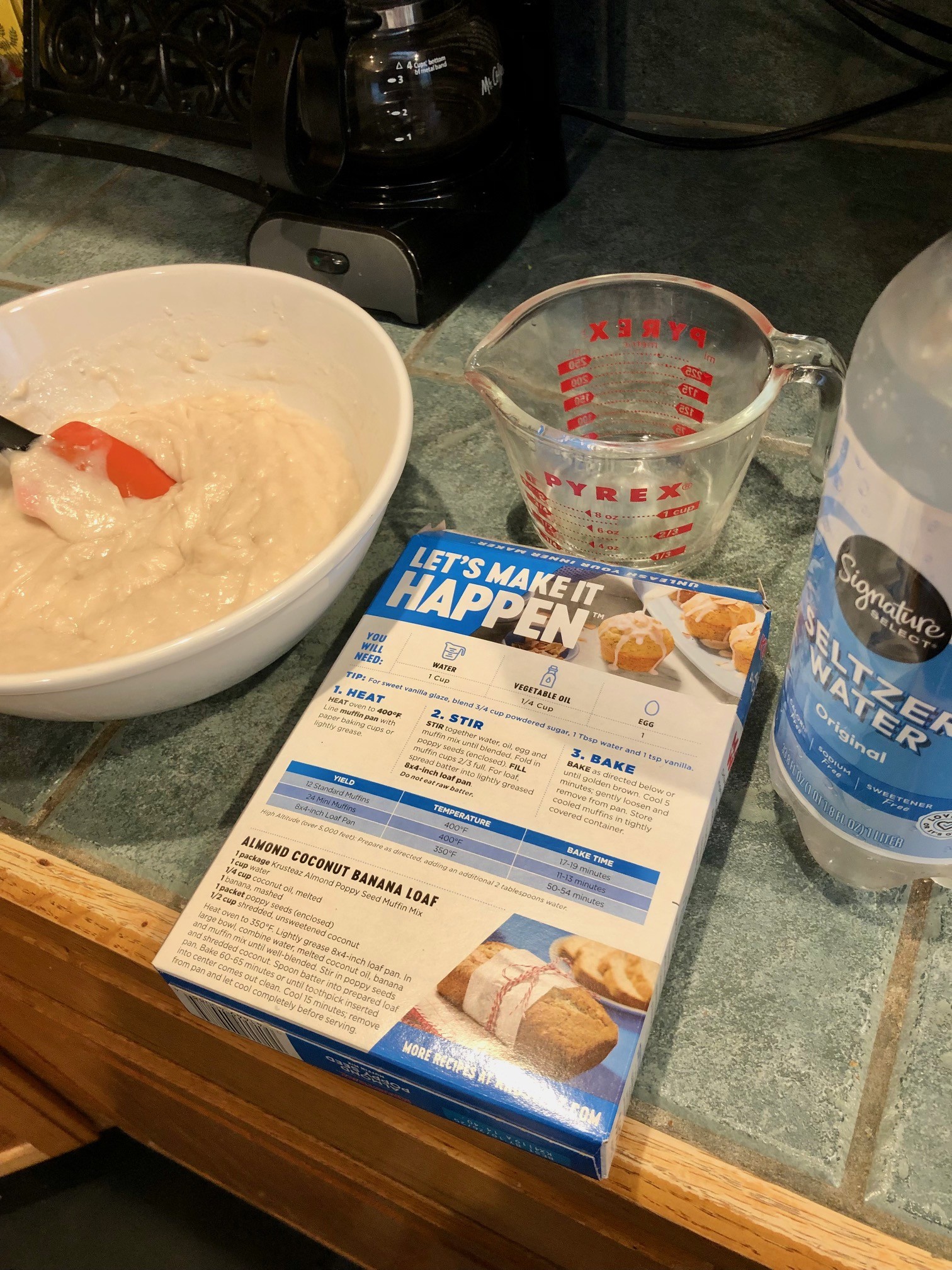
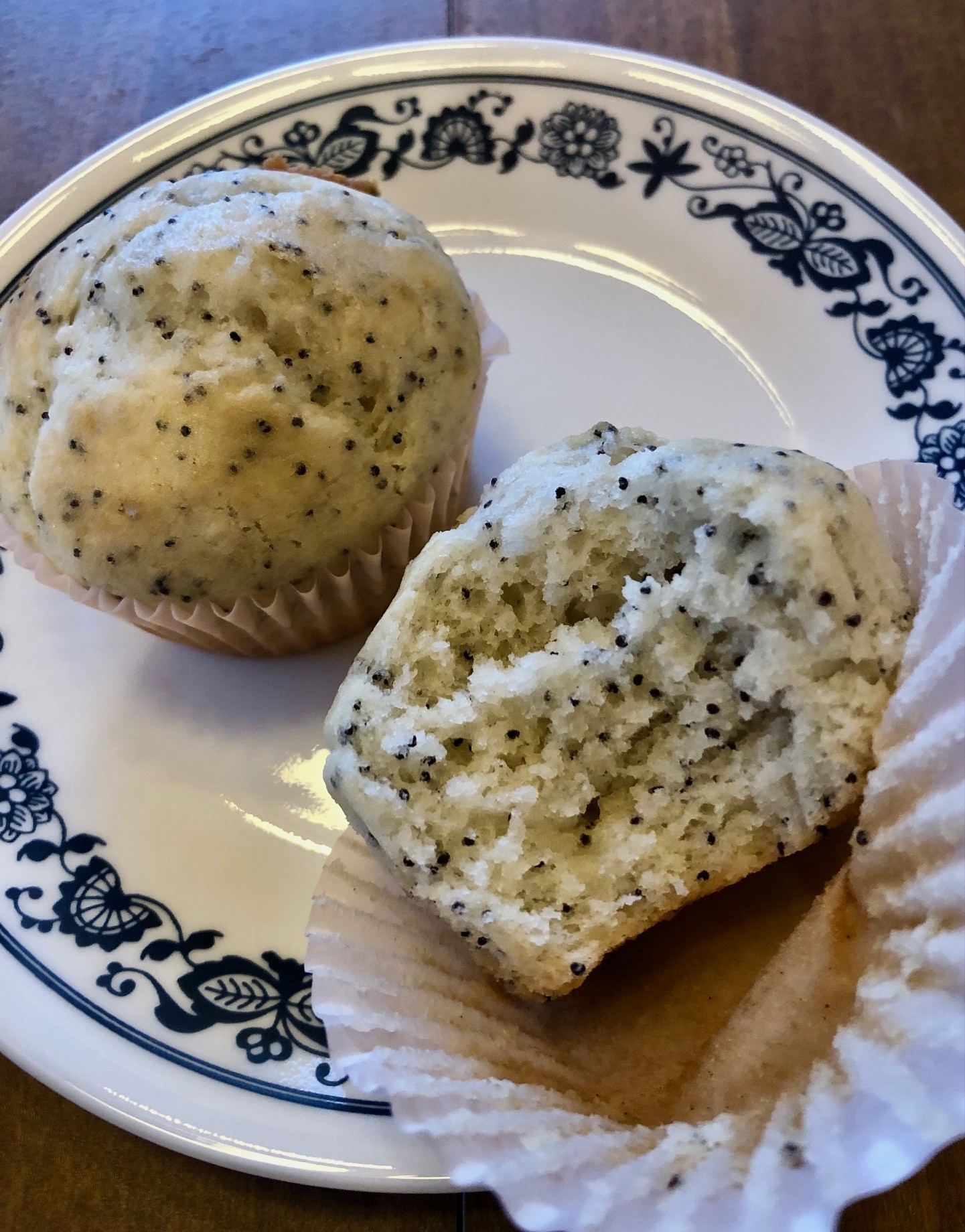
First up: Krusteaz Almond Poppyseed muffin mix
I mixed everything else in first then added 1/4 cup seltzer water (equivalent to 1 egg). I could hear the seltzer reacting with the baking soda which makes sense that it would create the lift and airiness. After baking it was paler than if I had made it with egg and it was more moist by way of chewiness, but overall, three out of three taste testers liked it and would do it again.
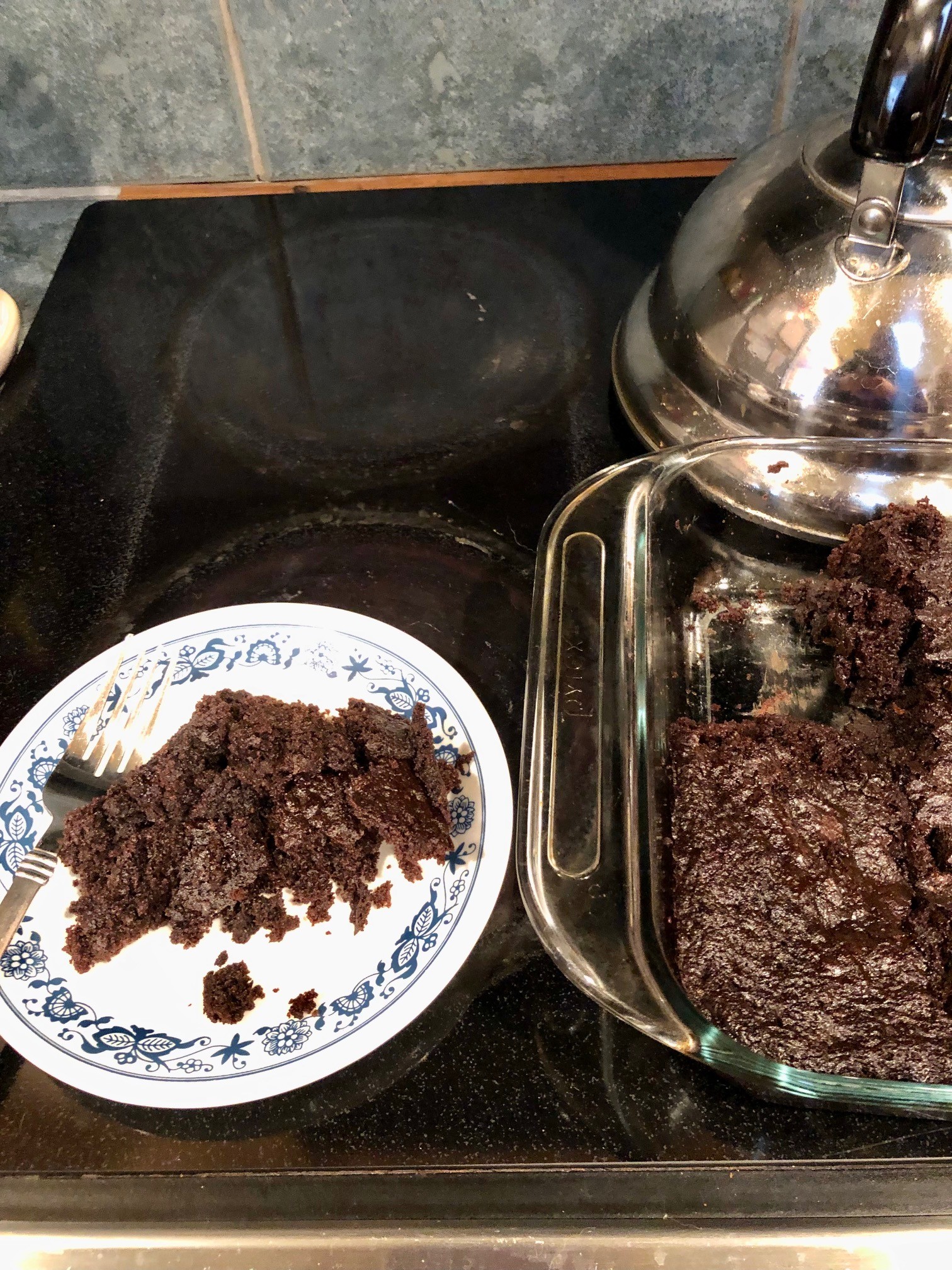
Next up: Trader Joe’s Brownies with Dutch cocoa and chocolate chips
This recipe required two eggs, so we substituted 1/2 cup seltzer water. I really liked the crunchiness of the outer edges, but the center fell apart. The brownies were still delicious, just very crumbly. If I did it this way again, I would put the mix into muffin tins to cook through and add more stability and shape.
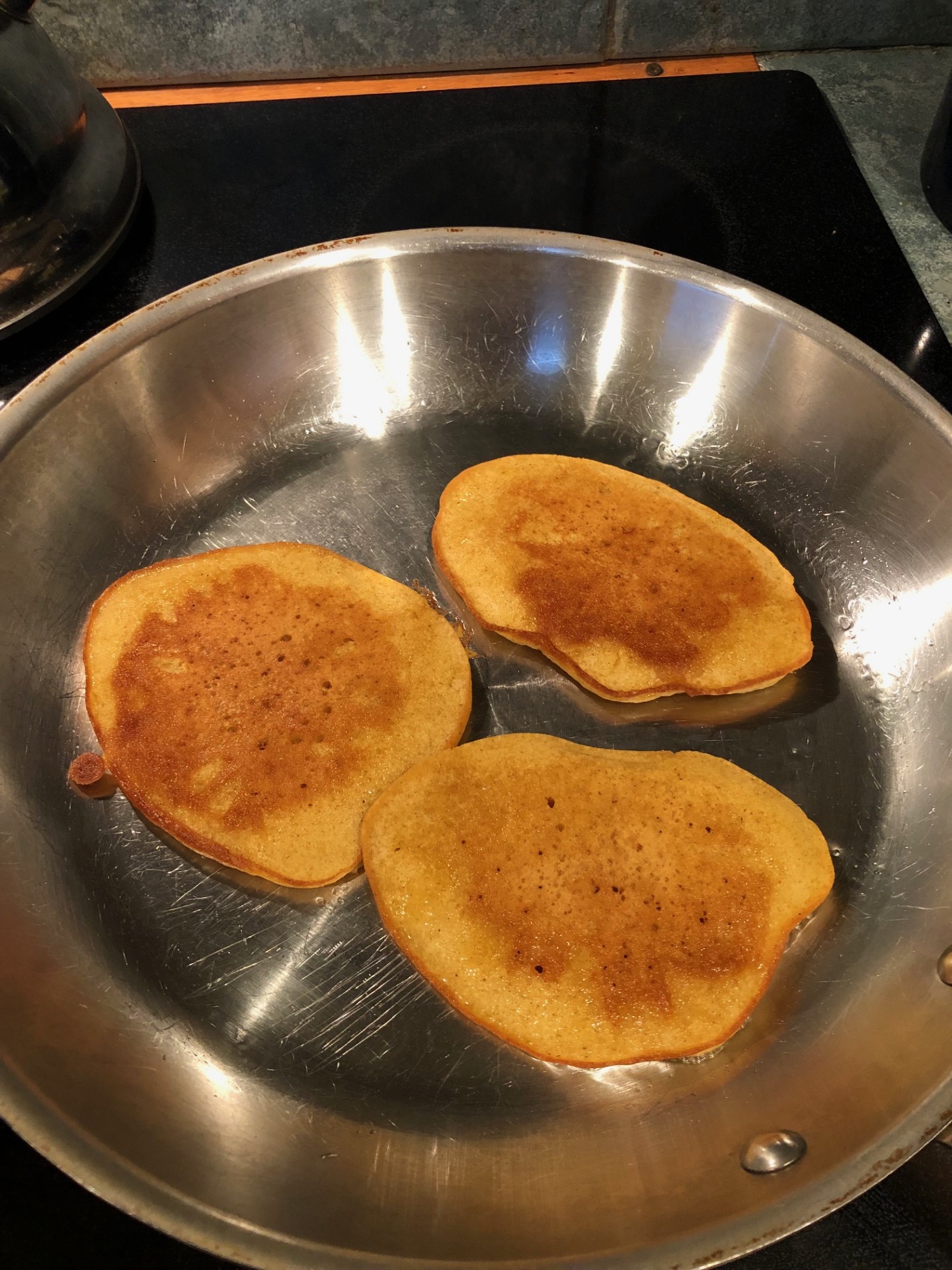
Finally, because it was a snowy icy weekend where we didn’t want to even try to go out, we continued our experiment with pancakes! I used Trader Joe’s Pumpkin Pancake mix which are indeed, “fancy pancakes” normally made with box mix, 2 eggs, 4 tablespoons butter, plus 3/4 cup of milk. The nice thing about this is that I could add more pancake mix and let it rest a little to thicken up the batter for a better consistency. The pancakes came out with nice edges. They were a little extra floppy in the middle, but still delicious.
Final Thoughts:
Seltzer water is a great and affordable substitute for eggs. If you are making something for someone who is vegan or allergic to eggs, seltzer water is a good substitute for baking simple baked goods. (If you use a box mix always double check the ingredients list to make sure powdered eggs aren’t part of the mix. Keep the box available if the person wants to see it, especially if they have food allergies.)
The downside to using seltzer water is the likelihood of having it in the house when you might need it as a substitute because you are out of eggs. It takes pre-planning to have it available. If you use it to make brownies or cake in a pan, you may need to put foil around the edges and let the center bake longer in the middle to keep it from being too wet and crumbly. As a side note, I once watched a chef make a meringue who was allergic to egg whites, so he substituted aquafaba (chickpea (aka Garbanzo bean) liquid from the can to create stiff peaks. The great thing about this substitute is that it gives the viscosity that egg whites would provide as a binder with a little added nutritional boost.
Do you have any great cooking hacks that you would like to share?
Have a great week! Get outside and don’t be afraid to try new things!
You may be concerned about the state of the world these days. It’s understandable. Things are changing with every rotation around the sun. We can’t go back. There’s nothing to go back too. Time marches forward and no one gets to change what happened yesterday. You can try to recreate what was, but it can never be exactly the same. Nostalgia is an unreliable narrative.
The time for individual convalescence and introspection is over.
In my time I’ve survived two recessions, a volcanic eruption, lived in poverty, ate fish from rivers contaminated by silver mines and aluminum plants. I’ve been physically and sexually assaulted, fought with neo-Nazis, and kicked out of my nice Christian church at the age of 16 when I confronted the Sheriff, a fellow parishioner, about his words aired on live tv the night before where he stated that women being raped should “lay back and enjoy it and not fight back.”
I’ve survived an earthquake, a “once-in-a-century” firestorm, a “once-in-a-century” icestorm and a “once-in-a-century” windstorm. Guess what? They lied; these storms are no longer rare. They seem to come once a decade at least, if not more.
My family, friends, and I have been poisoned by the U.S. government in the name of national security. We’re not the only ones. We’re called “Downwinders”, those who were affected by releases of radioactive material in the air and in the failing storage tanks that still leak into the groundwater and rivers. They made “Fat Man” and “Little Boy” here and dropped one of them on the hometown of one whom would eventually become one of my dearest friends, Hiroshima.
We suffer cancers, hypothyroidism and various hormone disruptions at high rates, but maybe it wasn’t the radioactivity; maybe it was the leeching of arsenic and mercury from the slag pits at the silver mines, or the “acceptable levels” of chemical wash from the aluminum plant. Maybe it was the glyphosate in Roundup or other pesticide ingredients in the farmers’ fields. Can you prove it? Can you show which atrocity caused your cancer in the name of civilized progress?
What of generational pain? The depression-era and WWII surviving grandparents, great aunts, and great uncles that talk to you as if it all just ended some months ago. Who teaches you to wash the aluminum foil and fold it neatly for reuse, who still weep for the ones that didn’t come home, and the one who lost his whole platoon and three fingers in the Pacific theatre. The bitterness of the Korean war and the spite of the Vietnam war bleeds down from parents to children and grandchildren. So many causes for alcoholism and violence in a blue-collar town.
I survived all this, but the list of grievances isn’t nearly complete. However, this is not an AA meeting where we feel obligated to compete for who’s had the worst life thus far. Your grievances are valid. You and I have endured because of who we are and sometimes in spite of who we are.
I want you to take stock of the many things that you have survived in your life and then reflect on all the things you still managed to accomplish.
For me, meaningful relationships have been fractured at times. Some people are hard to love. Some people express their love in weird and unfamiliar ways. Sometimes we struggle to accept it for fear of betrayal or abandonment…again. I made it out of my hometown that I hated more than I loved. I love where I live now, and the flaws are more like beauty marks in my eyes. Cities live and die by the people who inhabit them. We are the breath and cells when a city is viewed as a living organism.
I still believe in Martin Luther King Jr.’s “I have a dream” speech, though it might take longer and likely not be in any way we might have envisioned it for the future.
I grieve for the losses other people seem to forget or don’t talk about anymore; missing people who were never found, natural beauty destroyed, buildings and places of refuge that no longer exist like a favorite store or coffee shop.
Often times we, humans, are framed as separate from nature, but we are a part of it! We are fragile creatures with the ability to shape the land, the seas, and the communities around us be they made of humans, plants, animals or invertebrates. We shape the world through both our peace and violence, creation and destruction. You have so much more power than you realize! Start small in the goals you want to achieve. Get involved with groups and organizations with shared goals and provide what assistance you can within your means. Don’t overdo it in your desire to help. Be strategic.
Last year was a tough, but I’m back now with a renewed effort to focus on my writing and professional endeavors. This page will never be powered by a chatbot! I remain committed to my goal of making this page a community space for those of us who love nature and care about the well-being of ourselves and others.
I’m always open to ideas and suggestions so tell me, what would you like to see more of here? Do you like book reviews? Do you want tips and tricks about nature and saving money? Do you want focused posts about interesting places, people, animals, etc.? Let me know your thoughts down in the comments!
I love scouring the internet for useful and interesting information!
For example: The Avian Flu has currently spiked egg prices in the U.S. (again), if you’re looking for less expensive alternative egg substitutes the University of Maine Cooperative Extension program has you covered!
Product
Equivalent Amount
Price per Serving
Pros
Cons
Eggs
1 egg = 1/4 cup
$0.44
Most reliable for color, flavor, and appearance
Highest cost
Flax Seed
1 Tbsp flax and 3 Tbsp water = 1 egg
$0.06
Doesn’t affect flavor Good source of protein, fiber, and omega-3 fatty acids Shelf-stable prior to mixing up
Flax seeds visible in batter
Applesauce
1/4 cup = 1 egg
$0.25
Doesn’t provide as much leavening as other options
Affects flavor and texture of baked good—best used in quickbreads
Seltzer water
1/4 cup = 1 egg
$0.05
Inexpensive Best texture and flavor of all the substitutes we tried Shelf-stable
It’s the argument that people should have access to the parts needed to fix machinery, computers, appliances, and any other large purchase items. We lose this right to fix our purchased items when manufacturers require specialized tools inaccessible to most people. For example, instead of using a common nut or bolt to do the job they make a specialized widget requiring a specialized tool that is only accessible through them or a contracted vendor. The manufacturer may also attach additional requirements such as requiring someone to be “Authorized” or “Certified” through their training program, which of course, has to be paid for and may require materials fees such as books and/or require a re-certification or annual membership fee. This can also be called “gatekeeping”: limiting access to something in order to make it more valuable. It’s also a practice of what we in the United States call “nickel and diming”: when a business or person tries to get every last bit of change out of your pocket by creating add-on fees. Several notable companies that have a monopoly in their business sector are notorious for either steep or numerous add-on fees.
Why it matters
I come from a family of “fixers.” We always try to fix things before throwing them away or repurpose them. Originally our intent was not to save the planet from excess garbage, but to save money. Nowadays, I do try to fix and repurpose things for both ambitions; to save money and the planet from unnecessary waste. There is no more wasteful practice than planned obsolescence and fast fashion. There’s very little profit in offering parts to repair things, especially when you can just force the customer to buy a new one. When it becomes adopted as an industry standard all you have to do is convince the public that your newer version is much better. Sometimes the product really is better than what was previously offered, but other times, it’s just small tweaks that a customer may or may not notice or even want.
You might notice that I keep calling us “Customers”, but to many businesses they prefer to call us “Consumers” in hopes that we might be hungry like a school of piranhas ready to snap up whatever their offering. Language matters. Many companies want us to be the greedy, capitalistic public that they portray us to be. In a future post, I’ll cover why language matters in advertising and marketing.
When our washing machine broke several years ago the sales guy was giving us his spiel and ended with something to the effect of, “…this should last you five or six years which is fine because people want to change their appliances by then.”
I couldn’t’ stop my face from expressing exactly how I felt about that statement. Had it been said in words would have translated to “The #@$%, you say? How dare you mistake me for a fool?!?!” He panicked and quickly muttered about suddenly needing to do something way “over there” which was the farthest point away from us in the showroom and near a fire exit. I rarely intentionally intimidate people, but sometimes it happens naturally when they try to feed me malarky (aka rubbish.)
The most significant cases currently going through the U.S. legal system is a fight against John Deere tractors and Apple Inc. Farmers, have always been a social class of doers and fixers in our society out of necessity. Growing up rural myself, I’ve always admired the ingenuity of the farmers and machinist around me. I couldn’t believe my eyes when I read about the John Deere case. Sowing and harvest seasons are stressful enough. You can’t expect one certified repairman to cover an entire farming community of say sixty square miles of farmland, for example! That would be insane! Most traditional working American farms are hundreds of acres. You also have to fix the machine wherever it comes to a stop which is likely in the middle of a field. (1 sq mile = 640 acres/ ~ 259 hectares)
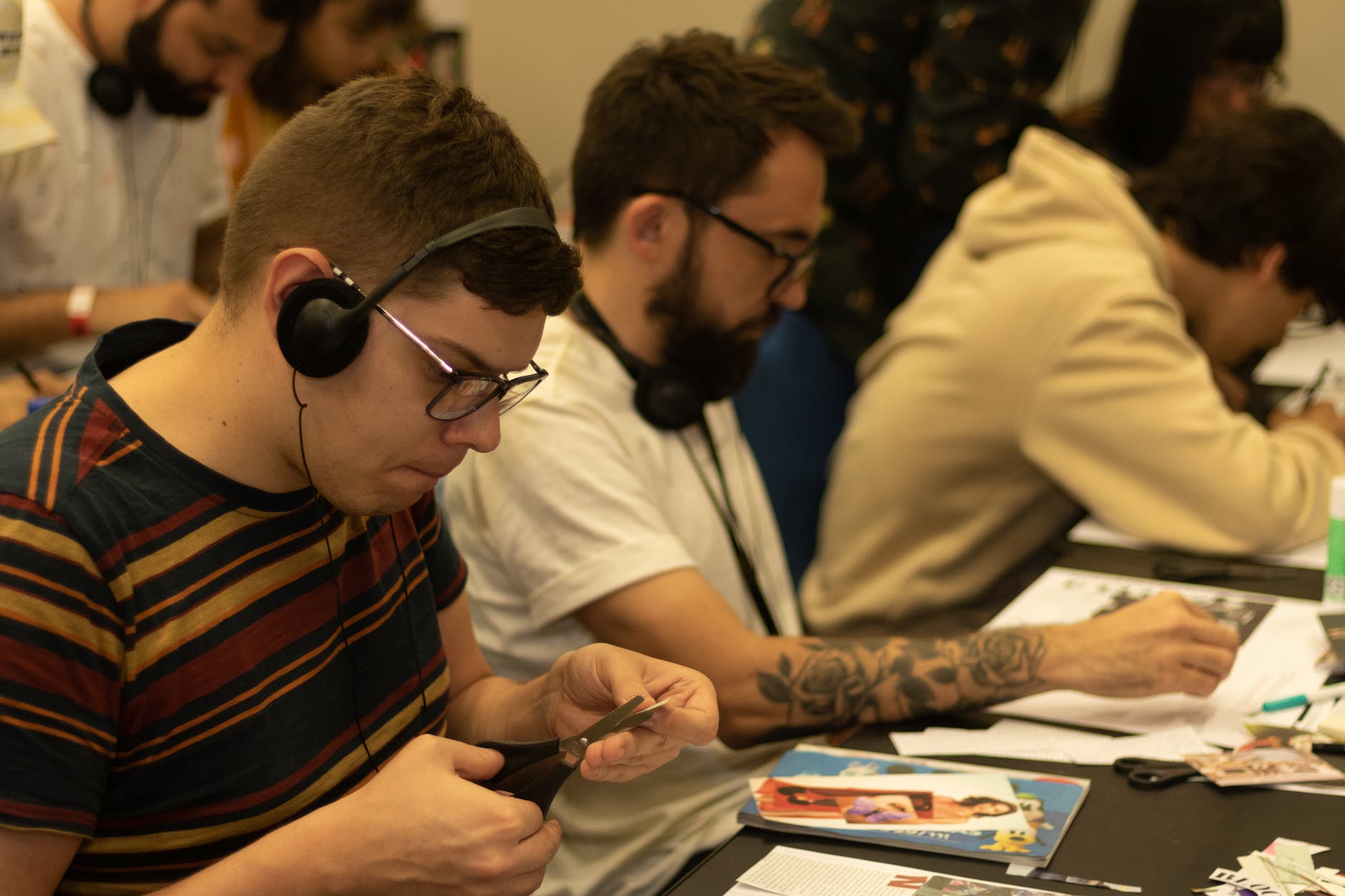
At its most basic definition a Maker Space is a place where people can gather together to make or repair a variety of things from lamps and vacuums to computer hardware. There is also the term “Repair Cafes” which is in the same vein. Both create a sense of community and encourage a curiosity for how things are made. You can find them both privately run or hosted and/or sponsored by different venues. My local library has makerspace classes and sessions that provide the space, the training, and access to a few key expensive equipment items. For example, two library branches in the county library system allow free access to 3D printers. You attend a safety training/how to class, bring your materials and if not part of a specific class session, then sign up for a 2-hour time slot to use the machine on your own.
Maker Spaces range in variety of complexity and offerings. From computer-related to arts and crafts projects. “Craft cafes” are another popular option that allow a meeting space and community atmosphere for those looking to paint, sew, crochet, etc. Some maker spaces hold themed events to keep community participants engaged.
Maker spaces try to be as inclusive as possible to all. Some are free and some require a small fee. I think these opportunities to build things together is important to have in a society where an epidemic of loneliness is taking over. It offers a safe space for people to be part of a community who aren’t interested in attending a church, or a sports or music-related venue.
Why they matter.
Makerspaces matter because having a sense of community is vital to us all! We are social creatures, even those of us who are introverted want to be a part of something bigger, but at our own comfort level. Sometimes it’s nice to sit in a room with other people and just do your own thing. It’s why writers like sitting in cafes. There’s a difference between being alone and being lonely. As much as I love my home and family, sometimes I just need to get away and meet new people, or I want them to get out of the house!
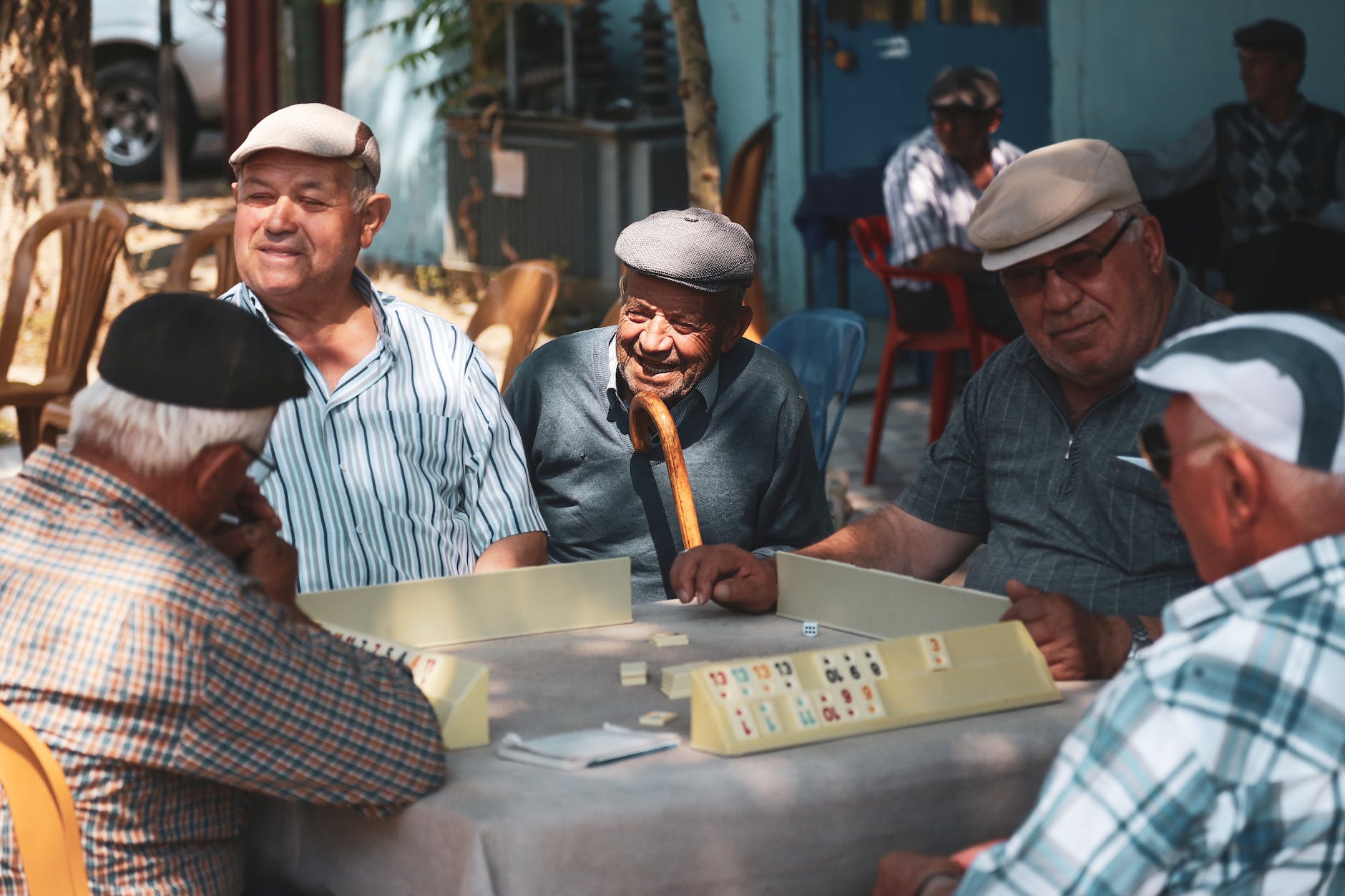
After talking with several friends in their 70s and 80s I’m starting to see a lack of places where older men feel wanted and interested in going. The women go out to connect with friends and trying new things, but the men don’t seem to know what to do with themselves. I’m concerned about how many people at all age levels comment on feeling adrift and disengaged from the rest of society. Makerspaces and the right-to-repair offer opportunities for feeling a genuine sense of accomplishment and a sense of community when done as part of a group. We need more physical spaces that bring us together without demanding we buy something.
Makerspaces can be found all over the world. Here’s a brief introduction and highlights of five Makerspaces including one in Brazil, India, and Senegal. The other two mentioned are in the U.S.
 The Nature-led Life