Book Review: The Well-Tempered City

Hello Nature-Led Friends!

Sometimes life is rough. We just have to do the best we can. Through dark times I have two mantras to help get me through it: “It won’t always be like this.” For better and for worse, change is inevitable. The second thing I remind myself of is “As long as there is another day, it is a chance to make things better.” Sometimes, you just have to put a bad day to rest and start anew the next day. If you are going through tough times right now, believe me when I say that I care about you and that I wish you the best.


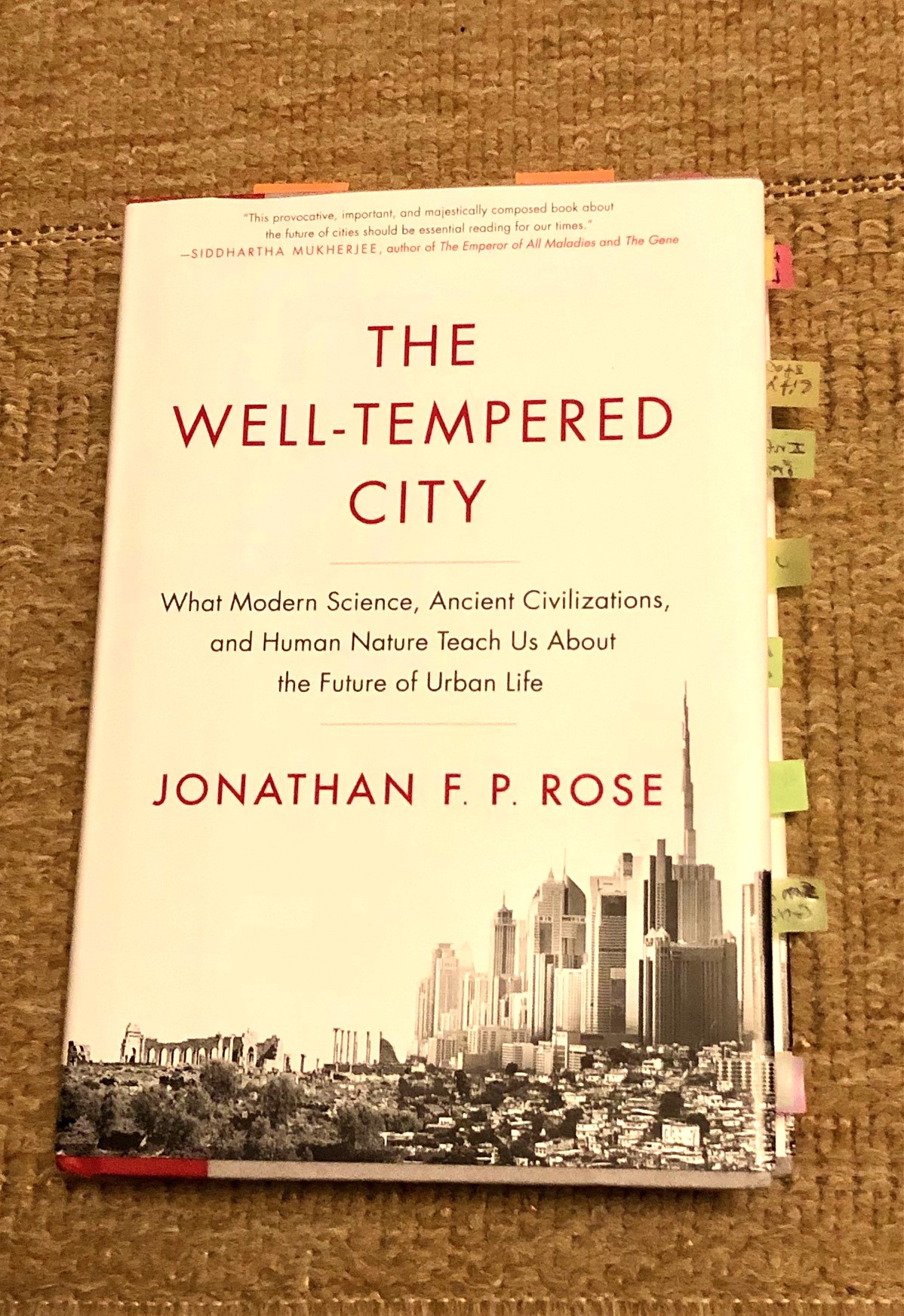
The Well-Tempered City: What Modern Science, Ancient Civilizations, and Human Nature Teach Us About the Future of Urban Life By Jonathan F.P. Rose, Printed 2016

Book Review: The Well-Tempered City: What Modern Science, Ancient Civilizations, and Human Nature Teach Us About the Future of Urban Life by Jonathan F.P. Rose

This book starts with an introduction into what we can learn about ancient civilizations and includes a concept called meh, loosely translated as “an activating energy and the source of rules that guided the spiritual, social and moral basis of [what was] the Ubaid culture” allowing it to become the first society to develop a framework of integrative systems that we now call Urbanism.

I smiled every time I read the word meh, because I have a friend who’s a one-word guy most of the time and that word is “Meh.” Intonation of the word could imply that a proposed idea is good enough that he is willing to do it (i.e. go to a specific restaurant or movie.) He is neither excited nor unexcited about the idea. If you ask him how something was, and he says “Meh.” that usually means it could have been better. If you are fortunate enough to propose an idea that he really likes you are rewarded not with a “Meh.” but with a “Definitely.”

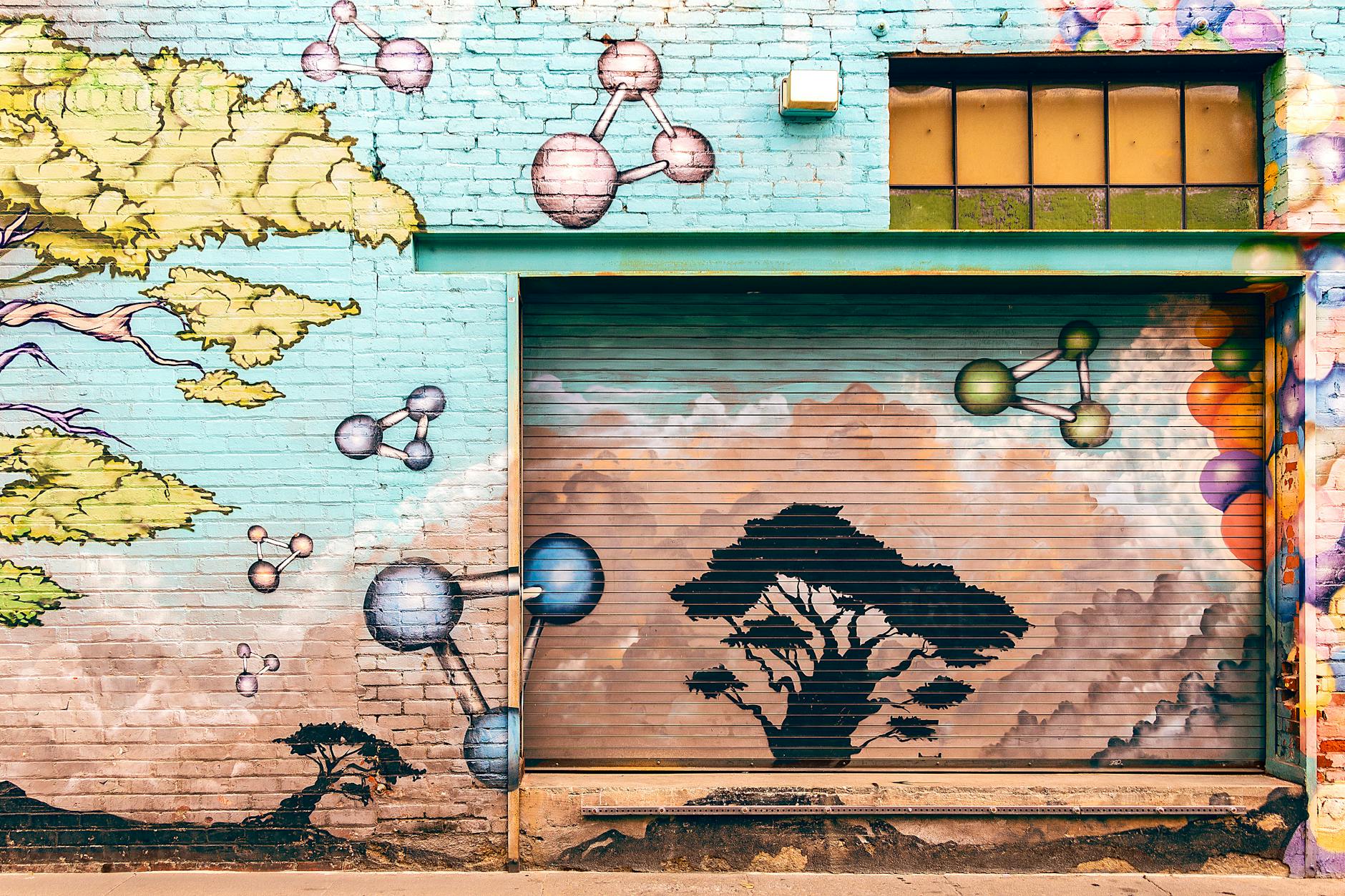
I feel that a lot of urban initiatives these days are met more with the kind of “meh” my friend prefers, a “wait-and-see” energy of approach then an “activating energy” for integrative social rules. Maybe it’s a bit of both. Anyone whose had more than a few rotations around the sun learns to approach things with cautious optimism.


Photo by Pixabay on Pexels.com

The five qualities of a well-tempered city (p.20):

  1. Coherence – an integrated framework that unifies a city governing sections of departments, programs and goals.
  2. Circularity – transforming linear systems into regenerative ones.
  3. Resilience – the ability to navigate forward when stressed.
  4. Community – social networks that strengthen the individual in mind, body, and spirit.
  5. Compassion – creating a healthy balance between individuals and the collective well-being of the community at large.

Folded within these key qualities is how they relate to the nine “C’s” that made early human evolution to civilization possible:

Cognition, cooperation, complexity, culture, calories (food), commerce, control, concentration and connectivity.


Overall, a really good book that offered relative case studies to make each point. I learned so much! It felt like a college course wrapped in a book. I took a lot of notes and tabbed a lot of key sections that pertained to areas I was most interested in as you can tell from the book picture above.

Here are three things I learned about that really interested me:


Photo by Pixabay on Pexels.com

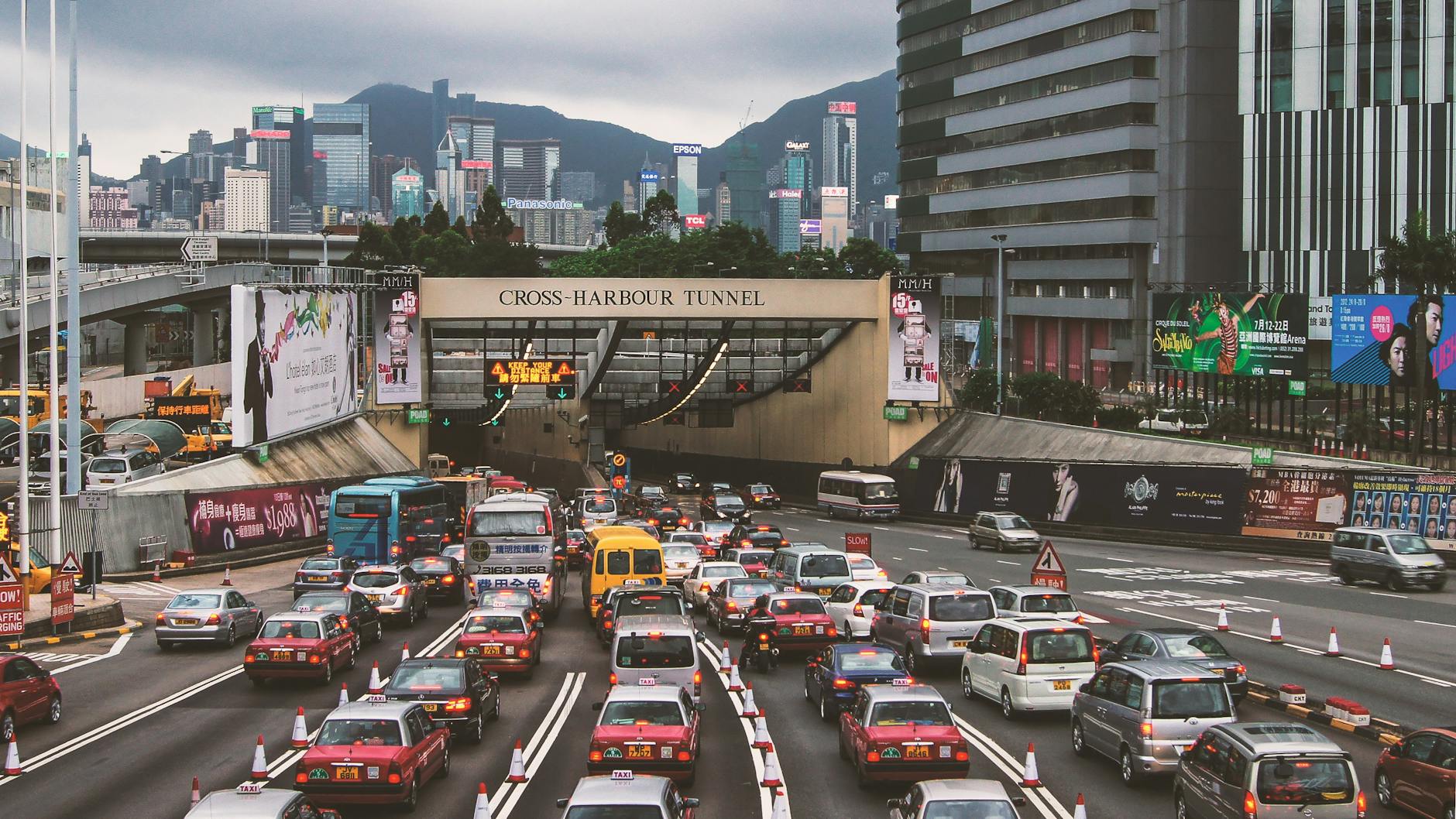
The Traffic Paradox (p.235)

More lanes create less efficiency, not more due to the Braess Paradox and the Nash equilibrium theory.

The basis of this is that drivers have a self-serving interest to take the shortest route possible from point A to B until so many people take that route that it is no longer shorter for anyone.

For a three-minute visual explanation of how this works visit this YouTube link: https://youtu.be/O8Wi1ZC_yL8?si=0HUdAC7tfLoHfcZx


This paradox is an excellent reason for why cities need to provide alternate means of transportation for city infrastructure. I’ve never been the kind of person interested in fancy job titles. It was always important to me to find a tolerable job with a tolerable commute. I spent the first half of my working life commuting to jobs that I could do by walking or taking a bus that rivaled or beat the commute time of a single passenger vehicles. Given the option, a safe walking route is always my preferred method of travel. One need not expend a lot of time or money working exercise and fresh air into their day when it’s imbedded into their daily routine. It also increases the opportunity for social interactions outside of school or work.


Photo by Eva Bronzini on Pexels.com

From Entropy to Emergy (p.238)

Eugene Odum and his brother Howard wrote the first Ecology book in 1953 describing ecosystems as communities of organic and inorganic elements. In this kind of closed circular system, the eventual entropy of one thing leads to the emergy or creation of newly stored information. “While entropy is always wearing down a system, emergy helps build it back up.”


Gardeners know this process well by gathering dead plant matter and wood chips to decompose, thereby releasing there nutrients as “newly stored information” in the form of compost to spread around young or existing plants.

Humans have learned to do this with paper products such as cardboard, but we need to do better at incentivizing more circulatory systems that benefit both humans and nature. My personal opinion is that one our biggest failings as modern societies is allowing plastics to be extracted and used so excessively for a lot of things that ultimately end up being cheap pieces of crap that can’t be recycled. The oil and plastics industries have powerful lobbying groups that allow our shared future resources to be exploited for meaningless crap. As a consumer, you speak with your purchasing power. In a market economy founded on supply and demand use your money as your voice wisely. If you don’t like something, make it unprofitable to support. It’s clear we can’t wait for governments to regulate appropriate solutions.


Photo by John Guccione http://www.advergroup.com on Pexels.com

Easterlin Paradox (p.345)

Richard Easterlin a USC Professor wrote “The Economics of Happiness” in 1974 which found that more money increased happiness in those previously in low income or poverty situations, but that more money does not increase happiness for the affluent.


I’ve witnessed this firsthand having grown up low income and later working in an exclusive member-only club where members were required to make no less than $80,000/year (in 1998) and be sponsored by two existing members of the club. I started the job in 1998 at the height of the dotcom bubble in Seattle, WA where tech was making new millionaires seemingly overnight. The “new money” were often young tech entrepreneurs launching their first IPOs and expecting everyone to know who they were and have people cater to their every whim. They were loud, obnoxious and often travel entourages. The “old money” were people who were more often born into wealth. They were polite and reserved. Time was a luxury. If they couldn’t be bothered to wait for your assistance they would come back later or have someone else take care of it on their behalf. They had no need to yell.

The club had hotel rooms, and I worked the front desk. The rooms often sold-out months in advance especially during Huskie football season. I was handing one of our long-time members his morning paper when a young techie came up expecting my full and immediate attention. I asked the long-time member if he needed anything else. The young guy huffed impatiently. I gave him a sharp look and said, “You will wait your turn.” The older guy chuckled, tucked his paper under his arm and told me to have a nice day as he walked away. The young guy didn’t even last a year at the club. The dotcom bubble burst not long after. Nearly every new member that year was purged from the member roles before New Year’s. The young guy had no idea he’d rudely interrupted one of the richest men in the world and one of our longest-standing members.

I’ve had the opportunity to ask multiple people with famous names; “What bothers you most about being rich and famous?” They’ve all said in some variation that it’s hard to trust people. They said that everyone wants or expects something from you all the time. You can go anywhere in the world, but you can’t trust that anyone genuinely cares about you as a person. It seems reasonable to assume then that what you gain in monetary significance can cost you in a kind of spiritual deficit (i.e. honest connections with other people.) Some people aren’t bothered by the tradeoff, but it would bother me.

Final Thoughts:

I definitely recommend this book! There’s really so much to it that what I’ve provided here is only a small sampling. If you’ve read this book, I would love to hear your thoughts on it!


Thank you for visiting!

Focus on What You DO Want

Photo by Raine Nectar on Pexels.com

When I was fourteen, I started volunteering at the Spokane Humane Society animal shelter in the 1980s. It took me two early morning buses and a one mile walk from the last bus stop to get there. On my first day I was to start helping out in the puppy room as all new volunteers did. At one point I was asked to get a bucket and a mop from the second door down the hall on the left. Somehow in that short walk I forgot which door to go into though, the first or the second? I went in the first door.

It was the incinerator room. In the center of the room was a pile of dogs and cats. They looked like they were sleeping. I wanted to run out of the building crying and never look back, but my feet wouldn’t let me. When my feet finally did move, they took me down the hall to the next door to grab the bucket and the mop. My only thought being, “If I run away now, I can’t help the animals that are still living.”

My family struggled with a lot of things. My city struggled with a lot of things and still does to this day. Back then, if you didn’t like it, well then, “Suck it up, Buttercup.” or “Welcome to Spokane, Sugarplum.” We felt few people were as tough as us, except maybe someone from Detroit or DC. I’d developed a high tolerance for what I was willing to put up with in life, but I wasn’t willing to accept the death of so many animals. “What are you going to do about it, little girl?” The antagonistic red-neck voice in my head sneered. “I’m going to lower the body count.” I thought matter-of-factly.

I went back to the puppy room determined to learn how to make a difference. When you grow up in a tough environment you learn to think on your feet real fast. If you can’t be stronger, be faster, and if you can’t be faster, be smarter! I quickly learned the ins and outs of the shelter’s operations. During that whole summer I worked 7 days a week from 7am to 7pm same as the shelter’s open hours. I was dependable and consistent. No one looked at me and saw a fourteen-year-old girl or a half-slack volunteer. I earned an equal amount of respect and responsibility as the people that work there. I just didn’t get paid for it.

Photo by Tima Miroshnichenko on Pexels.com

I’ve always been pretty good at reading people. It’s a survival skill, but you can only learn so much by looking at someone. I started asking the people what they were looking for in a dog or cat. Do they work a lot? Do they have a house or live in an apartment? The more questions I asked, the more I was able to determine which animals at the shelter would fit the person’s personality and living conditions. I spent a lot of time with these animals. I knew their personalities, their strengths, and their weaknesses. I taught dogs to be potty-trained. I trimmed excess hair away from their eyes so they could use their “puppy eyes” to their full advantage. I taught them how to “shake hands”, “bow” or put their paw over their nose when I asked, “Who farted?” Was it a little gimmicky? Yeah, but everybody wanted a dog like Benji or Lassie at the time, not a Cujo.

For the cats, I kept them clean and immediately quarantined any with the slightest hint of upper respiratory infection. The cats were housed in one room free to roam and the infection is highly contagious. If the room full of cats got the infection, the whole room was put down. We had neither the money nor the manpower to treat them, despite it being as treatable as the common cold in humans.

I drafted out “Adopter profiles” on a yellow legal pad and gave it to the Shelter Director. I gave her additional notes on what I’d learned about what people wanted and how to help the animals meet those needs so that no one left the shelter without an animal. Summer was quickly coming to an end and so was my volunteer time. I couldn’t do both school and volunteer work. As a student with dyslexia who never received support or special allowances, I struggled with schoolwork, low grades, and low self-esteem. At the shelter, I never felt dumb, and I knew what I was doing mattered. The Shelter Director was genuinely grateful for my contribution, and I remember her and the other people I worked with fondly. Of all the animals I’d personally helped get adopted out only one was returned and I still found a home for her before her time ran out. They also hadn’t had to euthanize the entire cat room since my intervention. I’d dramatically reduced the body count. I wish I could have saved them all, but — “I didn’t do nothing.”  I did something!

Years later I’d be living here in Western Washington, married, owning a home, and taking advantage of a free dog training class with my newly adopted dog at the Bellevue Humane Society. They had us fill out a questionnaire about our living situation and lifestyle and it made me think of those “Adopter profiles” I’d made so long ago.

During the dog training class the trainer talked about positive reinforcement. No more shoving a dog’s nose in poop to let them know they’d done wrong. I’d never subscribed to abusive training tactics, but I didn’t know there was a name for the opposite of it. You know how sometimes you feel a certain way or have an idea about something, but you don’t have a name for it? It’s really satisfying when you do learn the feeling or the concept has a name. Positive reinforcement, is something I believe in.


The trainer said something really meaningful that has stayed with me:

Focus on the behaviors you want; not the ones you don’t want.

When you think about it, it’s not just about dog training, but parenting, negotiating with difficult people and our attempts to realize own goals.

I’ve internalized the concept even farther:

Focus on what you want; not on what you don’t want.


How can you change what’s bothering you if you don’t know what you want in life? How can you realize a goal if you don’t know what the goal? I think of goal setting as a mountain path. If you’re working through a complex problem, you often need to start with smaller steps to reach the bigger ones. Sometimes you’ll have to step off the path to gather resources, mentors and/or acolytes but always keep the path and the goal within your sight.

We’ve come a long way when it comes to animal welfare in the United States. We’ve strengthened animal abuse laws, we’ve made it culturally unacceptable to abuse or neglect animals, and we’ve reduced the number of euthanasia in animal shelters. In 2019, the U.S. pet care industry was worth $95.7 Billion dollars! * I don’t think that’s an entirely good thing by itself, but it does demonstrate a cultural shift in our behaviors and beliefs about animal care. Other countries are also making progress in both human and animal welfare, it certainly isn’t limited to just one country!

When it comes to improving the future of humanity and the planet itself, we can’t wait decades to shape holistic climate change policies. We need to find our own paths up the mountain. What are we as individuals and societies willing to consider acceptable in the future? I believe we’re at the forefront of a new zeitgeist of environmental consciousness. For generations the science fiction genre of apocalypse scenarios  has been popular and has tried to warn us of what “could be.” None of us actually want to live through an apocalypse though! These stories remind us that humanity has always struggled and that we as individuals have always had to fight for what we believe in one way or the other. That’s what makes a hero. Stop waiting for someone else to be the hero. It’s you.

What should the narrative about the future of earth and humanity look like?

If you don’t want to live through an apocalypse, then what kind of future do you want?

How do we focus on the behaviors we want to see in ourselves and others? What kind of civilizations do we want to live in?

Please think about these questions. I would love to see some answers in the comments, but I understand if you’re the kind of person that prefer to do “quiet work.” I prefer to do quiet work, but I’m frustrated by what I perceive to be a lack of mentors. We see stories in the media everyday about what’s wrong and “worst case scenarios”, but where are the stories about how to change these things? I’m concerned that our collective fears and feelings of being overwhelmed could turn into acceptance and apathy of a self-fulfilling prophecy.

I refuse to accept the deaths of millions of lives on events that haven’t happened yet.

Photo by Nandhu Kumar on Pexels.com

Footnote: * 55 Pet Industry Statistics: 2020/2021 Industry Growth, Market Data & Forecasts | CompareCamp.com

Art and Manipulations

What is art? “Art is in the eye of the beholder.” Says the old cliché.

Original work: Félix González-Torres Depiction: Ken Lund – https://www.flickr.com/photos/kenlund/42514872465/

Picture of Félix González-Torres‘ participatory sculptural installation “Untitled” (Portrait of Ross in L.A.) (1991) at the Art Institute of Chicago in 2018. A pile of candies wrapped in many-colored cellophane sits against the wall in the corner of a gallery.

In 1991, Félix González-Torres, a minimalist artist, piled 175lbs (12.5 stones) of candy into a corner of the Art Institute of Chicago with the title, Untitled ( Portrait of Ross in LA).One hundred and seventy pounds was Ross Laycock’s healthy weight before he was stricken with HIV and died of AIDS the same year as the exhibition. Ross was Felix’s boyfriend. Felix wanted to convey his loss and start a conversation about HIV/AIDS when no one wanted to talk about it. Museum goers were encouraged to take a piece of candy. In this respect, they were taking a piece of Ross, consuming art made in his memory. Felix Gonalez-Torres left it up to museums to decide if they wanted to replenish the candy or not. This decision is where the art installation speaks to me the most.

The pile is not refilled

The pile of candy diminishes until there is nothing left. Ross, like some of my own friends and family having wasted away until their disease consumed them.

Re-filling the pile

The body is gone, but their memory remains. By making his art installation candy and sharing it with other he shares the memory of Ross with us. Ross Laycock remains in memory, in pictures, and in written word.

Félix González-Torres passed away of AIDS in 1996. His art Installation Untitled (Lover Boys) ideally weighed 355lbs (25 stones) to represent the combined weight of their bodies when they were both healthy.

Untitled (Placebo) weighs 1,000-1,200 (454 – 544 kg) was an attempt to visualize the massive amount of pills the patient had taken in their life.

(Side Note: I made a conscious choice to use the artist’s first name when mentioning him after the first introduction, because his art was deeply personal and centered on self.)

Original work: Maurizio Cattelan Depiction: Sarah Cascone – https://news.artnet.com/market/maurizio-cattelan-banana-art-basel-miami-beach-1722516

Let’s put this in juxtaposition to Maurizio Cattelan, an absurdist artist, and his famous/infamous installation titled, Comedian. You’re more likely to be familiar with this one as “the banana that was duct taped to a wall” or Art Basal Banana. The banana was sold three times and eaten four times. Two people shelled out $120,0000 for it, another for $150,000 and the fourth ripped it off the wall and ate it, because he was a performance artist and that was his “performance art” of the day. (No, He didn’t discuss it with Maurizio Cattelan beforehand and I wish someone would bring these two together because I can’t decide if it would be an interesting conversation or some completely boring grandstanding on both their parts.)

Art and the rules regarding art are a funny thing. So, what did the people get that paid for their banana art installations? They get to replicate in their own homes, in front of people, and take pictures or videos of it over and over again (at the cost of fresh bananas) because they purchased the legal right to display it as an authentic version of the original.


Image Credit: Manas Bhatia

What happens when an architect asks an artificial intelligence program to design nature-inspired buildings? Lots of curves and monolithic housing complexes that look like giant trees. You also get buildings presented in that ultra-white white that modern architects love so much, but with a draping of green, at least in the few iterations that I saw. Manas Bhatia is an architect in New Delhi, India who wanted to see if the AI imaging tool Midjourney could help him build cities of the future. While the concept art is computer-generated it still took Bhatia hours to find the right words to create text-based writing prompts that generated the kinds of images he wanted. His prompts included words like, bioluminescent material, symbiotic and futuristic towers.

Image Credit: Manas Bhatia

Does this make Manas Bhatia the artist? Or the AI program?

This is a big debate in the art world now and rightly so in my opinion.

Each time we advance the field of technology new rules of social order are formed. We talk about “business ecosystems” and have to clarify buildings as “the built environment” as opposed to things like the “cloud construction” of data networks. A person can no longer define themselves as an “Engineer” without being asked: “What kind of engineer?”

Physical? Electrical? Computer? Or one of the more than dozens of other kinds of engineers?

I predict that we will now need new and more defined roles as artists. Visual Artists (as they were formally known) and not the only ones who work is being invaded by AI. I am first and foremost a writer and I’ve already seen where the future of ‘predictive text” is going. I’ve already seen advertisements for programs that can “write your novel for you.” How do I feel about this as an artist? In a word, hostile. When I’m writing my emails and predictive text makes their suggestions about what word I’m going to use next I will intentionally pick a different word to use as “screw you!”

Even better is when the email software tells me that my word choices are “unprofessional” because its usually when I’m writing family or friend. If I started writing in a professional manner towards my friends, they would prompt write back asking “What’s wrong?” “Are you okay?’ “Are you mad at me?”

Do you find this auto-text helpful? Yes, or No? I always say “No” and when it prompts the question, “Why is the auto-text not helpful?” I write in the comment box, “Because I’m the fucking writer!”

I know full well my little act of rebellion amounts to nothing. It would take an army of people to answer no and provide the same comment before it ever escalated to the “value” of being seen by human eyes at Microsoft or Google. I use both. I have no loyalty when it comes to corporations. I suppose I could borrow some script kitties to make a bunch of bogus email accounts who all type random emails, click on “No” and comment fill “Because I’m the fucking writer!” but I’ve got bigger endeavors to attend too.

It’s all rather insane, but it’s only a symptom of a larger problem. Welcome to the information war! You’ve already been enlisted. I hope you didn’t think the war/mobilization/whatever you want to call it, in Ukraine was the only war going on now.

Pay attention to how people say things and not just what they say. What do you learn about the person and the message through their word choices?

Listen to politician, advertisements, and everyone else around you. Is what they say and what they mean the same thing? Are they being genuine?

When my son was four, I had him in a bike camp to learn how to ride. One day I arrived to pick him up wearing a stained and wrinkled old shirt because I’d been cleaning all day. When I got there one of the camp counselors quickly came over to me.

“First of all, I like your shirt.” She chirped.

“No you don’t.” I said tersely.

“Yeah, so anyways, your son had a rough day.” She continues.

He approached like he was coming off a battlefield and his side lost; all dusty and bloody, a tear in one pant knee, and his jaw set in a resigned grimace. I stopped listening to the woman. I’m sure the gist was to the effect of “Please don’t get mad and sue us.”

Walking back to the car, I acknowledged to my son that he’d had a rough day and told him I was proud of him. Maybe that wasn’t the day he’d learned to ride a bike, but he’d put in the work and tried.

When it comes to definitions there’s a difference between Nature-led and Nature-inspired. Nature-led means that we learn the rules of nature and work within nature’s framework of systems and organizations. Nature-inspired means that we look to nature for ideas and then go about making our own framework of systems and organizations. One of these could be the key to the survival of the human race. The other could be the key to our eventual annihilation. Am I being too dramatic to say such a thing? Well, we didn’t create the world, but some people are arrogant enough to pretend like we did! Beavers build a dam because it’s their home and they need to set up a successful environment for themselves. They don’t consider their impact on the greater environment at large. Humans are aware of their impact and often continue anyways, even when it negatively impacts the greater environment at large. They are just as disingenuous about saving the planet as the camp counselor pretending to like my nasty old shirt! There is no one country, politician, or corporation that can save us from our own arrogance. We, the collective people who make up our societies have to define our cultures by setting the rules.

We choose through our cultural acceptance or rejection whether a pile of candy in the corner of a museum is art, a banana duct taped to a wall, or an architect’s concept image created through AI software by using words. We also have choose whether we’re willing to buy the messaging from politicians, advertisers, businesses and people around us when they say they are making a commitment to the health and well-being of others and the places we inhabit.

I’m not against technology. I use it and consider it an amazing tool and resource, but it’s different than a hammer or a knife. I don’t have to worry about a hammer assuming implied consent to do or say things on my behalf.

Words matter, art matters, and our understanding of their interpretations matters. We are the rule makers and rule breakers. We decide what is culturally relevant and acceptable. There is a cabal of people who would love to make a job out of doing your thinking for you.

Links:

 Why did Félix González-Torres put free candy in a museum? – Public Delivery

Félix González-Torres – Wikipedia

The Art Basel Banana, Explained | Vogue

An architect asked AI to design cities of the future. This is what it proposed – CNN Style

Who should get the credit for AI art? – CNN Style


Current Blog Post Schedule: One a month

I need to focus on my books-in-progress: The Nature-led Life, The Nature-Led Society, and my collection of five dark medieval tales (Title TBD).


Reminder: “A Tree” Photo submission is due September 30th. Photos will be featured in a post On October 1st. I currently have eight submissions, but more are always welcome! It could always be split into a Part 1 and Part 2 if we get a lot of submissions. Please provide as a .JPEG or .PNG file, General location (State/Province & Country), your name/the Artist’s name, and a link to your website if you have one. Email to: natureledlife@gmail.com Subject: September Submission

The Prize: My love and gratitude for participating.

Final Note:

All Image rights and credits belong to their respective owners. Used here with the understanding of Fair Use w/ Credit Attribution for the purpose of a single post discussion. This site is non-commercial and does not sell or distribute anything. Images will be immediately removed upon request by their respective owners.