Someone Else’s Reality: Nature-led Thoughts on AI

Hello Nature-led Friends!

Human to human, I sincerely hope you are doing well wherever you are! Let’s be feral for a moment because I’ve got some crunchy thoughts.

I will not support Artificial Intelligence (AI) and I will not defend its use. It was corrupted at the moment of its inception to become a profit-driven machine. Spare me your stories of what AI could do for humanity when what it has done to society and the environment cannot be forgiven These insufferable arrogant rich technology bros and their companies built a learning machine and taught it how to steal from other people so they could throw up their hands and declare themselves free of any wrongdoing. The gun killed your child; not the person that aimed and pointed it, not the company that designed it for maximum velocity and stopping force upon the human body. The tool, offering you thoughts and prayers.

Napster was shut down in 2001 for its file sharing database due to copyright infringement. It was back to burning CDs that we owned to make mixed tapes/CDs for friends, family and love interests. Then somewhere around 2010 Google has the idea to copy every book ever written to put into a big searchable database, aka a for-profit library. People could search it for free and download the text for a fee paid only to them for their “service.” They initially hammered out the details and profitability of it by starting with “orphan works” and public domain; texts that had no known copyright holders. Concerns among writers and publishers started to be murmured.

Neither you nor I have the time to go into the accounting, line item by line item, of how capitalism came to dominate the internet and conquer American society. It’s not even a new story! Special interest groups have been puppeteering from behind the scenes of governance for as long as human civilization has existed. What’s different now is that technology gave us digital wings and with these wings a group of “Just trust me, Bro.” asshats with money and influence want to fly us all too close to the proverbial sun.

As an individual you might support causes you believe in by donating, volunteering, writing letters, buying goods and services from people and companies you respect and sharing your experience with others. All of these efforts have been “built to scale”, maximized, and incentivized by companies and organizations to get what they want. All of it for money, all of it for the greedy few who want to be kings of make-believe people and make-believe lands at the cost of real people and real land.

I had to put up with guys like this in high school. The ones that showed up to art class wearing “business casual.” The one’s that would ask me a question “as a woman” and then proceed to tell me what my opinion should be. Every time I scoffed, they took it as a challenge. I was categorized in their shrimp-sized brains as a wild creature to be tamed, or a land to be conquered. To them, no didn’t mean no, it meant try harder or find another way. Tenacity can be a good thing when you’re trying to improve yourself, it’s tyrannical when you apply it to others.

Artificial Intelligence, as in Large Language Models (LLMs), could have been something magical, but it’s corrupted by its human creators. It drinks from a hose of toxic filth while polluting and depriving both real and figurative bodies of water, and of knowledge for all other users. I don’t see how I can willingly use any LLM to put good things out into the world when it’s designed to extract resources from nature (even more) for the fleecing of everyone else (yet again) so that a handful of multibillionaires can bolster their private empires.

Generative AI is what you commonly hear referred to as “AI Slop” because it was trained on the works of real people; artists, creators, and working professionals in a variety of fields without their permission, recognition or compensation. Actual humans who need jobs and money to meet their basic needs of survival for themselves and their families. There are few things I despise more than insincerity. I can’t think of anything more insincere or dishonest than being expected to pay for an AI-written story about what it means to be human so that some feckless crash-test dummy of a genius can make money. No one will benefit more from AI then scammers and corporations pretending they aren’t a trenchcoat full of scammers.


Opt-Out! Support real artists & crafters, real local businesses and members of your online and offline community. If we aren’t the stakeholders, why are we supporting people who don’t care about us or the places we live and love? If corporations are ungovernable, then we should be too!

I’d like to know your thoughts!

What kind of reality do you want for the future?
Photo by ShonEjai on Pexels.com

Relevant Links:

A&M Records, Inc. v. Napster, Inc., 239 F.3d 1004 (9th Cir. 2001) – Copyright infringement is bad.

Authors Guild v Google ( 2015 Decision)
https://law.justia.com/cases/federal/appellate-courts/ca2/13-4829/13-4829-2015-10-16.html – Copyright infringement is cool for Tech companies if they share some of that sweet, sweet revenue.

Citizens United v FEC: https://supreme.justia.com/cases/federal/us/558/310/ – Corporations are people now; we’re not concerned about the lack of morality when they donate millions into presidential campaigns.

US Telecom Assoc, v FCC: https://law.justia.com/cases/federal/appellate-courts/cadc/15-1063/15-1063-2016-06-14.html – The internet is not a utility with government oversight. Telecomm companies can charge what they want.
A Short Story: The Evil Rooster

Hello, Nature-Led Friends!

I wrote this short story awhile back and submitted to the King County Library: Terrifying Tales Contest https://kcls.org/terrifyingtales/

While I didn’t win, I’m grateful for the opportunity to dust something off and give it a go. It’s hard for me to submit my stories. They’re never quite perfect in the mind of the writer. I happen to know the woman that won this year’s contest. I haven’t seen her since before the pandemic, but it makes me very happy to know she’s out their writing her own stories! You can read her story and all the other winners and honorable mentions for free at the link above.


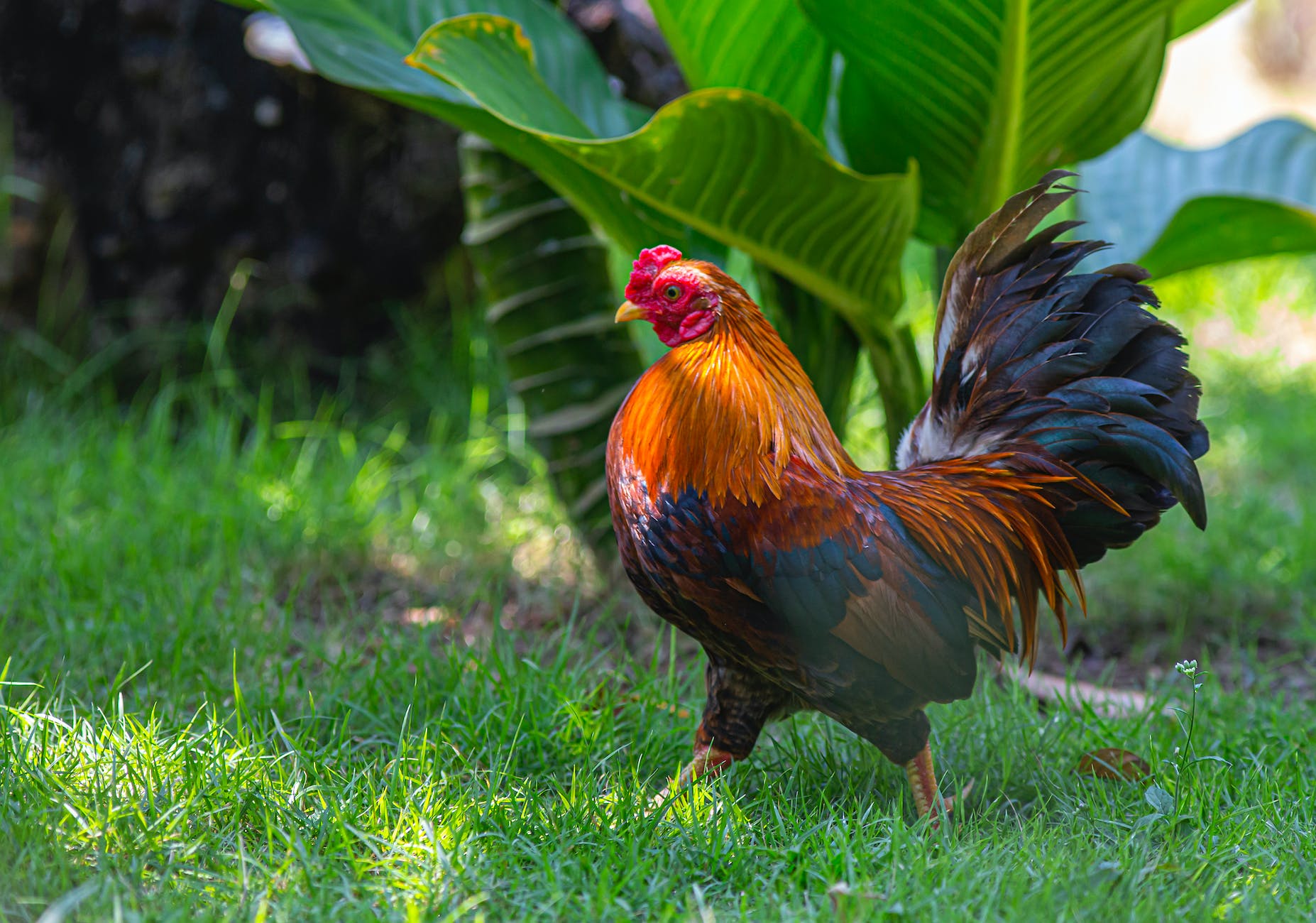
Photo by Erik Karits on Pexels.com

The Evil Rooster

By Melanie Reynolds

Somewhere in Colombia…

A man walked into the mountain village cantina very content with himself. He sat down and ordered a drink while watching everyone else around him. Raúl was not a good person. When he saw the happy man at the end of the bar, he believed there must be something worth stealing from him. Raúl offered the happy stranger another drink and then another. The happy stranger was grateful but reluctant.

“If I have another drink, I will not be able to stand!” the stranger said laughing.

“Don’t worry about it.” Raúl said. “Tell me your secret of why you’re so happy and I’ll pay for your bed here tonight.”

“Oh, you are too kind, my friend!” the happy stranger said. “I have no secrets, only the joy of telling stories, but you know, on the path to this village I did see the most beautiful rooster!”

“It was proud and handsome, as a rooster should be. You know, this area is famous for its chicken and eggs.” The man continued. “Even though the sun was fading, the feathers shimmered with an iridescent glow of red, green, and gold. Beautiful! Just beautiful!”

“Wow!” Raúl exclaimed. “Such a healthy bird would make a nice meal or fetch a good price. What did you do with the rooster?” Raúl asked.

“I didn’t do anything with it.” The stranger said raising his hands up in the air. “I simply admired it on the side of the path then came here.”

“It’s still out there?” Raúl asked. “I must go at once and see this beautiful bird for myself!”

Raúl paid for the stranger’s room upstairs and set off to find the rooster.

The moon was bright and Raúl could clearly see the path along the steep ravine by it’s light. On the other side of the path was a thick forest. Raúl went only a little further when the rooster stepped out from behind a giant fern.

It pecked at the pebbles in the path occasionally eyeing Raúl. Raúl slowed down and crouched a bit with a potato sack in one hand.

“Oh my, you are a beautiful bird, aren’t you?” Raúl said to the rooster.

The rooster clucked a bit as if in agreement. The rooster was just as the happy stranger had said with brilliant iridescent feathers that glowed red, green, and gold.

Raúl held the potato sack open with both hands now, but because he was so close, the rooster started to strut away. Raúl decide to leap for the bird to make up the distance, but the rooster evaded him with a short flight farther up the path then cocked its head and eyed Raúl again, this time with a disapproving gleam in its eye that made Raúl angry.

“You think you’re so smart?” Raúl asked the rooster his eyes becoming dangerously greedy. He repositioned the bag and continued to close the distance between them.

“I wouldn’t do that if I were you.” the Rooster said.

Raúl’s straightened up and his eyes got bigger. “Wow!” he said. “A talking rooster! This will surely be worth more than anything I could ever dream of!”

Raúl pounced at the rooster again, but this time it took off into the thick underbrush of the forest. Raúl chased after it, following flashes of iridescent feathers, always shimmering just out of his reach.

Raúl took one last big leap in an effort to catch the rooster and found himself with no ground beneath him. He fell to the rocks at the bottom of the ravine.

The next morning the rooster crowed his morning song. Some men from the village came to collect Raúl’s body from the rocks that were stained with centuries of blood. They carted the body back to the village and put it in a meat grinder to make chicken feed for the plump beautiful hens.

The happy stranger had a lovely breakfast of arepas with eggs and went on his way.


Postscript:

This is an original story inspired by an old Colombian folklore about an “evil chicken”. If the evil chicken is met on a path or road and does a shrill clucking that sounds both chicken and human, then the person should be warned of misfortune or death if they don’t say a prayer to Saint Michael the Archangel and/or turn back from the path. I would like to acknowledge gratitude to my friend Patricia Lezama for sharing her culture with me through our shared love of stories and assistance in translation during research as needed. Thank you, my friend! May I never lead you down a path of ruin.


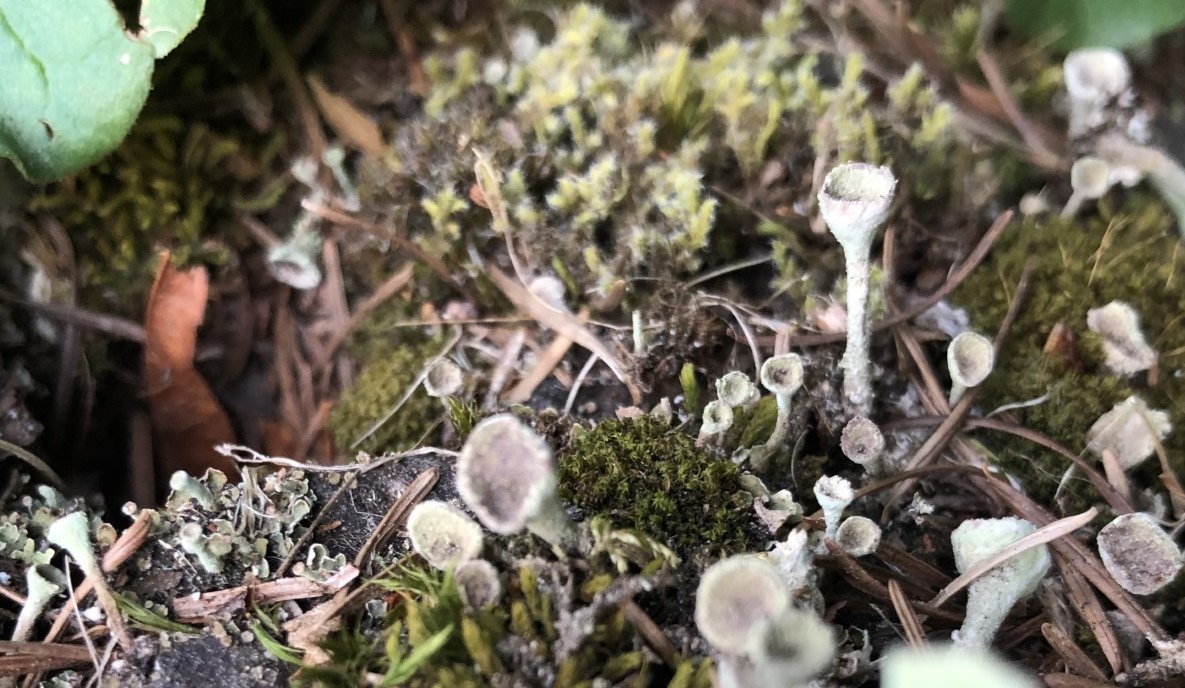
Reminder: Don’t forget to email me your Mushroom/Fungus pictures due on November 30th! (See previous post for details)

Science Fiction to Science Reality: The Post Apocalypse Edition

Photo by Rodrigo Souza on Pexels.com

Last year I read a lot of newly published books on Climate Change and Psychology. This takes patience on many levels, not least of all due to the fact that I have mild dyslexia. While I may not read as fast as most people, in some ways it feels like a secret superpower because I retain the majority of what I read and can expand upon it endlessly.

By the time this past holiday season rolled I was burnt out on real life doom and gloom and petty manipulations. I needed a return to a familiar space, Science Fiction, but more specifically, Octavia Butler’s familiar writing. I consider Octavia Butler “light reading” much to the amusement of my spouse. Her writing style is crisp and clean. She has the ability to say a lot in so few words and I feel her presence in her words. I get her. I get where she is coming from. I discovered her writing much too late though. If I had found her sooner, I could have potentially met her in person, she only lived 20 minutes away from where I live now.

She’s one of the few dead people allowed to life rent free in my brain. She sits at the kitchen table writing and thinking while William Morris paces back and forth on an ornate blue and cream rug practicing his speeches in the adjoining living room. High up in the corner of a bookcase Ryunosuke Akutagawa curls up like a cat watching everything below and taking notes. My brain is a proper Craftsman-style house. Writers, artists, thinkers, historians, and long-dead family and friends pass through for a visit now and then. Occasionally, the random stranger wanders through too.  Only Ryunosuke is amused.

It’s always a party when Kurt Vonnegut shows up. Pat Frank and George R. Stewart prefer coffee on the veranda, but I’m getting carried away.

Photo by Janko Ferlic on Pexels.com

Where were we?

Oh yes, what can we learn from fiction and in particular Science Fiction. Well, who isn’t familiar with Gene Roddenberry? George Lucas? Or Stephen Spielberg? Can you seriously say their scripts, movies and show have had no influence on the art of science? That they do not act as muses for scientists and engineers? Many of us are still waiting for hyperdrives and holodecks! Do you want to make a Computer Engineer swoon? Discuss The Moon is a Harsh Mistress by Robert Heinlein or the short stories of Isaac Asimov.

When considering the offerings of Robert Heinlein one has to chew through the sexism. I’m not going to excuse it on the faulty argument that he was “a man of his era.” He wrote The Moon is a Harsh Mistress in 1966 and there were plenty of men “of his era” that were not so blatantly sexist. Still, putting that aside we have a framework offered to us on how to build a resistance movement with minimal causalities and disruptions. By working in “cells” what is similar to creating “partitions” in a computer to keep data corruption and bugs from causing a full-scale shutdown. Redundancy in technical writing is bad, but redundancy in organized systems is good. What else works with cells, bugs and partitions? Trees! Let’s say a branch gets broken and damaged in a windstorm. If the tree cannot adequately thicken the cells in that area to help heal it over, it effectively self-amputates or “partitions” the branch from the rest of the body to prevent the spread of infection by cutting off supplies to the affected area. By reserving its strength, the tree lives another season and regrows the start of a new branch the next Spring.

I once read an article in an Architectural e-zine where an Architect proposed that perhaps the best way to “save” a building in a major earthquake might be by designing rooms(cells) of it to fail. (Presumably, this would help dissipate the force of energy produced by the earthquake upon the total surface area of the structure.) I appreciate the “out of the box” thinking, but how big is this man’s house? How many people have “spare rooms” to let collapse in the event of a major earthquake? I think if you have a bunch of unused rooms in your house it’s too big, and you should consider downsizing.

Octavia Butler imagined our current climate crisis in a book published in 1998 called Parable of the Sower and the sequel Parable of the Talents. Her story takes place in the early 2020’s and fortunately our here-and-now is not as terrifying as the one she wrote about, but some of the themes are eerily similar. We’re all aware of how politics impact our lives. What I focus on though is how individuals and communities shape the impact they have on the world around them. We have within the psyche of the American mind this image of “Rugged Individualism.” It’s represented in the notion “survivalist man” who can do everything and brave all challenges alone. I used to work very hard towards the idealism of the survivalist (wo)man but reading Science Fiction helped me understand that no person can be an island unto themselves for very long. In the end, it doesn’t matter how much of an introvert or anti-social being you thought you were. By the end of any lengthy stay alone in the mountains or in your head you’ll find yourself ready to make friends with anything not trying to eat you.

Science Fiction at its root is a cautionary tale of the successes and failures of individuals and groups. A forest and it’s trees. Sometimes the people are represented as alien races or other types of lifeforms, but it is in our human nature to find commonalities in order to relate to things no matter how alien it may appear on the surface. Octavia Butler worked hard to push this boundary to see where our tolerances might lie. Read her short stories Blood Child, Amnesty or the book Lilith’s Brood (Xenogenesis 1-3). Whenever I think my writing or ideas are getting “too weird” Octavia Butler challenges me to make it weirder.

Pat Frank wrote Alas, Babylon in 1959 and gave us an alternative history novel before all the cool kids started doing it. He showed us what living in Florida might have been like had the cold war been a hot one. Like Octavia Butler his writing is crisp and clean. A lot said in so few words. The imagery from some of the scenes in this book still put a smile on my face. I love this book so much that in the twenty years I have been with my spouse only once have I ever threatened him with a tomato, no sorry, ultimatum. “Read this book or divorce me.” He read the book in an afternoon. I made brownies and coffee. Crisis averted.

Finally, let’s close this post with an honorable mention, Earth Abides by George R. Stewart published in 1949. Yes, I know all the books and authors I’m mentioning here are old and dead, but that’s part of the beauty of it. To survive the future, you have to understand the past! A serious disruption in our ability to maintain our resources can put us back by ages. Fictional stories give our minds a playground to explore different theories and ideas of how to solve problems. Some of those solutions are found by going back to the basics and other solutions require us to unhinge our brains like a snake’s jaw and consume ideas we once thought too big to swallow.

There’s a scene in Earth Abides that made me laugh out loud and that is a very rare feat for any book! (I also dare you to make me cry too, while reading David Brin’s The Postman I was mad that I wasn’t more upset about a particular death.) What’s interesting about Earth Abides though is that there is an interracial relationship and a character with Down’s syndrome. It’s the only fictional novel where I can distinctly remember a character with a developmental disability and again, this book was published in 1949!

Whether it’s a Science Fiction, Romance or any other genre the one thing I can’t abide is when an author takes over two pages to describe a computer console or a room. I’m looking at you George RR Martin.


Photo by Castorly Stock on Pexels.com

Links:

https://www.scientificamerican.com/article/how-a-virus-exposed-the-myth-of-rugged-individualism/ (March 2022 Issue)

A24 Is Adapting Octavia Butler’s Parable of the Sower | Tor.com (July 26, 2021)