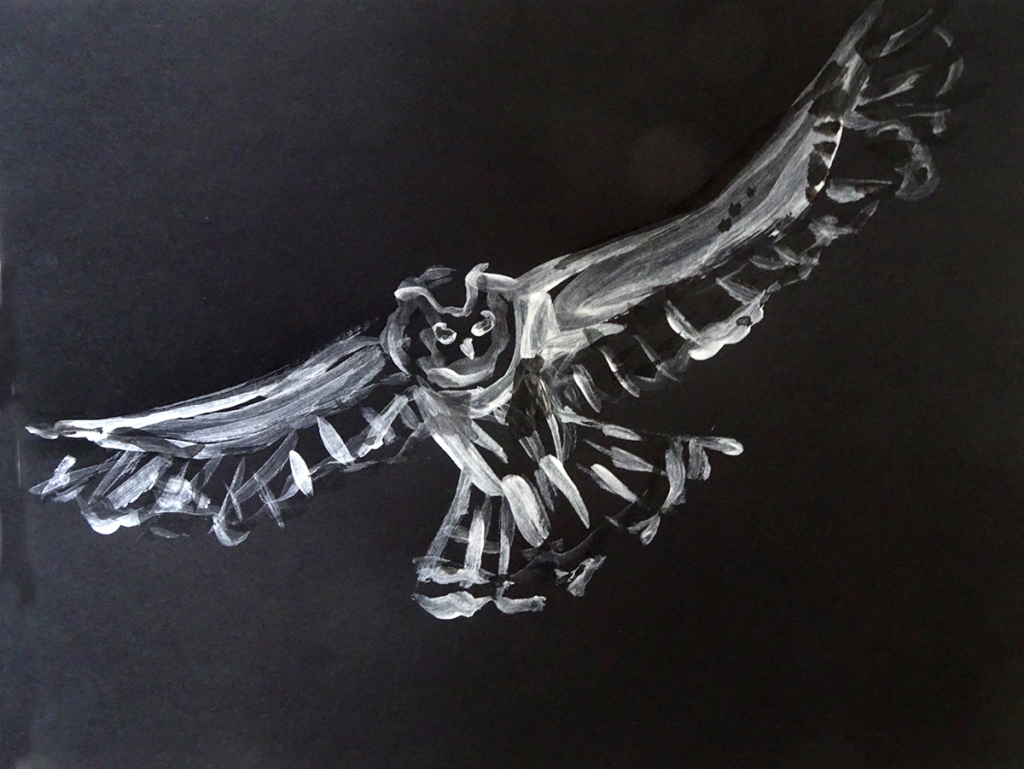
spread your wings carry the night in silent flight
The eagle owl is both one of the largest and longest-lived owls. With wing spans up to 6 feet, it has no natural predators, although it is sometimes mobbed by crows. The leading causes of death– electrocution, hunting, and poisoning–are man-made.
Nesting on cliffs or rocky outcrops, it has a wide distribution throughout Europe and Asia. I love its binomial name–Bubo Bubo.
Eagle owls are solitary, territorial, and nocturnal. They can more often be heard, having a large number of vocalizations, than seen.
I read an article in the Smithsonian magazine about Dasia Taylor, a high school student from Iowa that received an award for her research in creating color-changing sutures to detect infections by using beet juice. Her project idea came after she read about “smart sutures” which involves coating the sutures with a conductive material that can detect changes in the wound by the changes in electrical resistance. I don’t understand exactly how that works without a picture or video because I tend to be a visual and experiential learner, but that’s not what’s important here. What’s important is that these technology-based sutures capable of relaying the information to smart phones or computers are not cheap, nor are the materials to make them.
While Dasia was reading about these sutures, she thought about the racial equity work she does in her community and how universal something like wound care is. As part of her research, she found that in some African nations up to 20% of women who give birth by cesarean section develop infections at the surgical site. So how do you make sutures that can detect infections without smart technology?
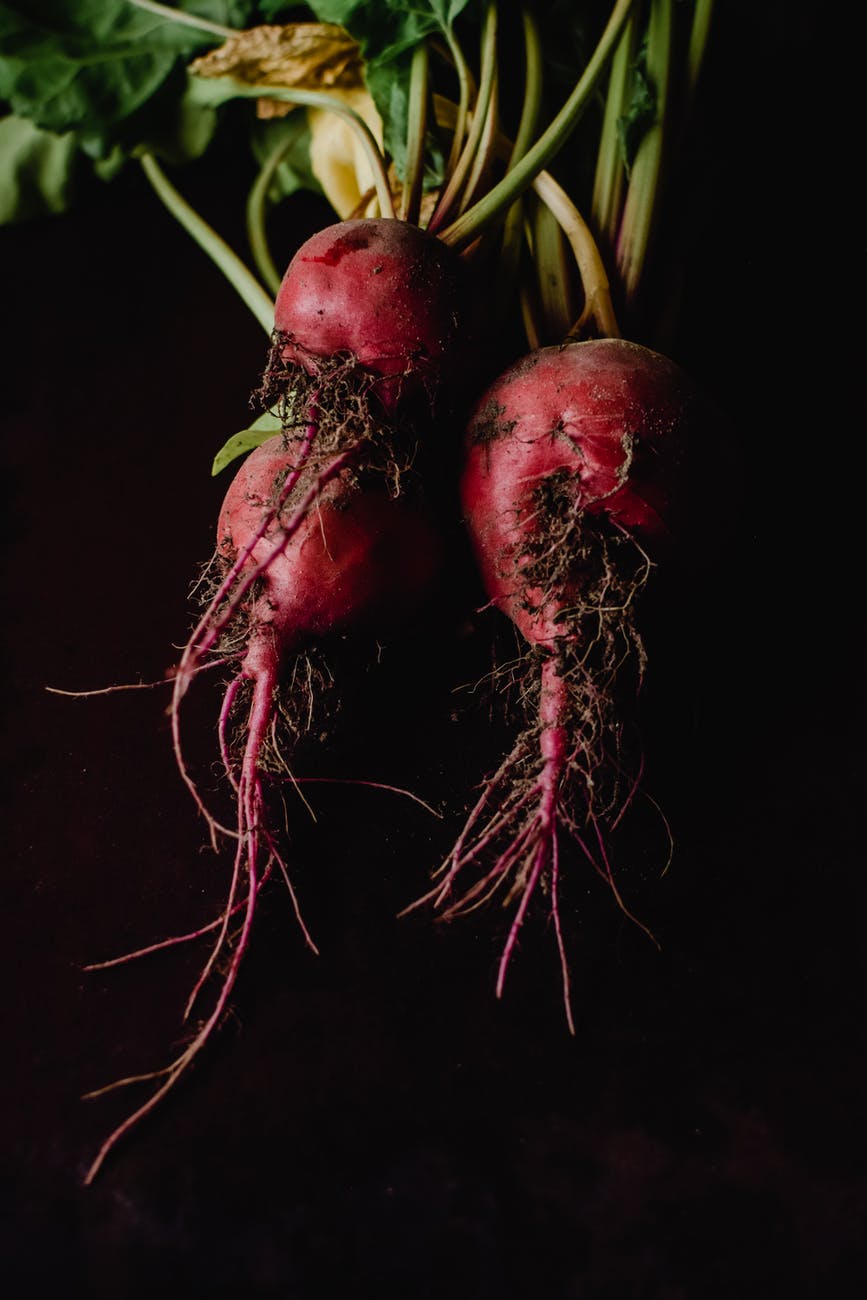
Dasia’s solution was to look for something that could measure the Ph difference in the skin. Healthy human skin is naturally acidic at around pH 5. Infections raise the pH level to around 9. Many fruits and vegetables change color at different pH levels making them natural indicators for different pH levels. Red beets (Beta vulgaris) ended up being Dasia’s best candidate. While her research isn’t perfect yet, she was able to demonstrate that it works and that vegetable dyes can be a viable, low cost solution to wound care.
More works needs to be done, but I’m bringing this to your attention because it illustrates some important realities.
You can’t have racial or social justice without environmental justice (and vice versa) due to economic and resource disparities throughout communities, countries, and regions.
Technology will not save us. It can help in many ways but looking to technology as our first response to everything is both arrogant and irresponsible.
I’m currently researching the question: Can capitalism be Green?
I’m currently settling on the answer: Cloudy with a chance of sun.
Our current capitalistic systems of commerce are not green and never will be if they remain as they are. We must reject the fallacies of “trickle-down economics” and “companies being able to police themselves.” It’s like leaving a toddler alone with a cake. Why would you think that’s a good idea?
Here’s the sunny part though, I think if we breakdown capitalism at the particle level, we can reconstitute it into a true Green economy. We are the particles. We are the grains of sand that can change the color of the beach. We make economic-based decisions everyday by what we purchase and organizations we choose to support. I think true radical change has to come from us, the people. We need to change our behaviors. We need to choose to be Nature-led, Social Justice minded people and societies every day. New patterns and pathways take time for our minds to adjust. When I first started using reusable bags for the grocery store, I would forget a lot. I didn’t give up and I kept trying to do better until the new pattern became the norm and I rarely forgot them. By the time the Pandemic hit it was hard to leave my reusable bags in the car. We knew so little about the Covid-19 virus in the beginning though, but I wasn’t willing to risk my safety or the safety of others around me. I kept the single-use bags I was getting and when it was considered safe to do so I recycled them. Here in the U.S. we have special containers at the store specifically for recycling clean, dry plastic grocery bags.
More needs to be done though. We need to make bigger advances faster. How? How can I/we be a part of those advances? I believe we need the thoughts, experiences and imaginations of everybody, every age, every perspective to find innovative solutions. We need to be excited about working towards common goals. I think an innate part of us seeks to be part of something greater than ourselves. We are after all social creatures.
it smells like the wind from the garden of that dream house, inhabited so many times.
It smells of the rumor of that voice that adds a pinch of love to every plate.
It smells of the purr of cats letting themselves be caressed by her bushes.
Smells like the Christmas tree that does not wait to be returned or packed.
Smells like the hair of the first woman on the face of the earth,
it smells like the man’s first breath after kissing that hair.
Perhaps at some time someone sat down to cry because he had lost his season …? tired was he of the flavors that others offered at his table; then she was tired of searching through the undergrowth for something to savor.
Lost all from all civilization seeded in their own land
rumor, purr, love, om mmmmmm
Your name sounds almost like a hymn, maybe that’s why they named you …
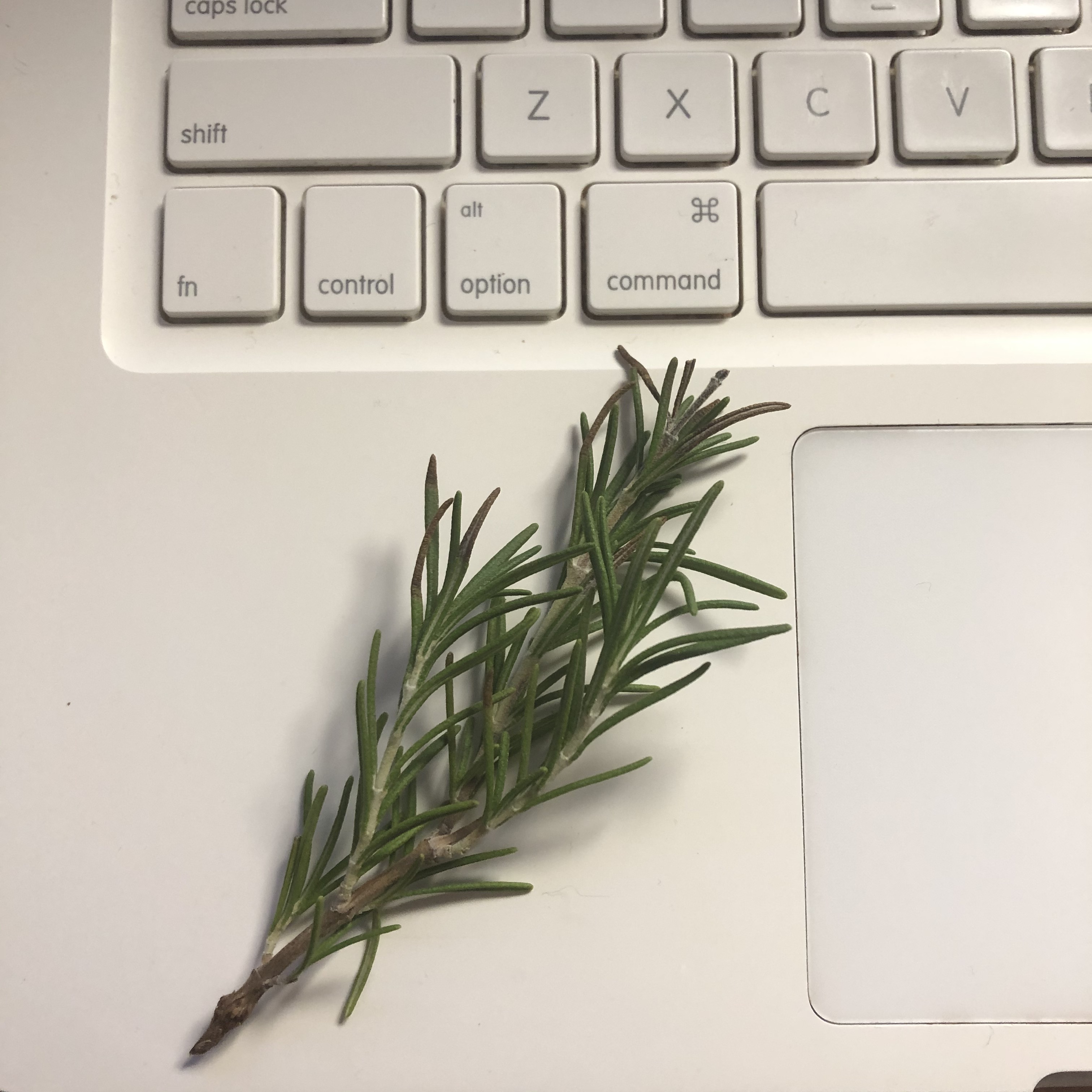
to you Rosemary
among all the plants that offer their wisdom to save us, and help us, to delight this existence.
Romero
A qué huele el romero?
Huele a las manos de mi abuela
huele al escondite del primer beso
huele al viento del jardín de esa casa soñada, tantas veces habitada.
Huele al rumor de esa voz que agrega de a pizcas, el amor en cada plato.
Huele al ronroneo de los gatos dejándose acariciar con sus arbustos.
Huele al árbol de navidad que no espera a ser devuelto o empacado.
Huele al cabello de la primera mujer sobre la faz de la tierra,
huele al primer aliento del hombre después de besar esa cabellera.
Acaso en algún tiempo alguien se sentó a llorar porque había perdido la sazón…? cansado estaba él de los sabores que otros ofrecían en su mesa; cansada ella de tanto andar buscando entre la maleza, algo para saborear.
Perdidos todos de toda civilización sembrada en su propia tierra
rumor, ronroneo, amor, om mmmmmm
casi a himno suena tu nombre, quizás por eso así te nombraron…
a ti Romero
que estás entre todas las plantas que ofrecen su sabiduría para salvarnos




 The Nature-led Life