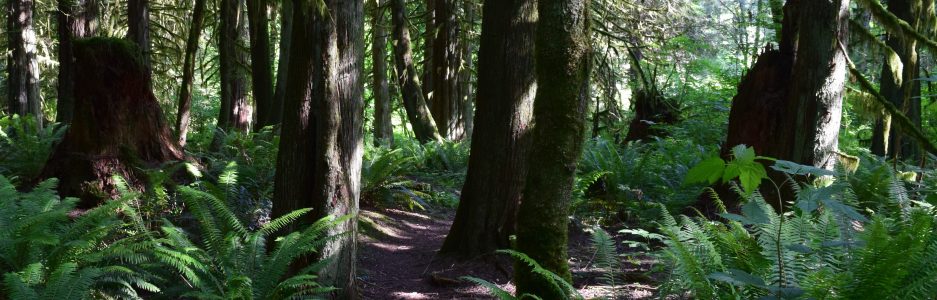
I envisioned that one morning I would be standing at the large living room window, cup of coffee in hand watching the field when a bear would stroll by. Blissfully safe in my house I would say, “Good morning, bear.” All cheery-like, of course.
Reality likes to kick sand everywhere though. I found myself instead at the far end of the field, on my hands and knees, pulling dirt and rocks away from a diseased Hazelnut (Corylus cornuta) stump infected with Eastern hazelnut blight. A diseased acorn can further the blight by birds and squirrels that forget a cache, allowing a diseased tree to become rooted. It can decimate an agricultural hazelnut grove. A cash crop in the nearby state of Oregon.
So, there I was being a good citizen for both humans and trees alike when a big black bear (Ursus americanus) decided to walk by. I knew he was in the ‘hood. I’d often seen fresh bear patties along the street. Bobcats, Coyotes, and the like drop “scat”, but bears make patties, large dark piles of bear poop. Around here it usually has cherry pits in it, even the coyotes will help themselves to the native Chokecherry (Prunus virginiana L.), the ornamentals that line the road at our street entrance, or the ones planted for backyard fruit. Washington state is the apple state, but we grow a lot of cherries too.
So it was, that the bear finally came before the patty. My dog was sleeping on the porch attached to a 15ft tether. We do this because she’s got a strong prey drive. All it would take is an errant squirrel or rabbit and she would chase it to no end until a vehicle stopped her. She’s got no sense when she spots a living squeaky toy. On this morning, her sleep was disturbed by something much larger. She started barking like crazy. I understand all of her barks, but this one was new. I stood up quickly with my hands on my hips wondering, “What does this bark mean?”
I turned around and there he was, less than ten feet from me! I could make out the individual hairs on his nose. He stopped abruptly and so did I. I’ve seen wild black bears before in the woods at a distance, equivalent to the size of a fat Golden retriever, but this suburban bear was huge. At least 800 hundred pounds. What the hell are people putting in their trash around here? Raw steaks and donuts?
All I could hear was my dogs frantic barking and the sound of my own heart beating. The bear sized me up and I did the same without making eye contact or any posturing that might be taken as a threat. We need some space. Yes, we definitely need some space between us. I’ve got a sharp axe and a sledgehammer within reach, but no desire to fight. He seems to agree. So I say in a carefully measured voice, “Why don’t I just back up towards the noisemaker on the porch, yeah?”
I back up slowly putting distance between us, glancing at the bear, not staring, not challenging. Once I’ve doubled the space between us the bear felts safe to proceed with his morning constitutional. He continues walking down the field toward the street. He was so quiet for such a big beast! I always thought they would be huffier and gruntier to give me some warning, like in the movies. It’s surreal to watch those massive paws walk so quietly. My mind wants to give it a soundtrack like a T. Rex is walking by. Pound, pound, pound with each step, but they don’t. They don’t make a sound and the birds have betrayed me. Just like a deer, when I hear the chorus of birds suddenly stop, I’m alerted that somethings wrong. I’ll pop my head up and look just as surely as if the dog has barked. Now I have learned another new thing. In the opinion of small birds, a bear is no threat.
Why do I pay attention to birds? Because cougars will hid expertly in the bushes, but they can’t hide from the birds, nor can the coyote, but mostly I listen to the birds, because they feel the vibrations in the air before I can. They were my first clue, just before the Nisqually quake hit our area on Feb 28th, 2001. So I listen to the birds as we perpetually wait for “the big one”, the day the Cascadian subduction zone give a great heave and snaps out the surface like we’re particles on a dirty rug.
But wait, there’s more to this bear story! When Mister Big Bear reached the road my neighbor from three doors down was there walking his puny little Shitzu. They all stopped unsure what to do. Poor Mister Bear has a new dance partner. The little dog was too scared to bark. Another neighbor rode to the rescue in his mid-life crisis, a metallic blue corvette. He stopped so the other neighbor and his little dog could hop in. They waited until Mr. Big Bear felt comfortable enough to pass. People who don’t live around here consider my City a “suburb” of Seattle, but we’re not. We have pastures and fields. The tallest building in our downtown city core doesn’t exceed seven floors. We live in what researchers and biologists call the urban-wildlife interface. I call it sub-rural as an antonym to sub-urban (suburban).
Recommendation:
What Happens When You Plant a Pile of Bear Scat? – Cool Green Science
Bear Behaviour – Understanding black and grizzly bears – BearSmart.com
 The Nature-led Life