Hello, this morning I woke up with a fog over me, as if a gray cloud with raindrops and thunder was announcing a storm. I then decided not to exercise at home, because if it was going to rain outside later, I preferred THAT to being trapped by the gray cloud in my head. So, I decided to arrive an hour early to my workplace and go to the park for a walk, open to possibilities, attentive, and observing my surroundings. I noticed the plants, the ground beneath my feet, and I remembered that nature speaks, that life arises from death, that everything is a cycle; something must die for something else to emerge, everything regenerates in life and existence.
In these photos I’m sharing, I capture what my eyes saw this morning and what completely changed my attitude.
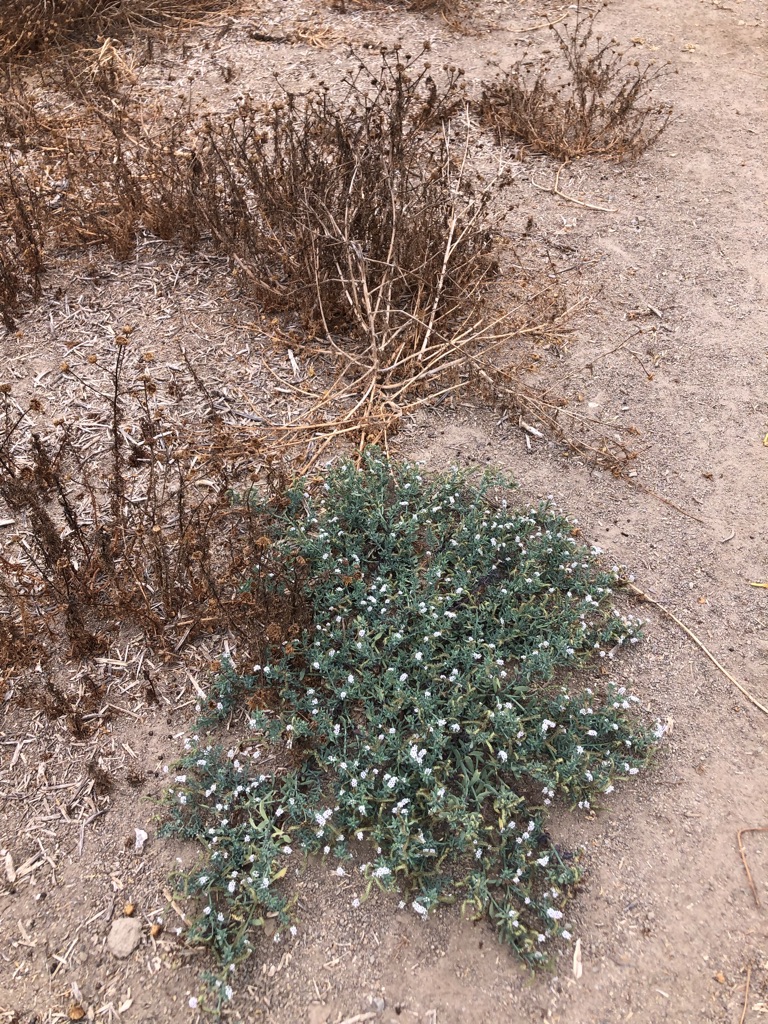
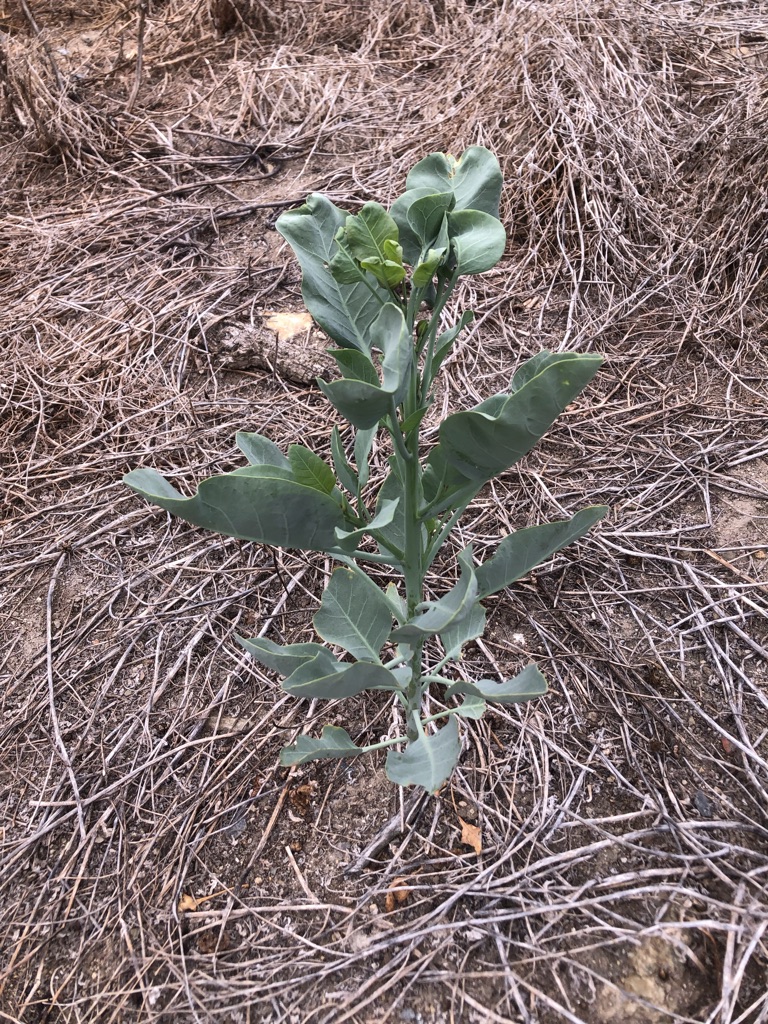
In this photo, something is born amidst the dead; something blooms in a barren landscape. It doesn’t matter if it’s a predatory plant—at this moment, my attitude doesn’t judge or criticize whether it’s a weed or not; I simply see that it’s something green blooming in the midst of death, a plant that stands tall and fertile.
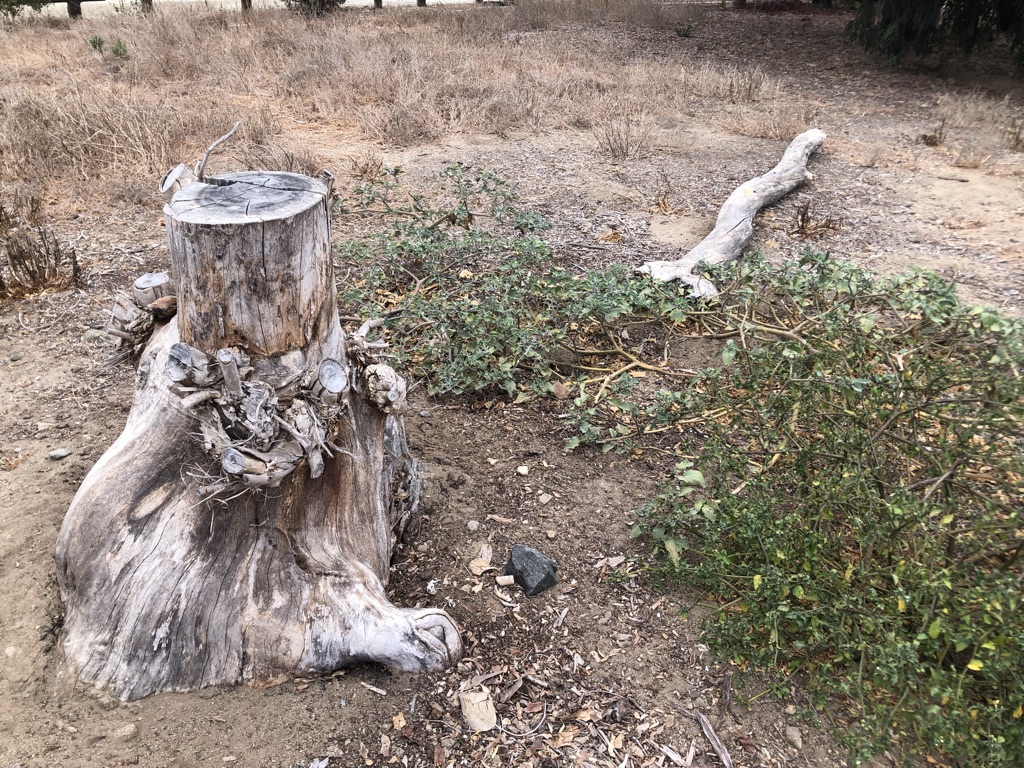
There’s a tree that once was large and leafy, now serving as shade and nourishment for the small plants growing around it, accompanying it in homage. Nature not only speaks; if you go further, it even wants me to smile, and in a comedic way, a bird drops one of its feathers among the bushes to make my memory play and make me sing: ¨One of these things is not like the others,
One of these things just doesn’t belong,
Can you tell which thing is not like the others
By the time I finish my song?” or invites me to play, “Where is the feather?” (like in Where´s Waldo?).
I smile, continue my walk, my cloud clears just like the horizon, and I await the rain, to wet, to relieve the drought, to nourish, to wash away and lighten the dark clouds of others, making them emerge from their caves. In the end, everything begins with a small decision: do I stay or go, do I observe or close my eyes, do I laugh or not, do I write these lines or not, do I post or not?
Yesterday was a good day. On Wednesday (Aug. 21st) a 66-year-old man with Parkinson’s Disease and Dementia had gone missing from a nearby city. Three days went by with no luck and Friday had been nearly non-stop rain all day and night. The situation was becoming desperate. The Sheriff’s helicopter and search and rescue team hadn’t found him. A few drones had been used, but still no luck. They called off their search. The family reached out by social media asking for any and all willing neighbors to come out and help.
It seemed like most people only had thoughts and prayers to offer. That wasn’t good. I know I shouldn’t be judgmental. I don’t know their lives, responsibilities or commitments, but for me, thoughts and prayers will never be good enough. I hold myself to a high level of expectations that I don’t expect from others. My friend Takeshi once said I was the most Samurai person he’d ever met; to which I consider the highest form of a compliment I’ve ever received.
I would make time for a man whose time was running out. It was something I needed to do. When I was a bored rural kid in Eastern Washington tracking animals and trying to “get lost” were my hobbies. As I got older, I took some survival training courses and as of a few years ago joined a local volunteer program called Community Emergency Response Team (CERT) with a nearby Fire department. I have three emergency bags: one for home, one for van and one for hiking. I keep five tourniquets in my minivan alone. Some people even got tourniquets for Christmas five years ago. At least my stepbrother thought it was the best gift ever.
At the start of my search, I checked in at the table the family had set up in a grocery store parking lot. I asked if they wanted me to look anywhere in particular. They said he could be anywhere at this point, a needle in a haystack. I offered to start on the outer edge of the search boundary from the light industrial park back to the place where he was last seen. She told me to trust my intuition. I took two steps away then blurted out, I have tracking experience. I’ve been self-conscious of how much of a hillbilly I really am compared to the posh metropolitan areas of Seattle since I moved here twenty years ago.
To my surprise her eyes brightened. She introduced herself as the missing man’s daughter. She asked me to come back to the table, showed me a map and pointed at the last known sighting near a water tower in a heavily wooded area. “They (the Police) looked here, but its so thick with brush, please go back and look again.”
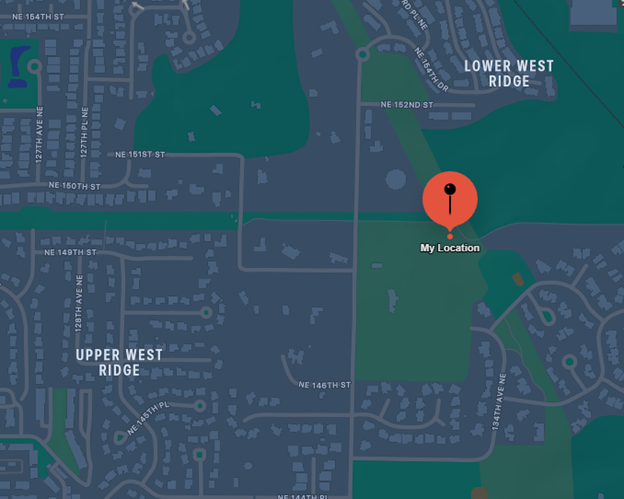
I dropped a pin on my phone and headed to the location. I noticed a police cruiser parked in a cul de sac facing the direction of the water tower. I parked, took my small backpack of essentials (food, water, a towel and first aid kit) and walked around the water tower to pick up a trail. In the US, our water towers are monitored by 24 -hour video surveillance and alarms to prevent tampering. I was very aware I was on camera and kept my body looking away from the tower and not at it.
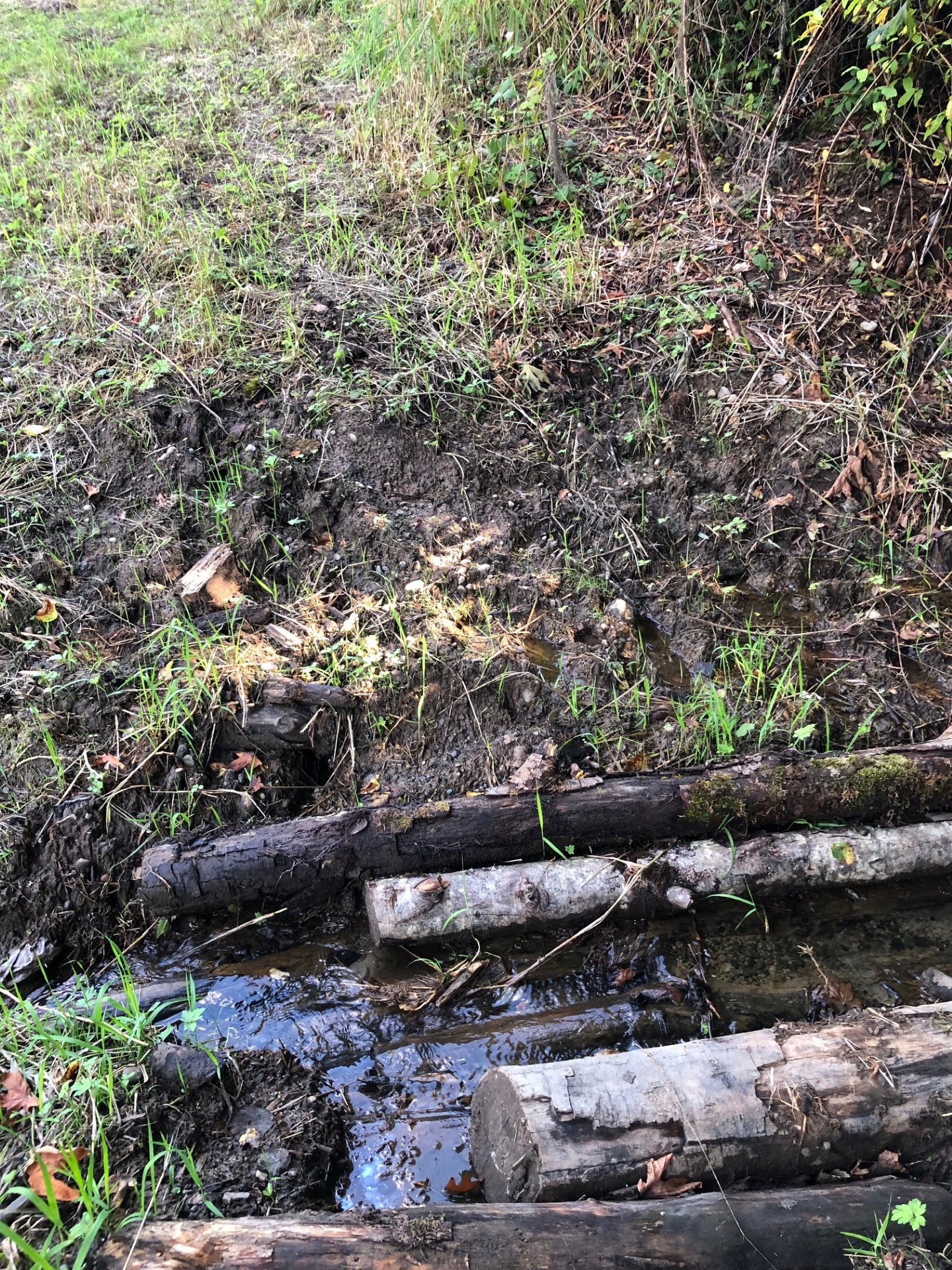
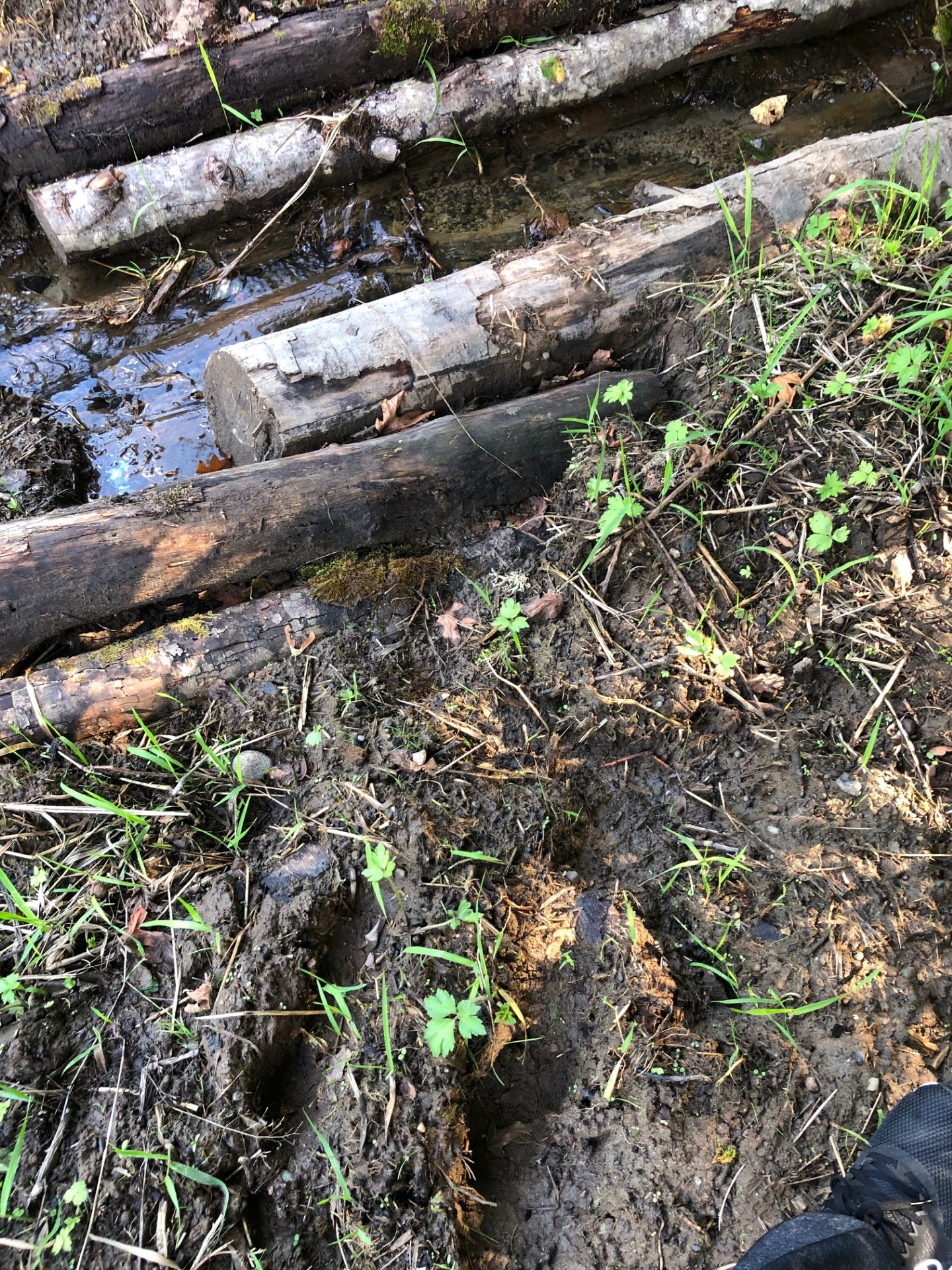
The fact that it had rained so heavily on Friday was helpful. Both human and animal tracks were well-formed in the drying soil. I look for pressed down grasses that make a trail, broken branches, and any kind of human debris. I found bits of torn twill, but I’m quite sure our man wasn’t wearing a veil when he ran off into the woods. I found a bit of white jacket lining (polyfil), but he hadn’t been wearing a puffy jacket. I found two rabbits, a garter snake. Then I found a strong lead. A little stream that someone had tried to cross on Friday when the ground was the wettest. The mud was solidifying and holding the shape of deeply imprinted shoe tracks of someone who had gotten stuck and struggled to drag themselves out. His daughter had mentioned he was wearing black tennis shoes the same size as mine.
Mudprints closeup
I followed clumps of mud up a hill in a pressed grass path. I felt like a hound catching the sent of its quarry. At the top of the hill the mud clumps had stopped, and I was intersecting the main walking trail. In the mind of a tracker, trampled and contaminated. I had four possible trails from that spot, so I started a pronged approach right to left looking for new clues to follow.
On the first prong I got about 35 feet when I came upon a heavily wooded hill that backed up to a neighborhood. Near the top of the hill was a coyote. I said, “Hey coyote, you seen a man around here?” The coyote was surprised to see me. I forget how quiet I can be. I was solely focused on listening for breathing, moans, growls and other things creeping about besides me. I also had the advantage of being downwind.
The coyote came within a few feet in front of me and sat tall. Polite coyote body language for “You shall not pass.” Behind her a pup ran from one side of the trail to the other. “Ah, I’m sorry to intrude. I’ll go back the way I came.” I made it clear I was leaving with no intent to come back. She didn’t follow. Prong two was a quick and short dead end with tall unpressed grass. Prong three and four weaved closely together and I found a couch and a bunch of bags of clothes that someone had dumped.
Mossy Waterpipe
Prong four, my last good trail that was not the main trail led me to a cool giant mossy waterpipe. This was a great place to hide from the elements and dry off, but it was right at the edge of a steep and heavily wooded ravine. There were no fresh tracks under the waterpipe, but there was a wide swath of pressed down vegetation heading down into the ravine. He could have come here for shelter, slipped and rolled down into the ravine. It was at that moment I regretted wearing shoes and not my boots. My ankles wouldn’t have the stability needed to safely traverse down and climbing ropes would have been helpful too.
There was one offshoot trail from here. I took a quick look and discovered it was a black bear’s favorite path for stealing the neighborhood garbage and chose not to proceed any further. I walked back to my point on the main trail. My one-hour search had become two hours already. I wanted to keep going, keep looking. It’s hard to stop, it feels like giving up, but you have to know when to call it a day. In my mind I was mapping out a four-hour search pattern I would start from that point the next day. Around the same time, I started to hear a lot of people excitedly talking but I couldn’t understand what they were saying without getting closer.
I wrote it off as most likely a BBQ in one of the backyards of a house that abuts the main trail. By the time I reached my minivan I heard the sirens of emergency vehicles and the coyote family howling along with them. Could those sirens be for him? When I drove to the grocery store parking lot to ask a few questions no one was at the table. Hope began to bloom. By the time I got home and checked the search page it had just been updated that he’d been found! He was found breathing, but unresponsive just down from where I had stopped.
I’m happy to report that as of this morning he’s in stable condition in the ICU. It’s a good sign that he made it through the night. Part of me wishes I’d paid attention to the human commotion down the trail. That I could have been there to see the moments of his discovery, but I have a natural inclination to avoid crowds and linger on the edges. I was solely focused on finding one man who I expected to find among the bushes and his name was David.
It’s been too long. Yes, yes, I know. I’m sorry, but as the title of this post clearly explains, you can’t keep my love inside or more accurately; you can’t keep my love indoors. Those of you who are regular or semi-regular commenters here are always with me though. Your part of the audience that lives in my brain.
At the start of this summer, I took the dog for an early morning walk to snap a picture of a new house that was under construction near me. I was planning a post about the struggle to find balance between the need for more housing and leaving “corridors” for wildlife. As I arrived before the construction workers so did a medium-sized black bear who was also not expecting any humans to be there yet. We took one look at each other and promptly turned around to walk back from which we’d come. My dog didn’t even have time to register the scent of bear and was none the wiser. Just as well, no need to make a fuss and wake the neighborhood about it.
I never made it back in time to take the picture and now that the house is occupied by a lovely lady, her little dog and husband. I’d be a creep to take a picture of an innocently occupied house without a good explanation. I’ve continued to try to organize my thoughts and attempt to articulate the need to find balance between creating more housing, preferably affordable housing, and providing safe corridors for wildlife to travel through. If you’re not an American, let me just say that in the United States we have big feelings about what property rights should and shouldn’t allow. For many, our feelings about it are very much ingrained in our individualistic idealism of freedom.
I first learned about the idea of wildlife corridors through Stephen Kellert’s book Birthright: People and Nature in the Modern World (2012). I consider Mr. Kellert one of my personal mentors. I refer to his books often to help frame my own ideas. As a Yale Professor in the School of Forestry he helped pioneer the philosophy of Biophilic Design. Sadly, he passed away of cancer in 2016.
Here in Washington State, we have what’s called the “Growth Management Act.” It dictates that every city must build new housing based on the city’s size and other criteria so that no one city is responsible for the State’s housing availability. Most of the ecological focus of the act focuses on surface water management and salmon restoration. I suppose it’s admirable that now they’ve finally decided to get serious about salmon run restoration and recovery before complete extinction, but it’s not without pointing out the economic value of keep enough salmon alive to be harvested. Salmon = $$$. It’s also a big part of the northwestern cultural identity for many Americans and Canadians whether we’re indigenous or not. Call me a fish snob if you want too, but Atlantic salmon is subpar to Coho and Sockeye!
I frequently worry about my wild neighbors, but not in the way that people might think. I’m happy to see the bears, coyotes, bobcats, and many more animals. I worry about other humans. My fellow humans, you can get so unnecessarily dramatic about things sometimes. When it comes to wild animals, I think it’s a lack of education, yes? At least once a day a siren will go by on the nearby main road and without fail, as long as they are in the ‘hood, the coyotes will go off howling and yelping along with it.
I think it’s funny. A coyote can be mid-stalk towards a rabbit meal when it’s suddenly overwhelmed to join the siren song of a fire truck going by a few streets over. A pack of them going off sounds like chaos, which also sounds like a pack of teenage boys going off about something. I know many people would also find a pack of teenage boys laughing and talking excitedly scary too. People, what to do with you? There are more important things to worry about!
So that’s where I’ve been. Outside helping native plants fight the good fight towards recovery and sustainability while also enjoying all my wild friends, human and non-human alike! I should be more actively looking for a paying job, but, but, but, the plants, the fresh air, the sun… I tried to get some outdoor summer work at gardening centers and parks maintenance, but with no previous employment experience to my credit, it was a no go.
I recently finished and interesting and entertaining book…
You Look Like A Thing And I Love You: How Artificial Intelligence Works And Why It’s Making the World a Weirder Place By Janelle Shane
I think she did an excellent job of discussing what AI is and isn’t for non-technical people. I highly encourage you to give the book a try or check out her blog (link below) if you’re worried about AI taking over the world and/or need clarity about what Artificial Intelligence means. AI means more than just one form of machine learning and it’s an important distinction. As with all things, I’ll tell you it’s not the entity you need to worry about but the people behind it and their motivations. In our modern hyper-capitalistic societies, it’s getting harder to find people who genuinely have our best interest at heart. Sincerity is not something we can allow to go extinct.




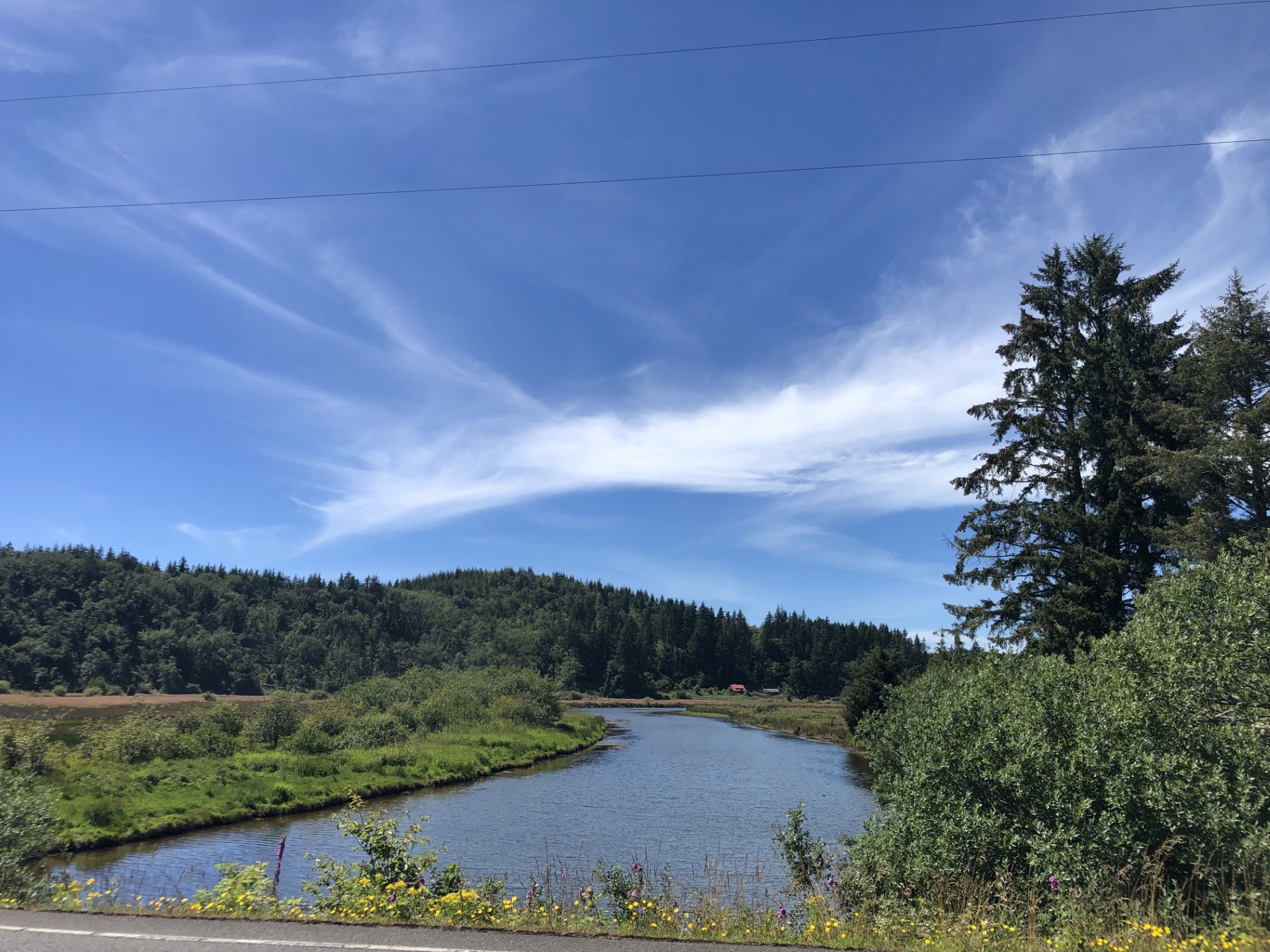
 The Nature-led Life