Not only humans sometimes forget our purpose, why we came to be on this earth, what fruits to give, and how to flourish.
Once I heard that in a field full of trees an Elm was disoriented. It saw that next to it a fragrant and colorful cherry tree flourished, and people came to visit that tree, to smell it, and contemplate it. It felt envious of that popularity. It wanted to be like the cherry tree, but no matter how hard it tried, every spring it never managed to blossom.
It tried a lot, it exerted itself so much that without realizing it, a group of birds took flight and went to eat at the plum tree in front of it.
The birds gathered there, sang, and ate in that plum tree. What a beautiful congregation, sighed the Elm.
If I didn’t manage to blossom, I would love to bear fruit. To give something that would make many birds come to cheer me with their songs. But no matter how much it wanted, it didn’t bear fruit, and it missed the birds’ perching on its branches.
No one comes to eat because I don’t bear fruit, no one comes to smell me because I don’t give flowers, the Elm lamented in the seasons.
Perhaps I should be lighter, to be able to climb between walls and windows and thus decorate the houses and gardens inhabited by humans. It then stopped absorbing water, tried to hide from the sun so as not to become stronger. Languidly it wanted to penetrate between the walls, but no matter how hard it tried, it almost lost its roots, as it no longer had leaves or strength. In that convalescent state, it could feel the presence of an owl. A wise and sincere bird, who does not lose flight over trivial matters. “What has happened to you, strong and solid Elm?
Where I always come to find refuge. Where the weary come to find serenity under your shade on hot days, where the birds come to rest after a long flight, where lovers come to be inspired. Where children lose their fear of climbing high.
You are an Elm tree, you won’t bloom like the cherry tree, nor bear fruit like the plum tree, nor climb like the vines; you have come to provide shade, shelter, and strength, because each one comes to offer what one intentionally likes to be.
Inspired by a story told on the psi.mammoliti podcast.
Now that we’ve entered the month of March, I’m looking forward to seeing some of my new young neighbors. I live in what’s called a “wildland-urban interface (WUI) zone in Western Washington. When we lived one city over “down the road” in an apartment we would occasionally see news stories about black bears and the odd cougar witnessed in the area of where we live now. A selling point for us, not so much for more timid people though! In 2007, we finally achieved our dream of owning a home here. We live about 200ft from a primary east-west throughfare that connects a chain of small cities to a major freeway.
After a few months I began to observe a parallel throughfare right through our property in what I affectionately call “the wildlife highway.” These last few years of development have been particularly difficult in fracturing this once invisible highway. The more people move in, the more reports of sightings increase. Most realtors seem a bit coy when telling new homeowners what kind of animals they’ll be living with. This often leads to panicked Facebook posts in the neighborhood group or calls to the police, who will politely tell the people to leave the animal alone and call them back if it threatens someone. This is of little consolation to any proud urbanite that had, until now, believed that all large predators live way up high in the mountains.
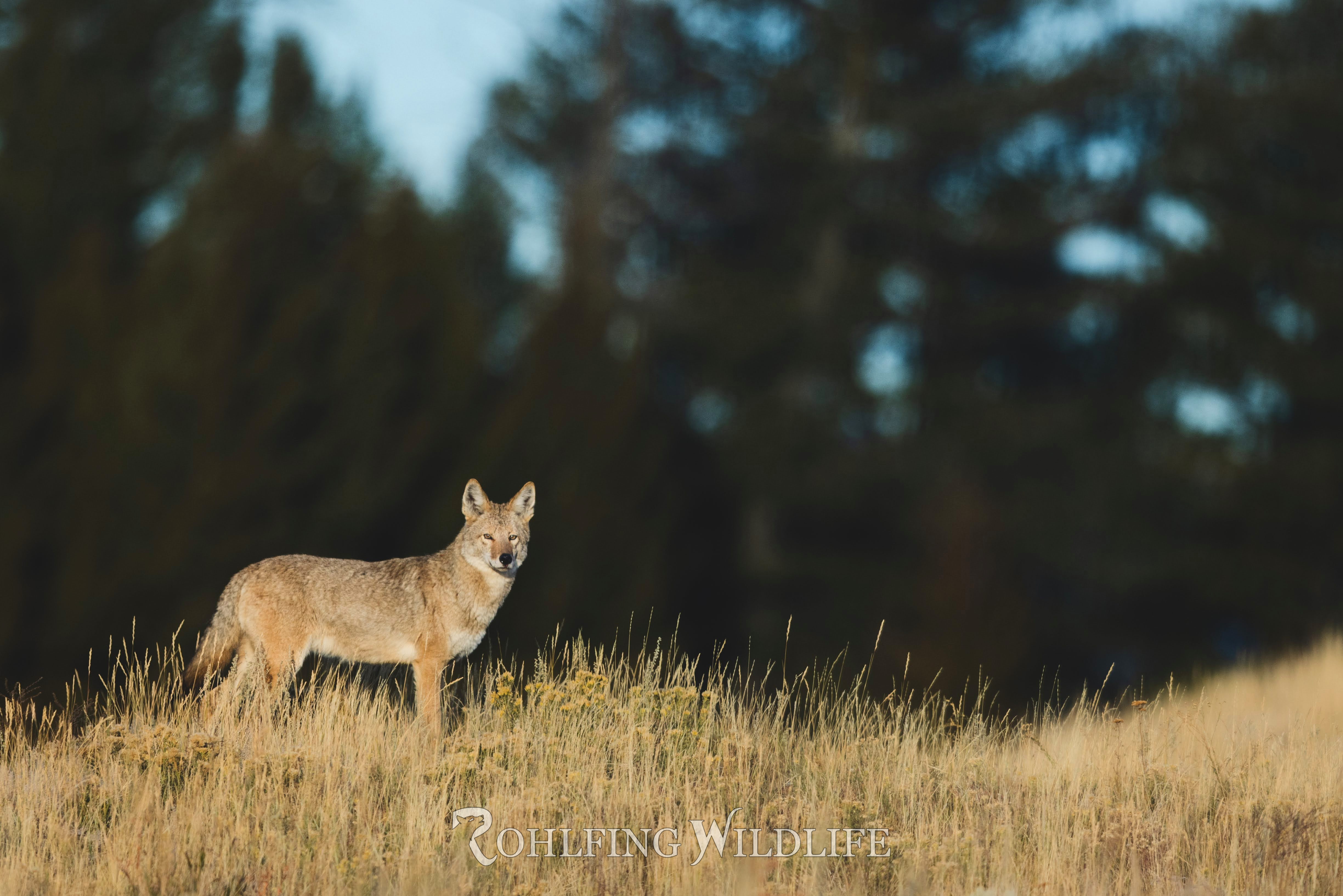
I’ve become a local soothsayer of sorts in my understanding of our wild and non-wild neighbors. The human neighbors call me “Snow White” and call, text or email me when they have questions or concerns about local wildlife or want native plant recommendations. People slow down to take pictures of me gardening alongside deer, rabbits, birds, and the occasional coyote basking in the sun a few feet away as if it were my dog.
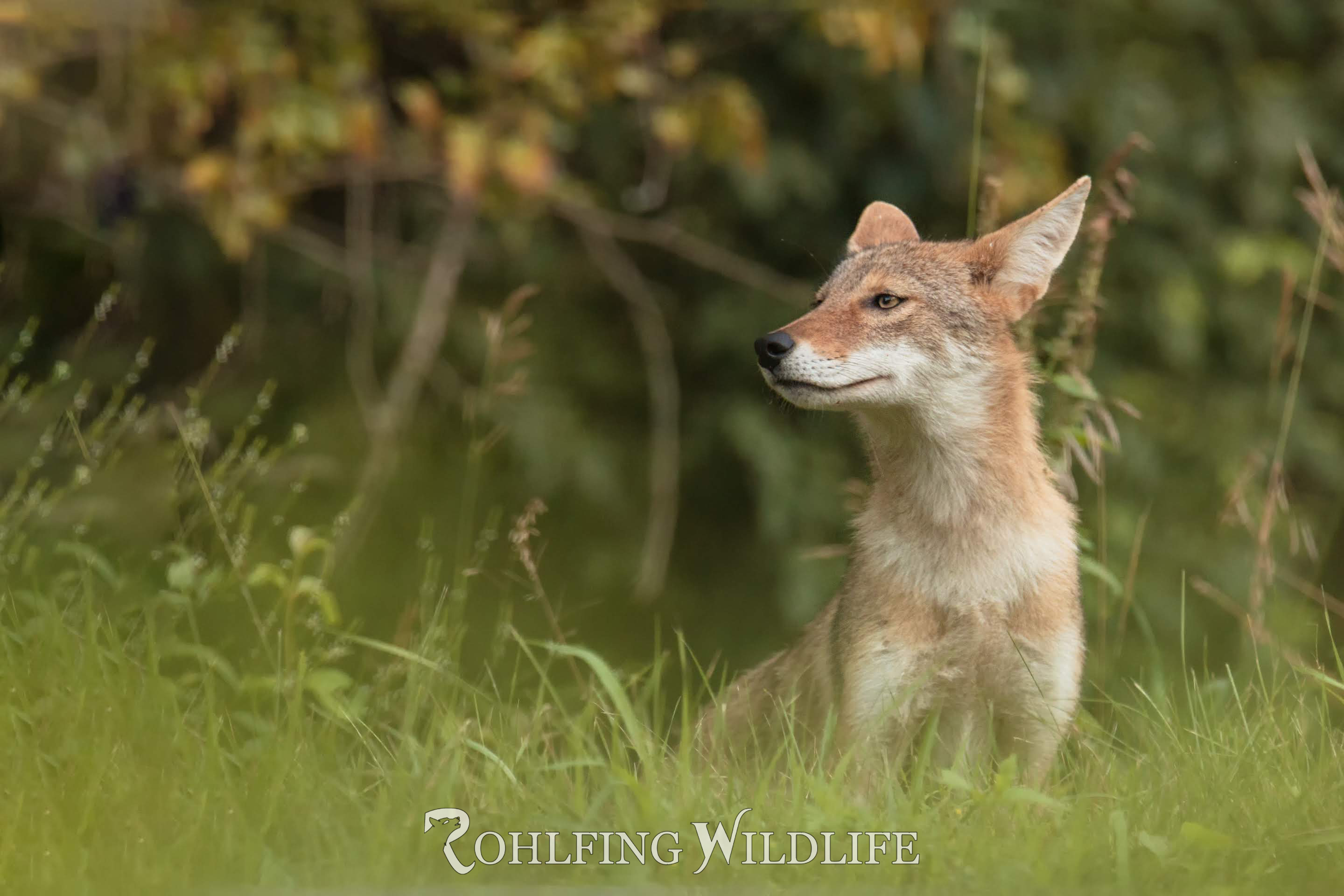
I’m now the adjunct guardian of this waystation on the wildlife highway. A sanctuary where they can rest without fear or harassment. The coyotes come for field snacks (mice) and stay for the curiosity of a woman so deeply imbedded in nature. They’ve been vilified for generations by us two-legged creatures. In our media they’re often cast as either evil creatures or dumb, pathetic things. They get no fair representation. They’re guilty of all crimes, most notably for eating all the cats. That non-native domestic species European Colonists brought with them that now decimate BILLIONS of native birds and mammals annually.1 Don’t get me wrong. I love cats as much as any other animal, but we have a responsibility to care for any animal that we’ve historically bred as pets. I empathize with any pet owner who loses a furry family member to an attack of any sort!
In Coyote America: A Natural & Supernatural History by Dan Flores2we learn how the war with the coyotes and wolves began as part of the western expansion of colonialism. As the white settlers cleared out the majority of wolves along the east coast and moved westward coyotes were able to infill where their larger cousins had once dominated. In the coyotes’ native range, he is the Creator and trickster to many plains dwelling indigenous tribes, but by the time he reaches the far western coast, home to the Coastal Salish tribes, he takes a place of no particular esteem behind their animistic creators and relatives.3
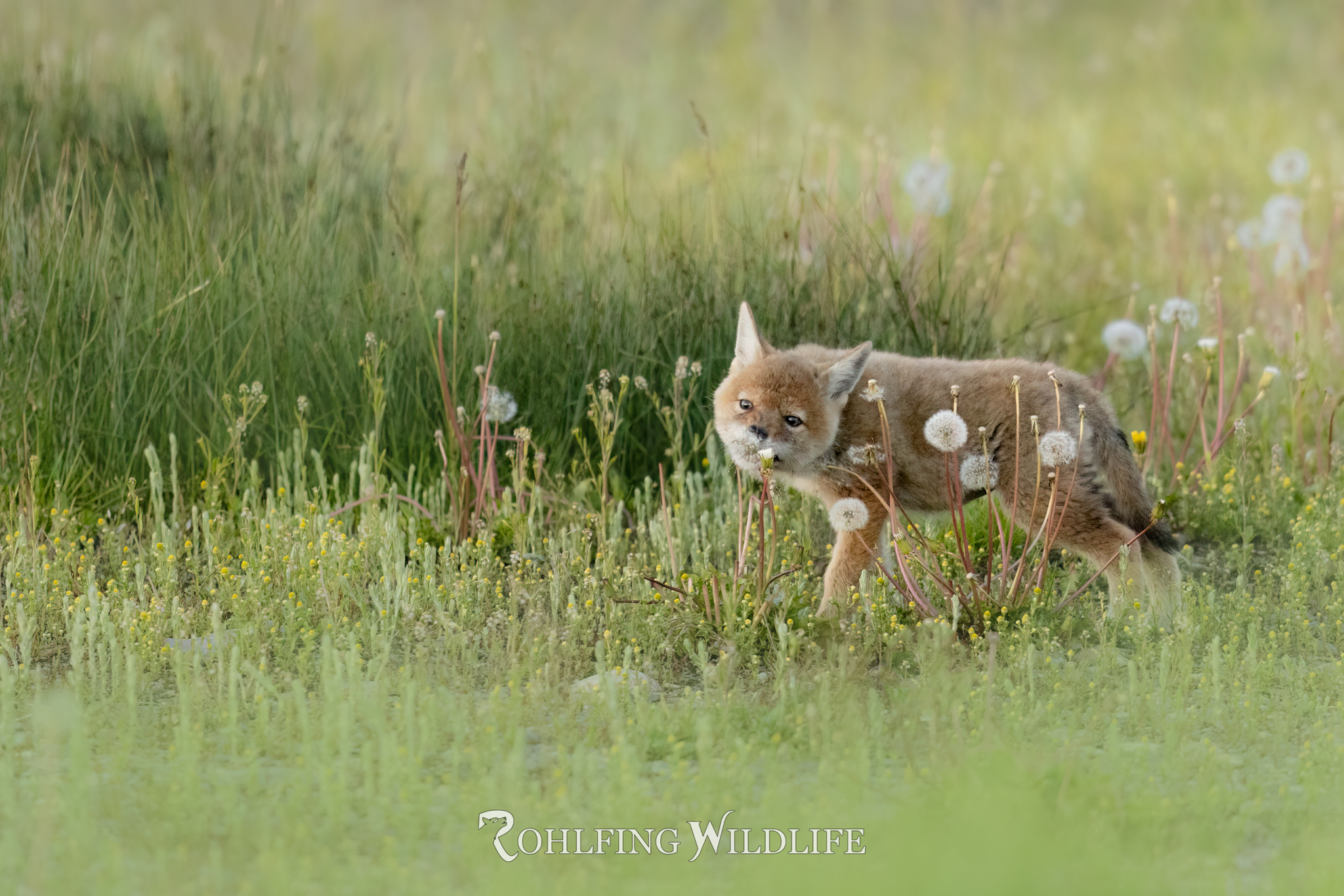
Coyotes are a lot like us in their ability to adapt. What Dan Flores refers to as “Fission-Fusion”: the ability to be both social and/or solitary. My first neighbor coyote familiarity began with a female that hunted during daylight hours in an effort to provide for her pups. She and I became known to each other. I never threatened her, and she never threatened me or my dog. We watched each other with both interest and a careful eye. One day, one of her pups strayed too far from the den and came into the yard through the driveway, only to find himself trapped in a section of the old horse pasture that, for whatever reason, had some hog wire fencing attached to it.
It wasn’t until I stepped out onto the porch for a better look that I realized it was a coyote pup and not a lost dog pup. I sat down to watch knowing that my approach would only cause undue stress. It appeared healthy and wasn’t in any immediate danger. I think that is the moment I embraced my role as the neighborhood guardian and liaison between wild and human neighbors. My policy is no intervention unless absolutely necessary.
He eventually calmed himself, worked his way back to roughly where he’d come and returned to the den across the street in the wetland. The next weekend I ripped out all of the fencing. Mother coyote got skinnier and skinnier until I didn’t see her anymore. One of her sons took up the territory. I can’t say if it was the one I’d seen as a pup or his sibling.
This male coyote is the one I had known the longest. My scent was on the landscape when he was born. As generations of animals have been born around me, they too imprint a connection of my scent with the landscape they call home. I look upon them as friends of the family. I started to worry that he would try to get too comfortable around other humans and that they would fear him. I also worried that if the Washington State Fish & Wildlife department received too many calls about a coyote, they might shoot it for their own convenience to stop receiving calls about it. As I dwelled in these thoughts there was a morning where it was very windy, and I was walking my dog when we and the coyote startled each other by our sudden abrupt closeness alongside a hedge. It was in that moment I decided a bit of light hazing might be good. I clapped my hands and told it to “Go on git!”
It was startled and as it trotted off it looked back at me with an expression I read as, “I thought we were friends.” I try so hard not to anthropomorphize wild animals, but his behavior afterwards conveyed what felt to me like a response to a perceived betrayal. He no longer came around me. I only knew he was still in the neighborhood when I caught a glimpse of him before he could see or smell me, but mostly he stuck to night hunting as I witnessed on my game camera. I reflect upon that moment when our friendship fractured with regret.
Sadly, this coyote got mange, which was first introduced to the North American landscape in 1905 as part of the eradication and removal plan by the US Biological Survey (now the US Fish & Wildlife Service) for coyotes and the remaining wolves. Several neighbors, who had once been apprehensive of living with coyotes, now looked upon his sorry state with sadness. I received texts late at night as they watched his suffering through their Ring doorbell cameras. I did research online and found that there was a kind of fringe movement where one could purchase anti-mange medication to put in food. The caveat was that you had to be certain the right animal would eat it. The recommendation was to trap, feed, and release. Something I couldn’t do without the risk of getting raccoons, a dog, or a bobcat by accident. The coyotes are not the most prolific hunters here but a bobcat that rarely passes me by without a large meal hanging from its mouth.
Our new young coyote neighbor was quite brazen when he was younger. Standing so close to the road with no interest in moving for cars that the neighbors, no longer with a sense of fear, would clap or yell at him to move along. “Get out of the road you idiot!” He has since learned that we prefer more personal space, about 25ft or so. This is his first year of having a family of his own. He met his mate this last November for mating season.
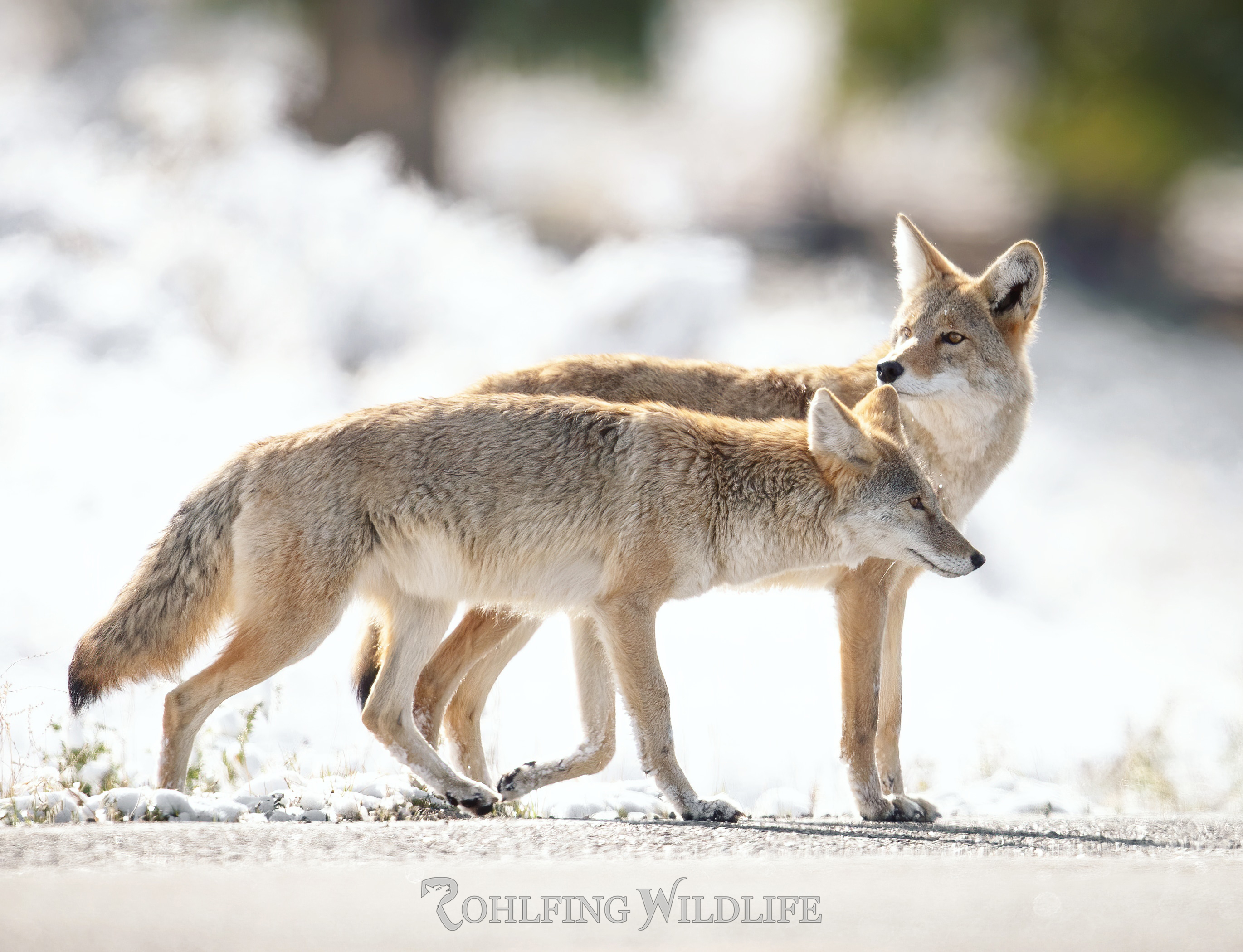
I find it was quite amusing that he hasn’t lost his interest in experimentation. One night after three of them had greeted each other in the field like a group of crazy middle school kids they decided to pretend being dogs by barking. They practiced for over an hour until they could match each other in similar tone and range. It reminded me of how crow families develop their own personal language cues.
A few days later during a morning walk I heard a dog bark and then another dog bark in a game of call and response. I know all the dog barks in the neighborhood. I can visual the dog, the owner, and the house, just by a bark alone. Even when I don’t know a barking dog personally, I can usually make a pretty good assumption about its breed and size. It’s the coyotes I thought. One was close by, so I stopped and waited because I was between them. Sure enough, creative coyote pops out onto the road, in a fast trot but immediately slowed to a casual walk when he saw it was me and my dog. As if to say “Oh, it’s just you.” The thought of it still makes me smile.
I hope you can understand that coyotes, like any other animal, are individuals with family dynamics that encourage what kind of personality they develop. There are some coyotes that can be aggressive, just as any other creature has the ability to be. I’ve never been threatened by a wild animal, of which I’ve met many, including black bears and moose. I’ve had two separate attempted attacks (both at night) one by a man and one by two dogs that tried to attack me and my dog. In both instances I walloped them with a swift kick up the side of their head. I’m fearless in many ways, but not careless. I know what I’m capable of and it’s a lot. I think the coyote and I have this in common. What do we fear? The gaze of a very hungry mountain lion.
~ A Special Thank You ~
This post was made possible with the generous contribution of Kyle Rohlfing Photography for allowing me permission to share his fine photography with you. You can see more of his wildlife photography at:
What was once inaudible or barely perceived, now echoes in the refuge of my waters.
It comes from afar, to bring to this present the sounds that harmonize memories.
From the low tone, red, ancestral and seismic U, I appreciate my flat feet, anchored to the earth.
The u vibrates in the connections between the outside and the inside, from the mountains of my native Colombia, in the estate of my origins, to the autumn of this intimate and latent awakening.
The u creates bridges in my tubes, the u makes a radiant, orange, and expansive light flowing to the plains of my womb. Paths that become clear, illuminating the dew of my vase, honoring the fertility that so often gave birth in silence.
I breathe an anticipatory song. You call me, make me remember myself.
I dance, laugh, play. Fusion. I listen to the meaning of the letters and vowels in my names and surnames. I am.
Here is my lineage sustained in the natural resonance of the wind, which from the top of a lush green with yellow flowers, proclaims my childhood free and wild.
I wish to see you, I follow your U’s. You, who see in the intrinsic shadows of the mist, find me, and I discover you in intuition. You sing what I need to hear.
Now my singing is accompanied by intention, and in frequency with emotions, so that the currents flow, stripping away the stagnation in forgetting me.
I have been deaf to the external noise and to those who shout imposing their discourse; silent to the hustle of the big city, with its avenues distracted by the volume of sleepless appliances.
Even more so, you remain there, suspended between two worlds, that of those who give and those who listen.
You and my voice, an honest bond in day and night chords, expanding. I am no longer prey.
You gift me tunes and claws, and I, alone, and in freedom, and healing, I hoot.





 The Nature-led Life