Why Our Stories Matter: The Human Narrative

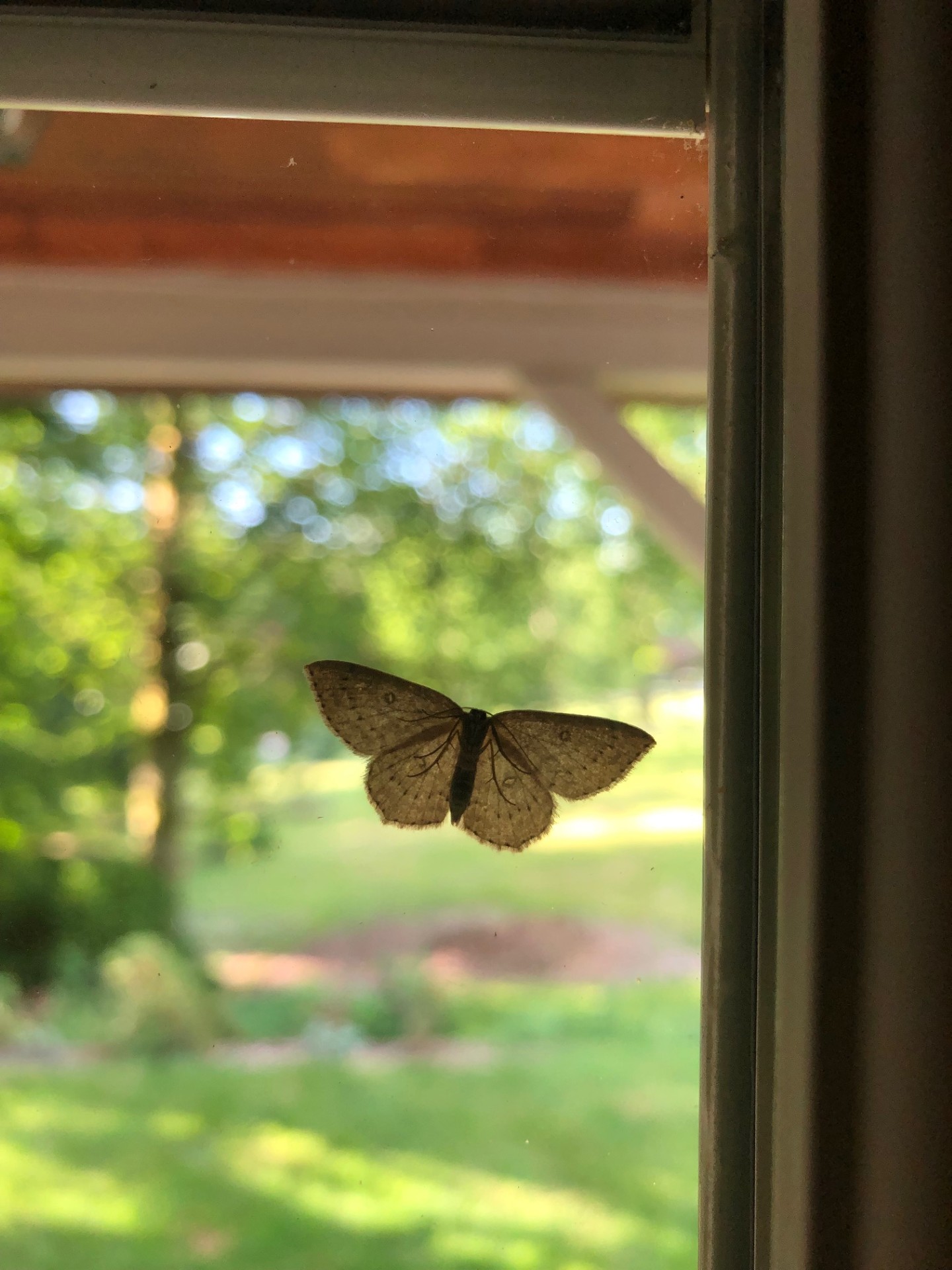
Moth on Window By Melanie Reynolds

Hello Nature-Led Friends!

Right now, I feel overwhelmed by a lot of things honestly. This website has been accessed and likely scrapped by AI without permission or acknowledgement like millions of other websites. Our words and pictures stolen without opt in, consent or recognition.

 If a human looked at our monthly challenges and used them to become a better artist by referencing them only to become better at say “drawing moss” or “drawing a camellia” that’s fair use. I’ve never had a problem with that. AI, however, puts us all in a blender and spits out an amalgamation of our written words and images with no context and no soul. People profit off of AI-generated theft, but not the creators whose works and words and thoughts were stolen to to make the LLM (large language models) learn for the profit of Tech companies and scammers. One can hardly tell the difference between the two these days. 

The artist community is in turmoil. We’ve never had our works stolen at such a vast magnitude before. While I would love to have illustrated art go with my stories, I’m not going to do it by using AI. I couldn’t expect a visual artist to respect my writing if I was using AI art and I wouldn’t respect them for using AI to do the writing for them. Artists are notorious for having to struggle to survive in Western societies to make art and it’s never been fair. Creation is often at its best when it seeks collaboration with other human artists, that’s how communities are born

Many of us are in a depressive state. Why bother? If our work it just going to get stolen why should we bother creating at all? Society seems fine with the novelty of regurgitated AI slop so far. If society sees no problem with using AI over humans, in the most fundamental act of being human why should we feed the machine?  

We tell our stories through writing, performance and visuals to connect with other humans on a sacred level. It’s how we reach out with our spirit to see and be seen. We use art to better understand ourselves and the world around us. It is culture. It is the foundation of how we communicate who we are as a people. In many cultures textiles aren’t just made as clothes to be worn but to signify where you are from. You can tell who someone’s people are by the colors and the patterns used in different regions of Latin America or SE Asia, for example.

If you think societies are too big to fail, the Romans would like to have a word with you. All we have left is what we leave behind; writing, sculptures, textiles, metal works, pottery etc. Why have we lost so many Indigenous societies to time? Because they shared their history, traditions and culture through an oral tradition. When no one was left to speak the language, to tell the story, the spirit of that nations people died. The art, if not passed down, absorbs back into the landscape.

As I’ve been turning inward lately to focus on nurturing the natural world and people around me, I’ve also been reading a lot, mostly fiction and short stories. I’m a little burnt out on most Nonfiction at the moment, unless it’s told from a personal perspective.

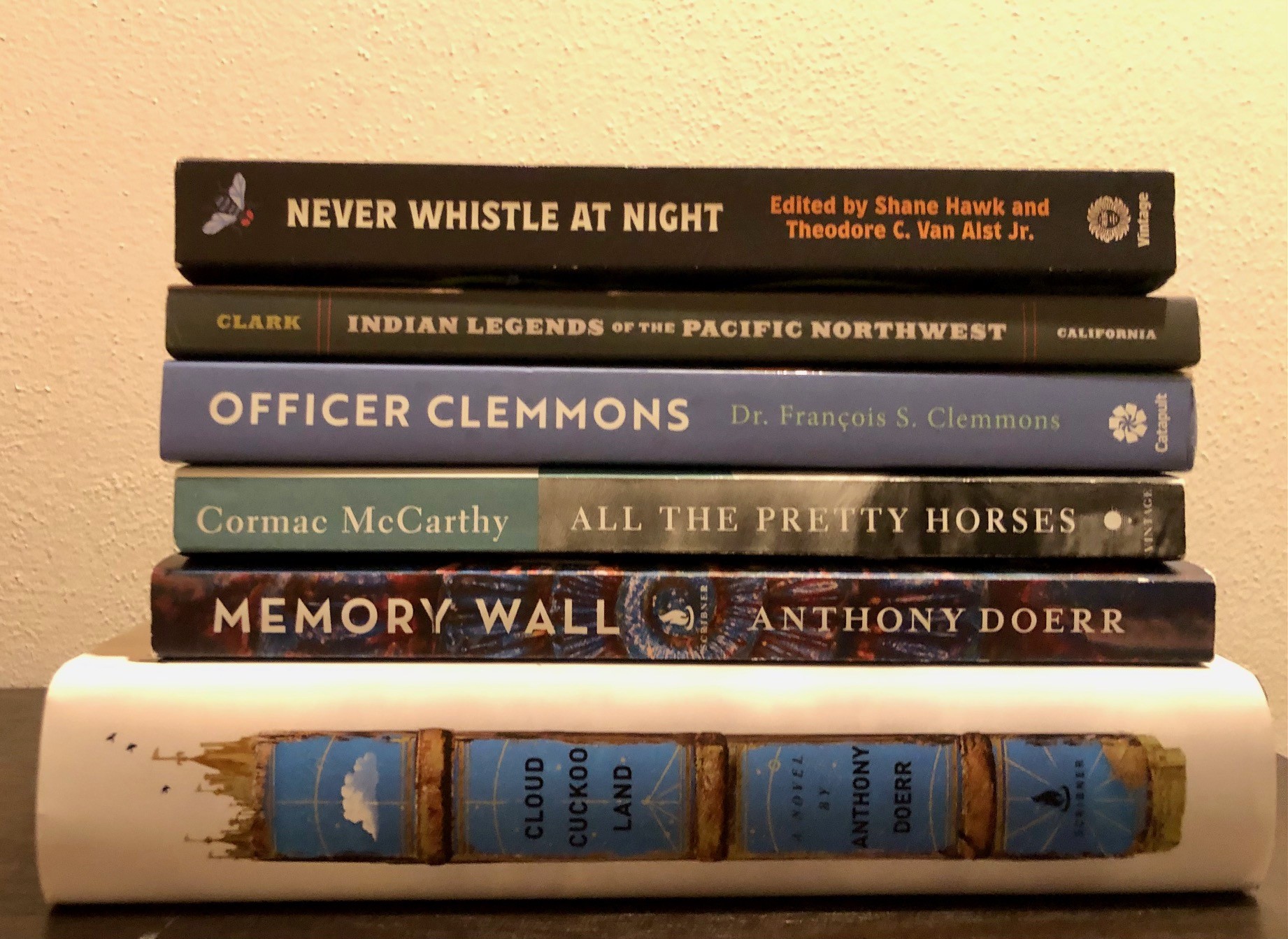
Some Books read so far in 2025, not pictured Hillbilly Elegy, a library loan.

Fiction currently read

Cloud Cuckoo Land by Anthony Doerr  

The Memory Wall (A collection of stories) By Anthony Doerr   

All The Pretty Horses by Cormac McCarthy    

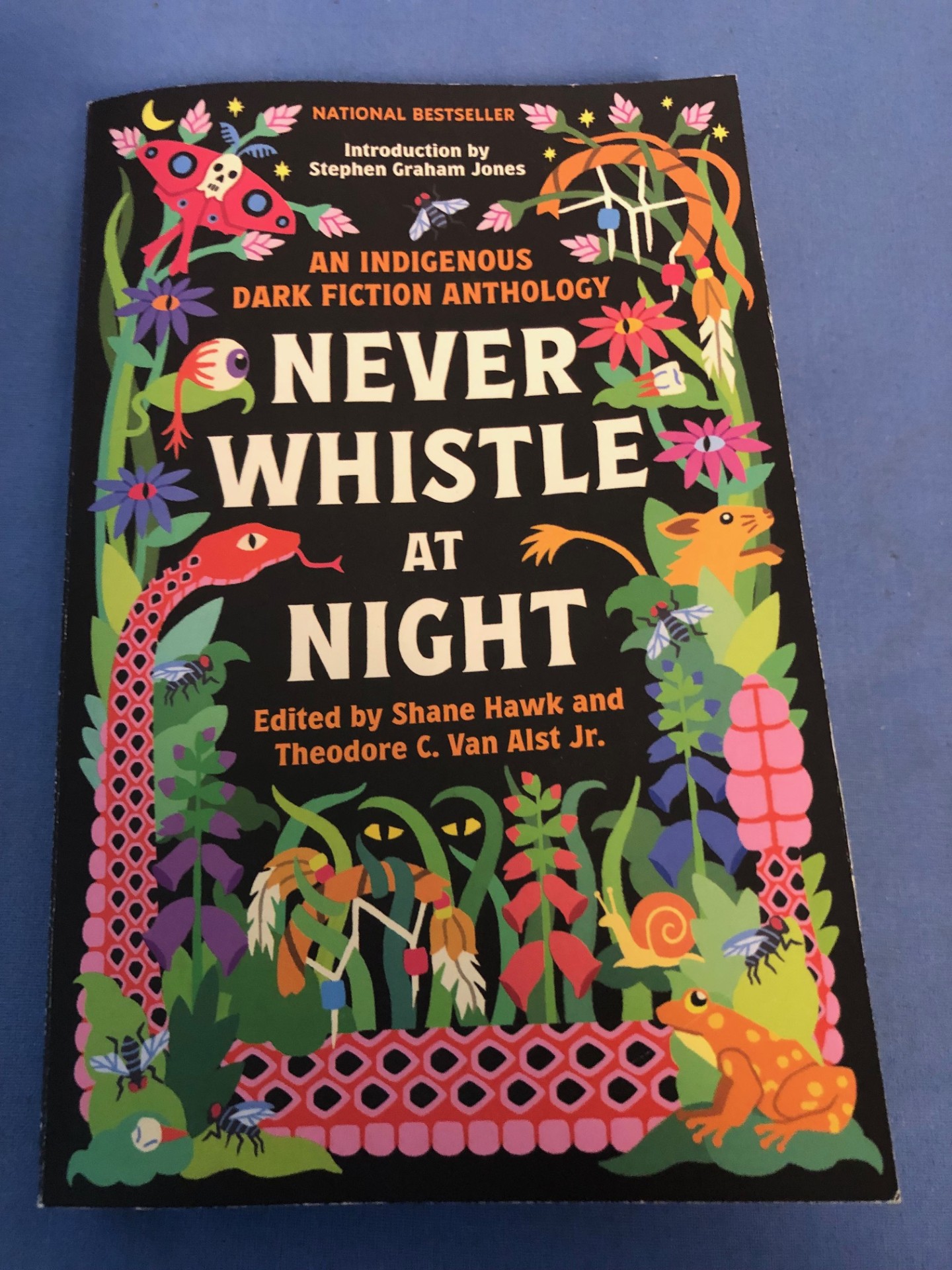
And my favorite so far this year:

Book cover of Never Whistle at Night.

Never Whistle at Night (An Indigenous Dark Fiction Anthology) Edited by Shane Hawk and Theodore C. Van Alst Jr.

As a collected work from various authors some spoke to me more than others, but several of these stories will stay with me a long time. I never thought I liked horror, but the truth is, I like horror/suspense with something to say. Stories that make us face uncomfortable truths are important to our understanding of the world around us. I’m not interested in blood and violence for the sake of graphic shock value. Some of these stories will leave you disturbed, I think, in a meaningful way.

Nonfiction Narratives currently read

Officer Clemmons, A Memoir by Dr Francois S. Clemmons 

Dr. Clemmons shares his personal story on what it was like to grow up as a young, gay Black man in the 1940s. His personal account adds depth, flavor, and emotion to a time and lived experience that I will never know personally. The U.S. could really use Fred Roger’s clarity and grace right now.

Hillbilly Elegy by J.D. Vance

I started with an open mind. I read the introduction and the first two chapters and learned all I needed to know about the author. No stories of hunting and fishing, swimming in a crik (creek), driving a tractor, cuttin’ trees, or community coming together during a great storm or tragedy. Instead, you get him making assumptions and passing judgement on people around him to justify that he’s better than they are.

What upset me the most is his account of walking down the street with his cousin and seeing a house and the eyes of suspicious children peeking from windows and a summation of their father, true or not, that he was an addict spending all his money on his drugs/alcohol and not his family. This is what Mr. Vance uses to launch into a manifesto on his opinion (peppered with statistics so you think he’s smart ‘cause that’s what they taught him to do at that fancy Ivy league school he graduated from) so he can tell you, the reader, what’s wrong with working class, rural Americans.

He didn’t talk to those kids; he didn’t talk to the dad. He built a narrative at their expense to write a book to further his reputation outside of Appalachia for money, praise and political opportunity. The worst kind of theft among people who may have little in terms of material value. He as no right to give a elegy on people he never bothered to really get to know.

Indian Legends of the Pacific Northwest by Ella E. Clark

There’s a right way to share someone else’s story. It starts with permission whenever possible. If permission isn’t possible (i.e. they’re dead and necromancy isn’t within your ability) then with acknowledgement up front that you feel that this person’s story is important and worth remembering and why it’s important to you.

We can argue whether a White person had the right to collect the stories of indigenous people back in 1953, but what if Ella E. Clark hadn’t chosen to do so out of her own interest to learn indigenous peoples’ stories? Would these stories have been lost to the indigenous youth of today or is there an indigenous historian I’m not aware of that has collected similar stories into one book? These stories were gathered from living Elders who were in their eighties and nineties at the time that they told them. Some of the stories come from even earlier origins as relayed to anthropologists and government employees either by the people themselves or by pioneers who had become familiar with their indigenous neighbors.

The introduction is respectful and gives credit where credit is due. There is extensive notetaking and what I really like the most is the brief introduction to the storyteller and something unique about them. Each storyteller of the oral tradition is also a performer. I’ve heard multiple tellings of the story “Raven Steals the Sun” and each version varies a little by who’s telling it. Storytelling is both a gift and an art form.

Alternative story forms, a side note:

I once saw a one-woman Noh play when I was in high school Creative Writing class. I was really skeptical that one person could hold my attention for two hours in such a way, but the whole class was meeting after school hours to attend the small performance and there would be dinner at a nice restaurant afterwards, so I thought it was worth giving it a try. I’m so glad I did! I’ve never seen anything like it and I think about it often. She would quick-change characters on the spot by simple props. Hair up with glasses is one character. A shawl about her shoulders and a cane is another character. Just one prop and a change in mannerisms introduced a new character and it was fascinating to watch. I was riveted by the whole thing, the quick change is part of the performance. Even after the show when we had the opportunity to talk to her and thank her for her performance I was left to wonder which version of her were we talking too. Since then, I’ve always seen people as multi-dimensional. Some have more versions of themselves than others.

The Japanese have always had an understanding of the public face/private face. The version strangers see and the version our family and friends see. This takes me to the thought of the masks made by war veterans during an experimental art therapy program that started around 2015. It encourages soldiers dealing with post-traumatic stress to paint a mask in an attempt to help them verbalize their traumatic experiences. The resulting mask is not the point, but the context of the themes that arise from it. (Links to stories about the Veterans and their masks. Military Veteran Project News – Military Veteran Project, Healing Soldiers | National Geographic, Behind the Mask – Art, Healing and Self-Discovery (A UK project story)

Wherever you are, I hope you are well! Get outside, read books, eat well, and make time for the people and things that matter to you! My fellow creators will not stop creating, we will just need to be more mindful about how we create, why we create and who we are creating it for. I’ve just started exploring growing Bonsai trees and reading How to be a Craftivist: The Art of Gentle Protest By Sarah P. Corbett.

What are you currently learning about or reading? I genuinely want to know!


In Memoriam:

My Uncle Rich passed yesterday morning. He’s free now from the excruciating pain of cancer and for that I’m grateful, but I’ll miss the timbre of his voice, abundant empathy, hearty laugh, warm bear hugs and beautiful smile.

I’ve been listening to this song a lot lately…(Arcane is an anime based off a video game.)

Ref A: 2A398833CE0A4E2BAF9AFDD723E49412 Ref B: STBEDGE0208 Ref C: 2021-07-28T03:10:42Z

Nature, Community & Your Place in the World

Photo by Quang Nguyen Vinh on Pexels.com

You may be concerned about the state of the world these days. It’s understandable. Things are changing with every rotation around the sun. We can’t go back. There’s nothing to go back too. Time marches forward and no one gets to change what happened yesterday. You can try to recreate what was, but it can never be exactly the same. Nostalgia is an unreliable narrative.

The time for individual convalescence and introspection is over.

In my time I’ve survived two recessions, a volcanic eruption, lived in poverty, ate fish from rivers contaminated by silver mines and aluminum plants. I’ve been physically and sexually assaulted, fought with neo-Nazis, and kicked out of my nice Christian church at the age of 16 when I confronted the Sheriff, a fellow parishioner, about his words aired on live tv the night before where he stated that women being raped should “lay back and enjoy it and not fight back.”

I’ve survived an earthquake, a “once-in-a-century” firestorm, a “once-in-a-century” icestorm and a “once-in-a-century” windstorm. Guess what? They lied; these storms are no longer rare. They seem to come once a decade at least, if not more.

My family, friends, and I have been poisoned by the U.S. government in the name of national security. We’re not the only ones. We’re called “Downwinders”, those who were affected by releases of radioactive material in the air and in the failing storage tanks that still leak into the groundwater and rivers. They made “Fat Man” and “Little Boy” here and dropped one of them on the hometown of one whom would eventually become one of my dearest friends, Hiroshima.

We suffer cancers, hypothyroidism and various hormone disruptions at high rates, but maybe it wasn’t the radioactivity; maybe it was the leeching of arsenic and mercury from the slag pits at the silver mines, or the “acceptable levels” of chemical wash from the aluminum plant. Maybe it was the glyphosate in Roundup or other pesticide ingredients in the farmers’ fields.  Can you prove it? Can you show which atrocity caused your cancer in the name of civilized progress?

What of generational pain? The depression-era and WWII surviving grandparents, great aunts, and great uncles that talk to you as if it all just ended some months ago. Who teaches you to wash the aluminum foil and fold it neatly for reuse, who still weep for the ones that didn’t come home, and the one who lost his whole platoon and three fingers in the Pacific theatre. The bitterness of the Korean war and the spite of the Vietnam war bleeds down from parents to children and grandchildren. So many causes for alcoholism and violence in a blue-collar town.

I survived all this, but the list of grievances isn’t nearly complete. However, this is not an AA meeting where we feel obligated to compete for who’s had the worst life thus far. Your grievances are valid. You and I have endured because of who we are and sometimes in spite of who we are.

I want you to take stock of the many things that you have survived in your life and then reflect on all the things you still managed to accomplish.

For me, meaningful relationships have been fractured at times. Some people are hard to love. Some people express their love in weird and unfamiliar ways. Sometimes we struggle to accept it for fear of betrayal or abandonment…again. I made it out of my hometown that I hated more than I loved. I love where I live now, and the flaws are more like beauty marks in my eyes. Cities live and die by the people who inhabit them. We are the breath and cells when a city is viewed as a living organism.

I still believe in Martin Luther King Jr.’s “I have a dream” speech, though it might take longer and likely not be in any way we might have envisioned it for the future.

I grieve for the losses other people seem to forget or don’t talk about anymore; missing people who were never found, natural beauty destroyed, buildings and places of refuge that no longer exist like a favorite store or coffee shop.

Often times we, humans, are framed as separate from nature, but we are a part of it! We are fragile creatures with the ability to shape the land, the seas, and the communities around us be they made of humans, plants, animals or invertebrates. We shape the world through both our peace and violence, creation and destruction. You have so much more power than you realize! Start small in the goals you want to achieve. Get involved with groups and organizations with shared goals and provide what assistance you can within your means. Don’t overdo it in your desire to help. Be strategic.

Last year was a tough, but I’m back now with a renewed effort to focus on my writing and professional endeavors. This page will never be powered by a chatbot! I remain committed to my goal of making this page a community space for those of us who love nature and care about the well-being of ourselves and others.

I’m always open to ideas and suggestions so tell me, what would you like to see more of here? Do you like book reviews? Do you want tips and tricks about nature and saving money? Do you want focused posts about interesting places, people, animals, etc.? Let me know your thoughts down in the comments!


Photo By: Kaboompics.com on Pexels.com

I love scouring the internet for useful and interesting information!

 For example: The Avian Flu has currently spiked egg prices in the U.S. (again), if you’re looking for less expensive alternative egg substitutes the University of Maine Cooperative Extension program has you covered!

ProductEquivalent AmountPrice per ServingProsCons
Eggs1 egg = 1/4 cup$0.44Most reliable for color, flavor, and appearanceHighest cost
Flax Seed1 Tbsp flax and 3 Tbsp water = 1 egg$0.06Doesn’t affect flavor Good source of protein, fiber, and omega-3 fatty acids Shelf-stable prior to mixing upFlax seeds visible in batter
Applesauce1/4 cup = 1 egg$0.25Doesn’t provide as much leavening as other optionsAffects flavor and texture of baked good—best used in quickbreads
Seltzer water1/4 cup = 1 egg$0.05Inexpensive Best texture and flavor of all the substitutes we tried Shelf-stablePale color

Table Excerpt from: Using Egg Substitutes in Baking and Cooking – Cooperative Extension: Food & Health – University of Maine Cooperative Extension By Kate McCarty, Food Systems Professional, University of Maine Cooperative Extension Feb 16, 2023

Invisible Labor is Human Mycelium

My dearest Nature-led friends, where has the time gone?

I am fine. I didn’t intend to have such a long break in posting. I’ve been looking for a job. As many of you know, looking for a job is a full-time job in itself. Each version of my resume is carefully crafted to match the keywords and phrases of the job posting in an attempt to get pass the algorithms sieving through the applicants for HR. Each cover letter is earnestly prepared in hopes of convincing a pair of human eyes that yes: I have the skills, I have the desire, and I have done my research about your company.

If I’m lucky, I’ll get a form letter notifying me of my rejection. It was nice that the rejection email I received on Christmas Eve was written by a sympathetic human. I admit that I still locked myself away for a five-minute pity party in the bathroom afterwards because I’d had such high hopes of getting an interview for that one. Most of the time it’s silence. It spreads for weeks while I keep applying to new opportunities so that I don’t have to think about it. I’m told networking is the golden key.

I know lots of lovely people, but ‘leveraging’ their help sounds insincere to me and I’ve never been accused of being insincere! My best asset is that I’m stubborn. My worst asset is that I’m stubborn. A double-edged sword that stubbornness! It runs in the family. I don’t like to ask for things. I prefer to be the helper not the helped. I’d make a terrible damsel in distress! I’d rather be the knight’s ass. I mean steed, but let’s be honest, they aren’t famous for their stubbornness and donkeys are more practical in some terrain. When not applying for paying employment I continue with the invisible labor of being a caretaker. A wife, mother, daughter, environmentalist, engaged community member, and all-around do-gooder.

Job Search Dilemma

One of the issues I face is that job search engines and LinkedIn organize open positions by job title. I get it. It makes sense. I, however, don’t care what my job title is. I care about doing work that matters and making the world better. This means spending more time pruning through endless possibilities. I would love to teach rats to sniff out earthquake survivors or landmine! What kind of job title would that be? It can’t be rat handler because that’s what some pest control people are called. I could be a Program Assistant, Program Coordinator, Research Assistant, Team Lead, Trainer/Presenter, Communication Specialist, Writer, or Technical Writer just make it nature and community focused! These are all “me” and so much more to varying degrees of experience.

Alternatively,

I’m strongly considering creating my own business, but it’s intimidating. I’m fearless in so many ways, but not with the idea of putting myself out there as a business. What if I run afoul of a government form or tax mistake? Freelance writing and editing gigs are a clear possibility, but my friends and family also think I would be a great at coaching and/or consulting. I’m thinking of something similar to a Home Organizer but making it nature-led. Helping people live better lives to reduce stress, save money and save the planet. I know a lot about minimalism principles, biophilic design, planting, landscape design and just this week I became a Certified Habitat Steward from the National Wildlife Federation so I can help people do that too.

The classes were fun, and a couple of friends are exasperated with me because I keep taking classes that I could be teaching! It’s so much easier to be an audience member though, right? I enjoy the enthusiasm of my fellow classmates as they learn about things for the first time. Maybe I could compliment the classes by offering personalized in-home consultations to help their dreams become closer to reality. I prefer working with adults, families, or community groups. I enjoy a high level of organizational challenges.

Photo by Sean Whang on Pexels.com

I need your feedback:

Would you pay someone a sensible fee to help you get your home and life in order in a way that aligns with your intrinsic values? Or does it only sound like a nice idea, but something you wouldn’t pay for?

I’m open to your ideas, thoughts, and suggestions. I value honesty, please don’t feel the need to worry about offending me! I’m a rugged American, remember? If you punch me in the face I just get back up and say, “Well a fine ‘Hello’ to you too, pardner!”

~A Tangent~

Ah dear, there I go mixing metaphors like some kind of crazy cocktail. Horses and donkeys; knights and cowboys. We’ve got everything here in America! My friend Takeshi once said I was the most Samurai person he’d ever met. I take that as a high compliment from an authentic Japanese person! Once a group of coworkers threatened to launch a thousand ships in my honor. I really have no idea what that was all about. It was somebody else’s tangent and it’s all Greek to me! In a nutshell, I’m America, a crazy, irrelevant chaotic genius! Ugh, somebody put me to work already! I’m spending too much time with myself!

Thank you for visiting!

I do so very much hope to get back to discussing things like my coyote neighbors and something I call ‘land lasagna’ in upcoming posts. I just need to sort some things out first. I’m lacking structure beyond my own tree.

——————————————————————————————————————————–

Mycelium: a root-like structure of a fungus consisting of a mass of branching, thread-like hyphae. It is the primary way in which trees communicate. What Suzanne Simard’s research was coined as “the Wood Wide Web.” I highly recommend her book by the way called, Finding the Mother Tree.

Photo by Felix Mittermeier on Pexels.com