
Hello Nature-Led Friends!
Sometimes life is rough. We just have to do the best we can. Through dark times I have two mantras to help get me through it: “It won’t always be like this.” For better and for worse, change is inevitable. The second thing I remind myself of is “As long as there is another day, it is a chance to make things better.” Sometimes, you just have to put a bad day to rest and start anew the next day. If you are going through tough times right now, believe me when I say that I care about you and that I wish you the best.
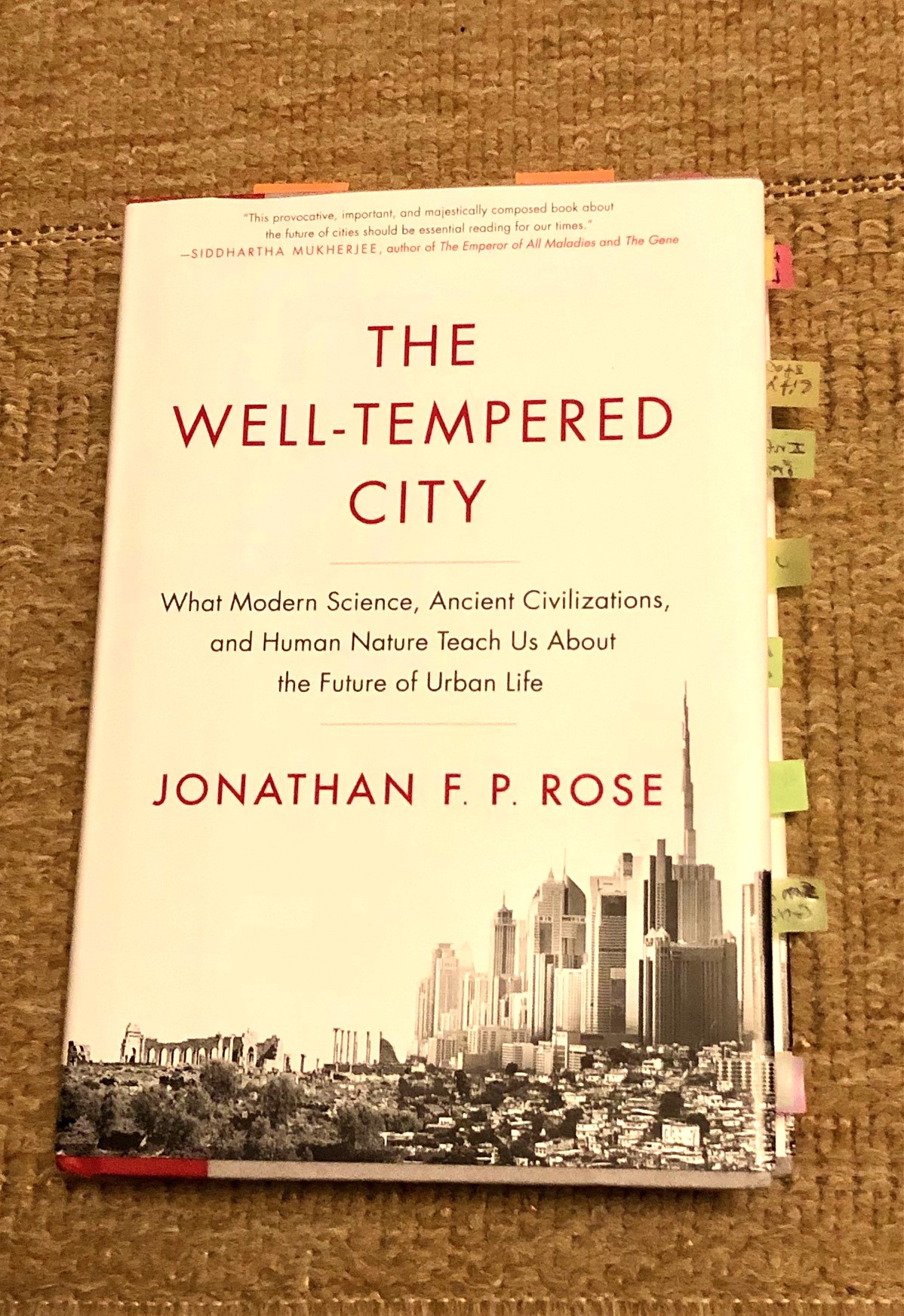
Book Review: The Well-Tempered City: What Modern Science, Ancient Civilizations, and Human Nature Teach Us About the Future of Urban Life by Jonathan F.P. Rose
This book starts with an introduction into what we can learn about ancient civilizations and includes a concept called meh, loosely translated as “an activating energy and the source of rules that guided the spiritual, social and moral basis of [what was] the Ubaid culture” allowing it to become the first society to develop a framework of integrative systems that we now call Urbanism.
I smiled every time I read the word meh, because I have a friend who’s a one-word guy most of the time and that word is “Meh.” Intonation of the word could imply that a proposed idea is good enough that he is willing to do it (i.e. go to a specific restaurant or movie.) He is neither excited nor unexcited about the idea. If you ask him how something was, and he says “Meh.” that usually means it could have been better. If you are fortunate enough to propose an idea that he really likes you are rewarded not with a “Meh.” but with a “Definitely.”
I feel that a lot of urban initiatives these days are met more with the kind of “meh” my friend prefers, a “wait-and-see” energy of approach then an “activating energy” for integrative social rules. Maybe it’s a bit of both. Anyone whose had more than a few rotations around the sun learns to approach things with cautious optimism.
The five qualities of a well-tempered city (p.20):
- Coherence – an integrated framework that unifies a city governing sections of departments, programs and goals.
- Circularity – transforming linear systems into regenerative ones.
- Resilience – the ability to navigate forward when stressed.
- Community – social networks that strengthen the individual in mind, body, and spirit.
- Compassion – creating a healthy balance between individuals and the collective well-being of the community at large.
Folded within these key qualities is how they relate to the nine “C’s” that made early human evolution to civilization possible:
Cognition, cooperation, complexity, culture, calories (food), commerce, control, concentration and connectivity.
Overall, a really good book that offered relative case studies to make each point. I learned so much! It felt like a college course wrapped in a book. I took a lot of notes and tabbed a lot of key sections that pertained to areas I was most interested in as you can tell from the book picture above.
Here are three things I learned about that really interested me:
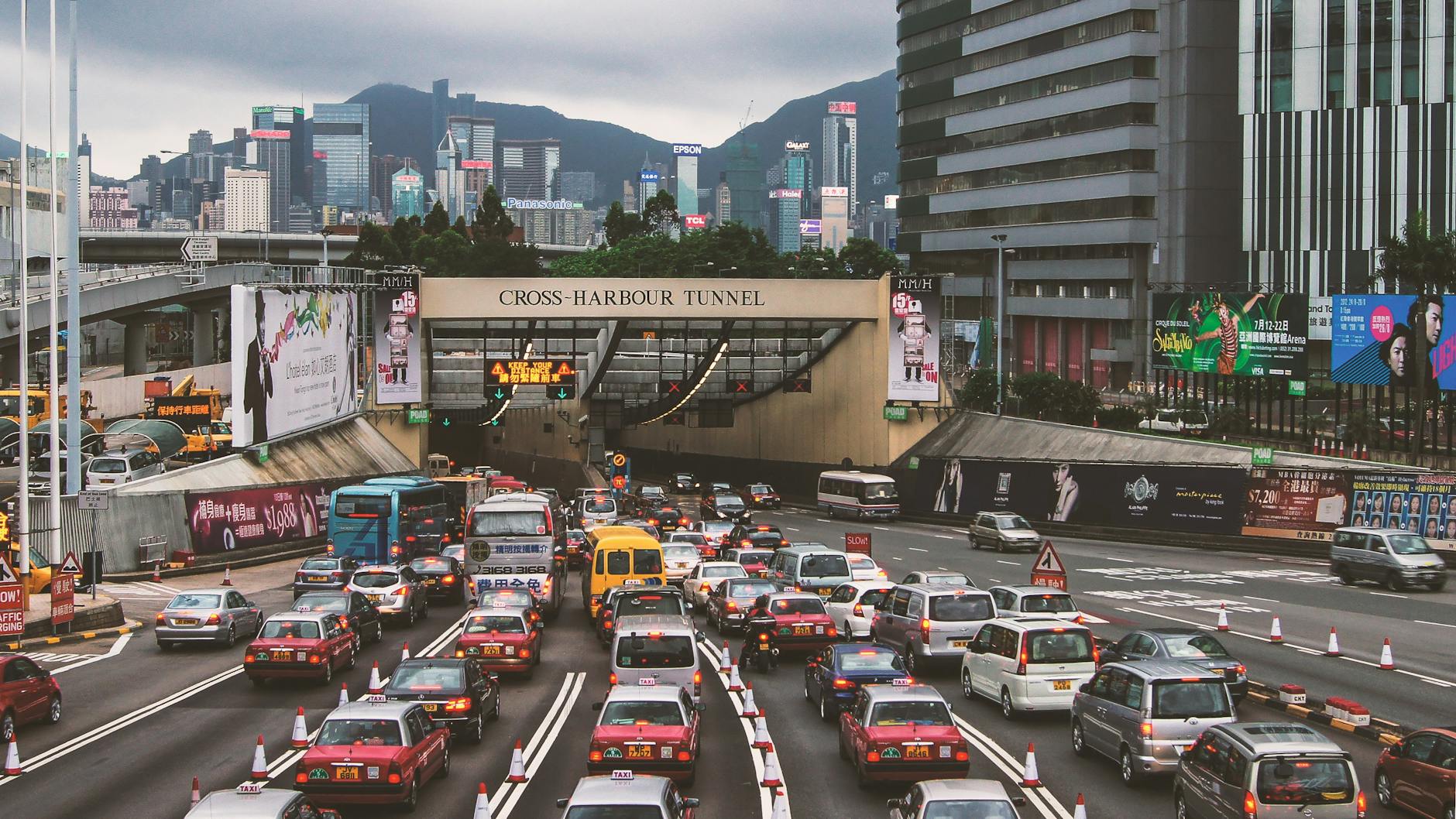
The Traffic Paradox (p.235)
More lanes create less efficiency, not more due to the Braess Paradox and the Nash equilibrium theory.
The basis of this is that drivers have a self-serving interest to take the shortest route possible from point A to B until so many people take that route that it is no longer shorter for anyone.
For a three-minute visual explanation of how this works visit this YouTube link: https://youtu.be/O8Wi1ZC_yL8?si=0HUdAC7tfLoHfcZx
This paradox is an excellent reason for why cities need to provide alternate means of transportation for city infrastructure. I’ve never been the kind of person interested in fancy job titles. It was always important to me to find a tolerable job with a tolerable commute. I spent the first half of my working life commuting to jobs that I could do by walking or taking a bus that rivaled or beat the commute time of a single passenger vehicles. Given the option, a safe walking route is always my preferred method of travel. One need not expend a lot of time or money working exercise and fresh air into their day when it’s imbedded into their daily routine. It also increases the opportunity for social interactions outside of school or work.

From Entropy to Emergy (p.238)
Eugene Odum and his brother Howard wrote the first Ecology book in 1953 describing ecosystems as communities of organic and inorganic elements. In this kind of closed circular system, the eventual entropy of one thing leads to the emergy or creation of newly stored information. “While entropy is always wearing down a system, emergy helps build it back up.”
Gardeners know this process well by gathering dead plant matter and wood chips to decompose, thereby releasing there nutrients as “newly stored information” in the form of compost to spread around young or existing plants.
Humans have learned to do this with paper products such as cardboard, but we need to do better at incentivizing more circulatory systems that benefit both humans and nature. My personal opinion is that one our biggest failings as modern societies is allowing plastics to be extracted and used so excessively for a lot of things that ultimately end up being cheap pieces of crap that can’t be recycled. The oil and plastics industries have powerful lobbying groups that allow our shared future resources to be exploited for meaningless crap. As a consumer, you speak with your purchasing power. In a market economy founded on supply and demand use your money as your voice wisely. If you don’t like something, make it unprofitable to support. It’s clear we can’t wait for governments to regulate appropriate solutions.

Easterlin Paradox (p.345)
Richard Easterlin a USC Professor wrote “The Economics of Happiness” in 1974 which found that more money increased happiness in those previously in low income or poverty situations, but that more money does not increase happiness for the affluent.
I’ve witnessed this firsthand having grown up low income and later working in an exclusive member-only club where members were required to make no less than $80,000/year (in 1998) and be sponsored by two existing members of the club. I started the job in 1998 at the height of the dotcom bubble in Seattle, WA where tech was making new millionaires seemingly overnight. The “new money” were often young tech entrepreneurs launching their first IPOs and expecting everyone to know who they were and have people cater to their every whim. They were loud, obnoxious and often travel entourages. The “old money” were people who were more often born into wealth. They were polite and reserved. Time was a luxury. If they couldn’t be bothered to wait for your assistance they would come back later or have someone else take care of it on their behalf. They had no need to yell.
The club had hotel rooms, and I worked the front desk. The rooms often sold-out months in advance especially during Huskie football season. I was handing one of our long-time members his morning paper when a young techie came up expecting my full and immediate attention. I asked the long-time member if he needed anything else. The young guy huffed impatiently. I gave him a sharp look and said, “You will wait your turn.” The older guy chuckled, tucked his paper under his arm and told me to have a nice day as he walked away. The young guy didn’t even last a year at the club. The dotcom bubble burst not long after. Nearly every new member that year was purged from the member roles before New Year’s. The young guy had no idea he’d rudely interrupted one of the richest men in the world and one of our longest-standing members.
I’ve had the opportunity to ask multiple people with famous names; “What bothers you most about being rich and famous?” They’ve all said in some variation that it’s hard to trust people. They said that everyone wants or expects something from you all the time. You can go anywhere in the world, but you can’t trust that anyone genuinely cares about you as a person. It seems reasonable to assume then that what you gain in monetary significance can cost you in a kind of spiritual deficit (i.e. honest connections with other people.) Some people aren’t bothered by the tradeoff, but it would bother me.
Final Thoughts:
I definitely recommend this book! There’s really so much to it that what I’ve provided here is only a small sampling. If you’ve read this book, I would love to hear your thoughts on it!
Thank you for visiting!
 The Nature-led Life
I know you only return sporadically, but it’s good to have you back, Melanie.
LikeLiked by 1 person
Thank you, Schingle, I appreciate it! It’s nice to know I haven’t been forgotten!
LikeLike
I think that’s very true about money and fame. “Just enough is plenty” is a good motto for life.
Also–building more highways outside the city also just increases the number of drivers, it does not make driving anywhere less crowded or more efficient. No one needs a car in a city. The money to “help” people with cars would be be much better spent on helping them to live without them. Everywhere, really.
And Community–that’s where everything starts. So hard when people are never not looking at their devices…(K)
LikeLiked by 1 person
Definitely, I agree Kerfe! This was one of those books where I could recognize the problems, but I didn’t know if they had a name or what it was. There are a lot of smart people in the world trying to solve a variety of complex issues, but it’s hard to discover when you don’t know where to look.
LikeLiked by 1 person
That’s true. Although ignorance seems to be a badge to wear proudly these days.
LikeLiked by 1 person