spread your wings carry the night in silent flight
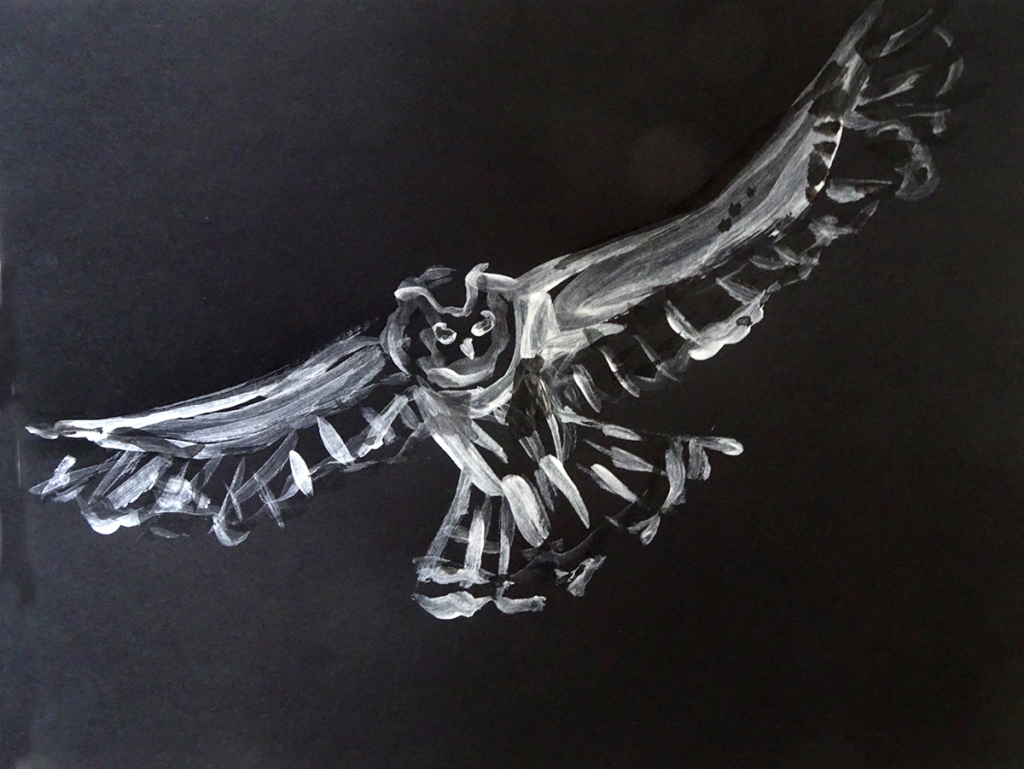
The eagle owl is both one of the largest and longest-lived owls. With wing spans up to 6 feet, it has no natural predators, although it is sometimes mobbed by crows. The leading causes of death– electrocution, hunting, and poisoning–are man-made.
Nesting on cliffs or rocky outcrops, it has a wide distribution throughout Europe and Asia. I love its binomial name–Bubo Bubo.
Eagle owls are solitary, territorial, and nocturnal. They can more often be heard, having a large number of vocalizations, than seen.
I read an article in the Smithsonian magazine about Dasia Taylor, a high school student from Iowa that received an award for her research in creating color-changing sutures to detect infections by using beet juice. Her project idea came after she read about “smart sutures” which involves coating the sutures with a conductive material that can detect changes in the wound by the changes in electrical resistance. I don’t understand exactly how that works without a picture or video because I tend to be a visual and experiential learner, but that’s not what’s important here. What’s important is that these technology-based sutures capable of relaying the information to smart phones or computers are not cheap, nor are the materials to make them.
While Dasia was reading about these sutures, she thought about the racial equity work she does in her community and how universal something like wound care is. As part of her research, she found that in some African nations up to 20% of women who give birth by cesarean section develop infections at the surgical site. So how do you make sutures that can detect infections without smart technology?
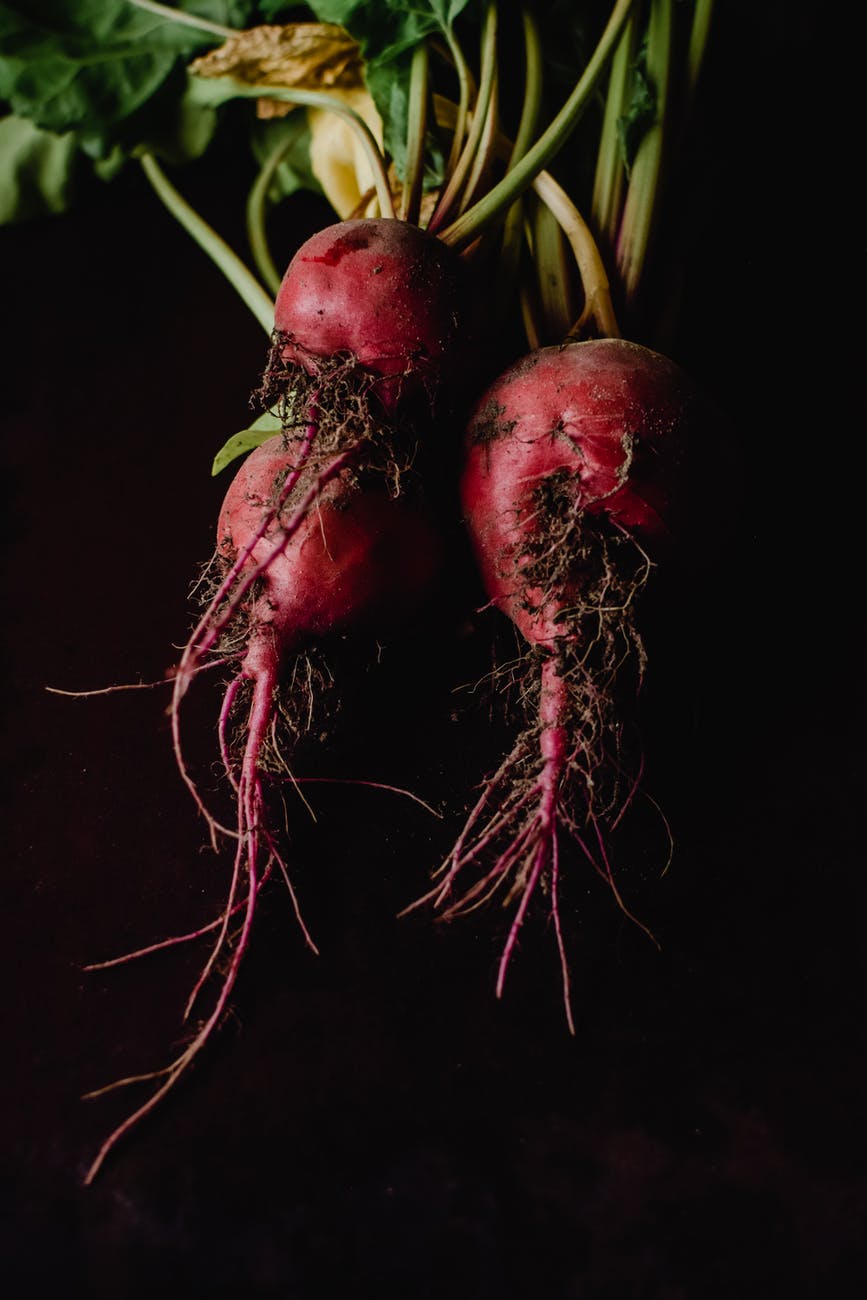
Dasia’s solution was to look for something that could measure the Ph difference in the skin. Healthy human skin is naturally acidic at around pH 5. Infections raise the pH level to around 9. Many fruits and vegetables change color at different pH levels making them natural indicators for different pH levels. Red beets (Beta vulgaris) ended up being Dasia’s best candidate. While her research isn’t perfect yet, she was able to demonstrate that it works and that vegetable dyes can be a viable, low cost solution to wound care.
More works needs to be done, but I’m bringing this to your attention because it illustrates some important realities.
You can’t have racial or social justice without environmental justice (and vice versa) due to economic and resource disparities throughout communities, countries, and regions.
Technology will not save us. It can help in many ways but looking to technology as our first response to everything is both arrogant and irresponsible.
I’m currently researching the question: Can capitalism be Green?
I’m currently settling on the answer: Cloudy with a chance of sun.
Our current capitalistic systems of commerce are not green and never will be if they remain as they are. We must reject the fallacies of “trickle-down economics” and “companies being able to police themselves.” It’s like leaving a toddler alone with a cake. Why would you think that’s a good idea?
Here’s the sunny part though, I think if we breakdown capitalism at the particle level, we can reconstitute it into a true Green economy. We are the particles. We are the grains of sand that can change the color of the beach. We make economic-based decisions everyday by what we purchase and organizations we choose to support. I think true radical change has to come from us, the people. We need to change our behaviors. We need to choose to be Nature-led, Social Justice minded people and societies every day. New patterns and pathways take time for our minds to adjust. When I first started using reusable bags for the grocery store, I would forget a lot. I didn’t give up and I kept trying to do better until the new pattern became the norm and I rarely forgot them. By the time the Pandemic hit it was hard to leave my reusable bags in the car. We knew so little about the Covid-19 virus in the beginning though, but I wasn’t willing to risk my safety or the safety of others around me. I kept the single-use bags I was getting and when it was considered safe to do so I recycled them. Here in the U.S. we have special containers at the store specifically for recycling clean, dry plastic grocery bags.
More needs to be done though. We need to make bigger advances faster. How? How can I/we be a part of those advances? I believe we need the thoughts, experiences and imaginations of everybody, every age, every perspective to find innovative solutions. We need to be excited about working towards common goals. I think an innate part of us seeks to be part of something greater than ourselves. We are after all social creatures.
“Grandma enjoys cooking her grandchildren and dogs.”
“Grandma enjoys cooking, her grandchildren, and dogs.”
Some people, like sentences, need to be approached with caution. One of the things I miss the most about our current life in this pandemic is walking my son to and from school. Those brief strolls in nature, fresh air, and the opportunity for him to decompress and tell me what’s on his mind. Sometimes we get to see things like these cool mushrooms. *Do not eat*
I can’t tell you how many adults I meet that ask, “What is this plant/fungi?” Follow by, “Can I eat it?” Like the natural world is some kind of giant salad bar! Leave it to the children to ask more sensible questions like “Is this poisonous?”
Earthstar mushrooms
The other thing I liked about walking my child to school were the brief interactions with other parents. Nothing overwhelming for this devout introvert, just a brief “Hello” and “How about that rainstorm last night?” During one afternoon however, a mom whom I’d never met before strolled up to stand beside me. I thought she just wanted a simple chitchat, but she quickly whipped out her ulterior motive. “So what do you like to eat?” (hmm, strange conversation starter but okay.) “I’ve been a pescatarian for 23 years, actually. Which means I’m mostly vegetarian, but I eat fish once or twice a month.”
She turns to me and gives me this really scathing look and says, “Well, that’s not good enough!” She looks me up and down in disgust and proceeds to say, “You need to do better. You need to be Vegan!”
Whoa, Lady! Now I get it; why some people would get all shady and defensive when I’d mention being mostly vegetarian. They must be holding their breath waiting for some kind of lecture or critical assessment about their diet. Many don’t realize I’m a vegetarian until YEARS into our friendship or association with each other. Honestly though, you could eat old leather shoes for all I care. I’m not interested in telling other people how to eat. I’m happy to offer my perspective and concerns about certain topics, but your choices belong to you. I realized that woman had walked up to me spring-loaded and ready for a fight. She must be fun at parties.
I looked her dead in the eyes with a slow creeping smirk. Sinister? I was going for sinister. “You know you’re right. I could use more protein. I think I’ll add VEGAN CHILDREN to my menu!”
Of course, at that moment the bell rang and all the kids came pouring out around us. “Which ones are yours?” I asked.
I haven’t seen that mother since.
Photo credit? Uncredited, found on Pinterest ☹
So yeah, we could all probably do better on making our diets healthier and less of a strain on natural resources, but I’m not going to do it because some crazy lady yelled at me. If you or a loved one has worked through a major life change, then you should know change only happens because the person is invested in making those changes for themselves. All you can do is provide support. They/You have to do the work.
I would like to recommend eating less meat though. The choice is yours. From my personal experiences, I refuse to accept or ignore inhumane treatment of any living thing. I refuse to support factory farms, especially where the lives of animals are concerned. Factory farms in the U.S. are decimating the competition, which are your local, family-owned small farms and ranches for profit. Generations-long family farms and ranches are breaking under poorly managed government subsides, the lobbying power and money might of factory farms and climate change. What bothers me most is that I know factory farms don’t care about the wellbeing of their workers or the animals they process. They also don’t care about the degradation to the land around them. I know, because I’ve been a food factory worker. I’ve worked at places that treated their workers as well as one could hope for in such an industry and I’ve worked for one that treated us like meatsack automatons. It’s grueling invisible work that damages your body and crushes your spirit if you let it.
In 2004, I had the opportunity to go to Karnataka, Southern India as part of my undergraduate degree for Social & Environmental Issues. I met with several Indian nonprofit groups who were trying to make positive changes in their communities. Some of the people I had to meet in the middle of the night, trucked out in the middle of nowhere because they feared for their lives. Their only crime was being gay and wanting to advocate for gay rights, other were survivors of corruption schemes by government entities or a major corporation. One of the groups was informing farmers of their land rights. Some of the farmers had no idea their lands were about to be claimed in the name of Imminent Domain because the notices were being posted in English in Bengaluru (formerly Bangalore) newspapers as notices. The farmers cried. This is not the end. We can still be agents of change like the Great Green Wall project across several African nations helping to repel desertification and support affected communities.
Where ever you live, you have the power to affect the great good. It’s always been there. You can make change happen. The factory farms make things cheap and easy for you to mindlessly buy from them. I’m asking you to stop for a moment and add a comma (a pause) to consider your options. Will you buy it because it’s cheap and you don’t have to think? Would you notice if the ingredients list started to change?
We may not be eating the children (yet), but we consume their future world with our choices.