It’s Springtime and I’m springing into action trying to get our homestead, affectionately known as the Fernmire, ready for the warm seasons. Why do we call it Fernmire? Because we have lots of ferns and it can become quite the mire through the rainy season, roughly October through May. I also just really like the name; it goes with my whole “Bog Lady Witch” aesthetic that I’ve been dreaming up in my brain. Strictly for my own entertainment purposes. My rituals are very mundane (like making coffee in the morning) and my curses are basic (like calling bad drivers “a dirty biscuit eater” because it’s better to be annoyed and amused than all about road rage.)
Humans aren’t the only ones who get annoyed about near misses. The birds are going crazy right now! They harken the early morning dawn at 6am now. The Juncos, in particular, are bad drivers flyers and the chickadees aren’t having it! I nearly got hit by a Junco the other day! Did it mistake me for a moving tree? It narrowly missed my face, which would have been unpleasant for both of us! There are of course some rivalries going on as the birds vie for mates making them bolder and maybe not so smart in the throes of passion.
This is the time of year when we see an increase in birds hitting the windows. I’d always hoped if we kept our windows dirty enough the birds wouldn’t hit them, but there’s always a few that seem to hit the windows in the dining room despite the dirty windows. So, this was the year I put forth the effort to clean the windows and put window clings on them that should hopefully stop unnecessary death. There is enough drama going on with the Avian Flu right now, affecting birds and mammals alike. While I don’t want to get into it, I’ve heard several heartbreaking first-hand accounts from Wildlife Enthusiasts/Birders and Wildlife Rehabbers alike of Great Blue Herons, Raccoons and Foxes dying or being humanely euthanized due to complications from HPAI H5N1.
Anti-strike Window Clings Photo By Melanie Reynolds
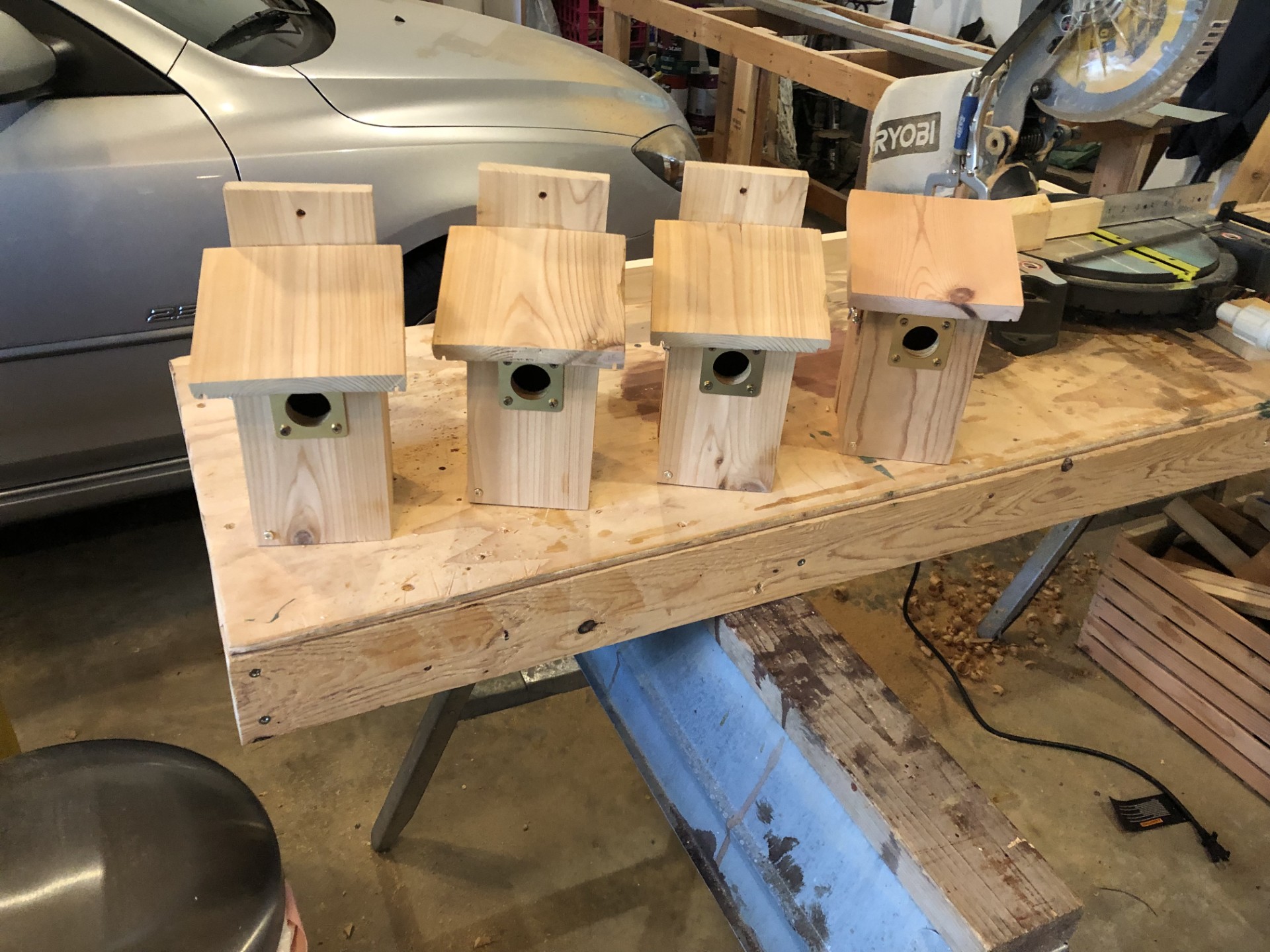
This is the year we were also on time for making a plethora of new birdhouses! You can make four birdhouses from one piece of cedar wood fence plank; the fifth one was made out of spare wood we had as the initial prototype. If you would also like to make birdhouses this is the website we used for instructions and cut sheet. It’s hosted by the Cornell School of Ornithology, which also hosts the wonderful website All About Birds.
I hope you are well and have the chance to get outside! If you’re doing anything special to support your wild neighbors this year let me know in the comments below!
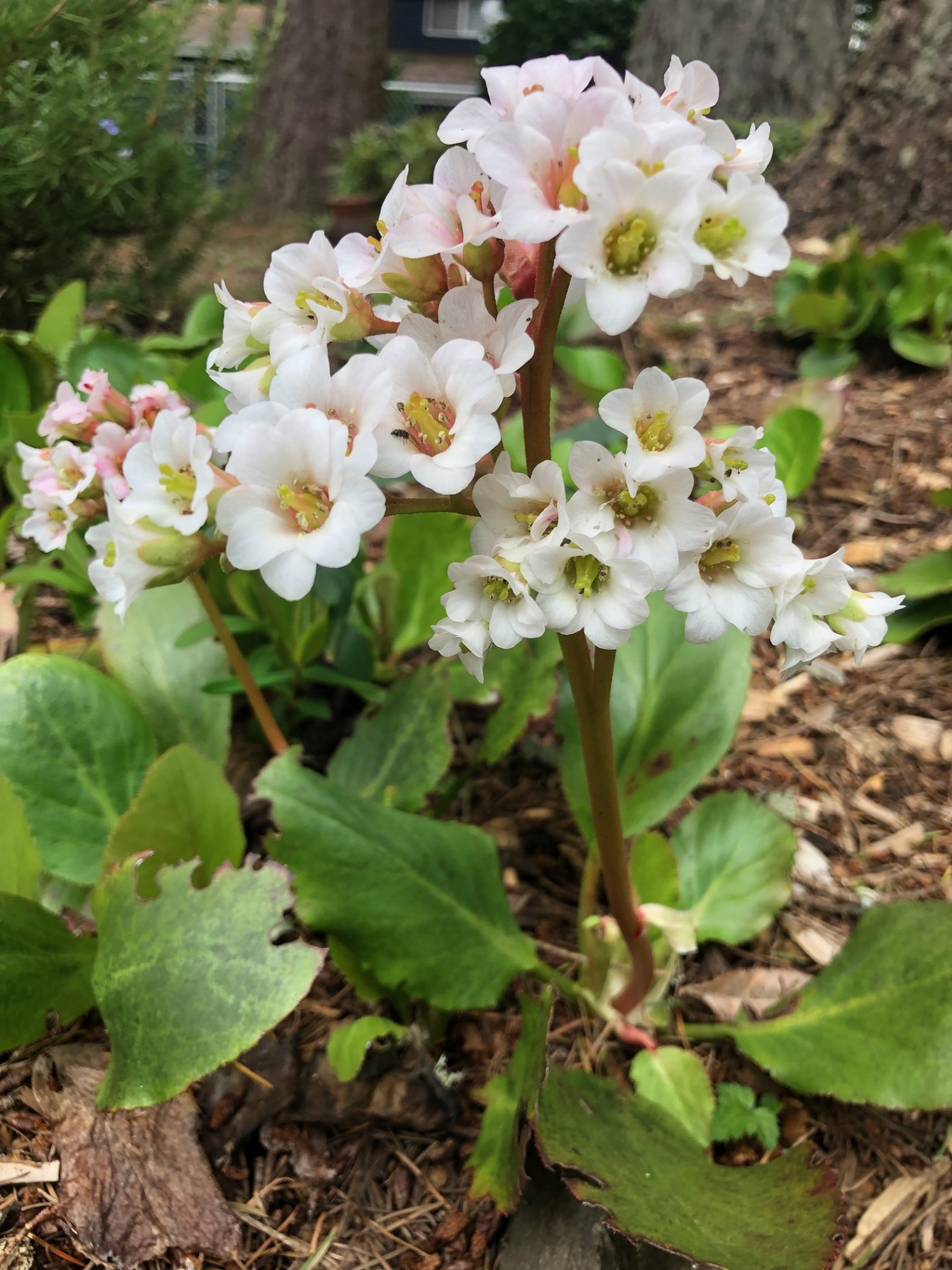
Flowering Begonia 2025 By Melanie Reynolds
Additional Links:
For more information about Avian Flu impacts visit the page of the Native American Fish & Wildlife Society below:
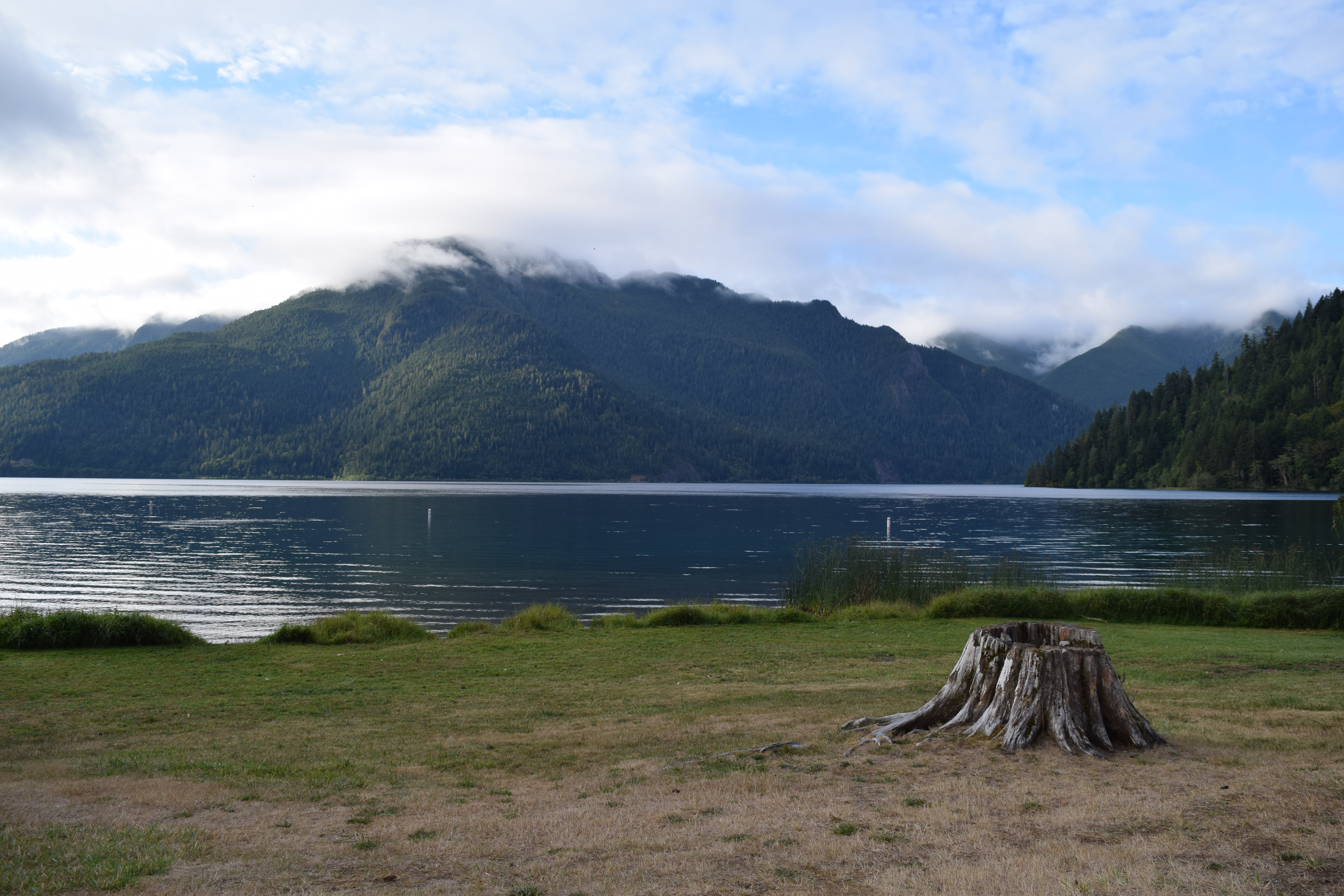
My New Year’s gift to you is the picture above. Lake Crescent, located near the Hoh Rainforest, and one of the quietest places in the United States according to the Gordon Hempton’s project, One Square Inch of Silence.
Between the holidays and the crazy weather, I doubt many of you were quiet or restful for very long. This month’s photo submission was a bit of a washout. I kind of suspected this might happen. Life, like all forms of energy has its own ebb and flow similar to water. I’m neither sad nor disappointed.
Please join me in thanking Lisa Troute and Tracy Abell for their photo submission!
So cute!
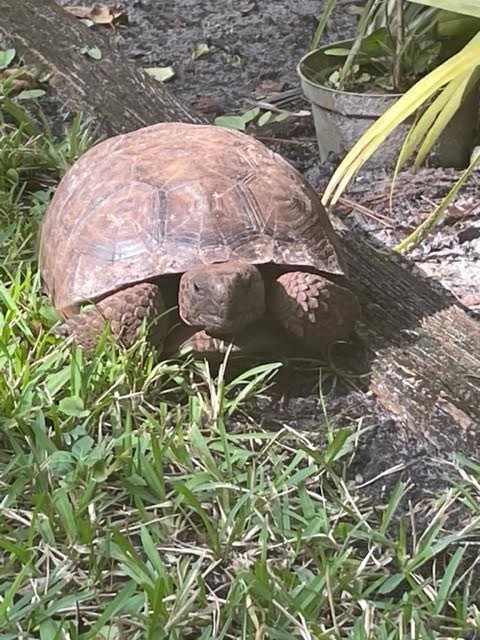
Gopher Tortoise By Lisa Troute Jupiter, Florida.
The Gopher Tortoise is a threatened species under the U.S. Endangered Species Act in its native territory of the Southeastern United States. It is the only tortoise found naturally east of the Mississippi River. They can live up to 40-60 years in the wild and 90+ in captivity. (https://myfwc.com/wildlifehabitats/profiles/reptiles/gopher-tortoise/)
Lisa says that a lot of animals use the tortoise’s burrows including snakes and small animals. I found this 1:45min clip on PBS Nature about how these other animals also rely on the burrows for safety during fires and hurricanes. This makes the Gopher Tortoise a Nature-Led hero in my book! Wolverines and Badgers might also make nice burrows, but they’re rarely inclined to share their home with others.
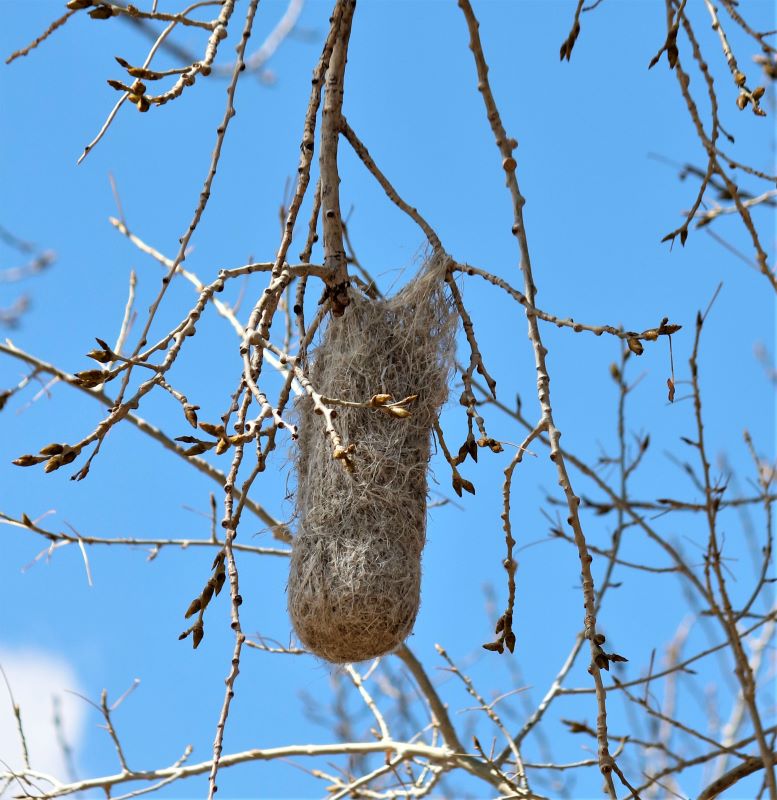
Unknown bird nest. Barr Lake State Park, Colorado. April 8, 2021 Tracy Abell / Another Day On the Planet
While Tracy captioned her picture as “Unknown bird nest” I had fun playing Forest Detective and we think we know whose nest this is. Our guess is that it belongs to a Bullock’s Oriole. This type of nest is called a “pendant nest”. I did my original search calling it a “hammock nest” and some other people searched for it calling it a “sock nest”. Whatever you want to call it though, it’s an interesting nest and I love it!
Thank you again Lisa and Tracy for giving me interesting pictures and non-rabbit holes to follow!
Finally, let’s just call this bonus content. Do you need more inspiration for getting excited about nature? Well, check out this lovely fellow and his Becorns! This is a true pleasure to watch. I also appreciate that he has a calm, casual voice similar to my own.
Video belongs to: David M Bird
Nature-Led New Year’s Goals?
If you’re the kind of person who likes to make goals for the new year, what are some of your goals for 2023?
Can you think of how to make these or other goals, Nature-led goals?
Future Photo Submissions:
January: Moss Due: January 31st (Posted Feb 1st PST)
Email to: natureledlife@gmail.com, Subject line: Photo Submission for [month] (Multiple months of photos in one email is fine.) Image: Attached as a .JPEG or .PNG file preferred. Captions each picture: Subject in the photo (if known), State/Providence & Country, Date (optional). Your name as you want it to appear, Your blog link (if you have one.) Feel free to add any interesting notes about a picture. I love interesting stories behind things! Let me know if it’s just for ‘my eyes only’ or if I can share any part of it with your photo. Pictures must be your own or you have permission from the Photographer to share it. All copyrights belong to their owners. This is just a free, fun, community site about nature.
As always, THANK YOU for being here and being part of the Nature-Led community!
But wait there’s more! Here is Dinah’s on the cusp photo submission for “Nature at Rest”!
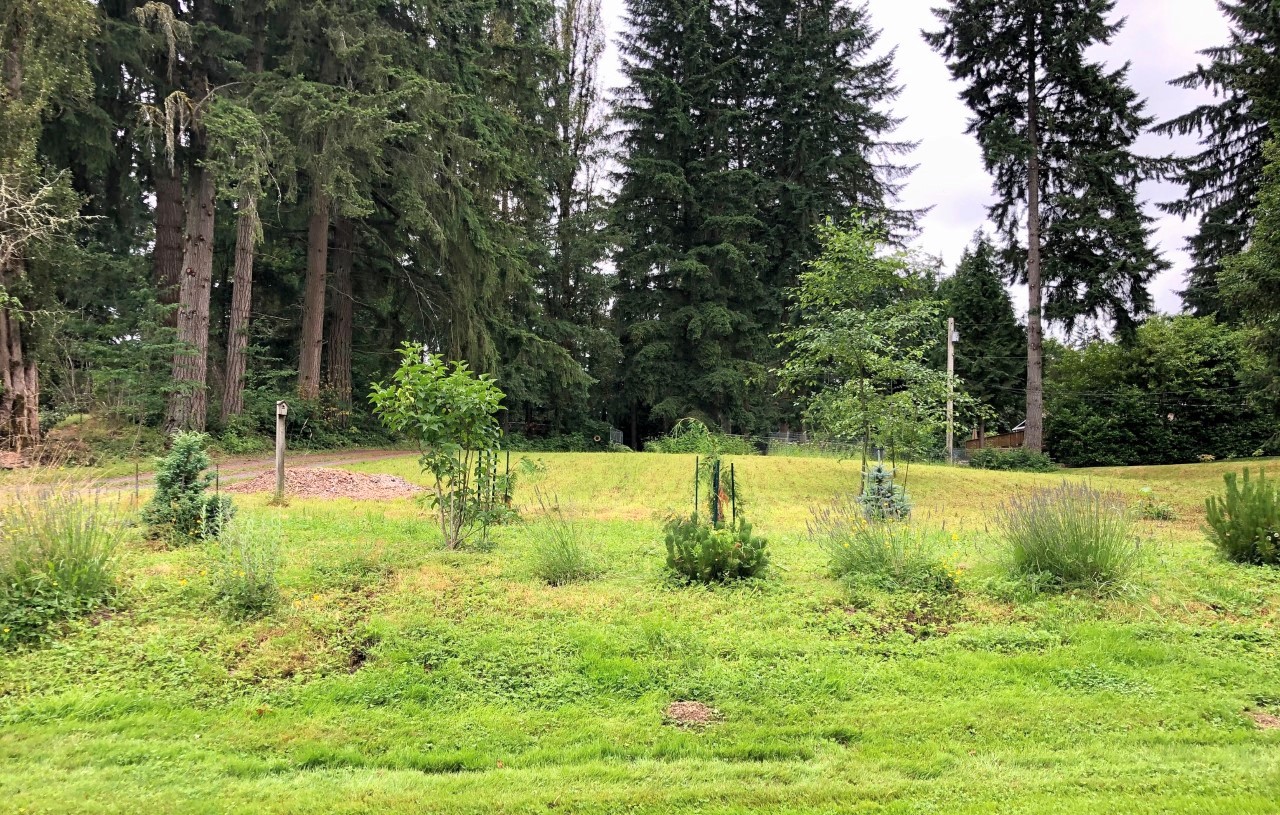
Fernmire Field 2021 – The hawks lived in the fir trees to the left. Neighbor’s field is on the other side.
For five year the Red-Tailed Hawk couple guarded mine and my neighbor’s fields. They kept my cherries and the baby birds of Robins, Junco, Towhees and Chickadees safe from the crows. They also kept the cherry tree safe from a traveling group of rock doves every year too. Occasionally the crows that lived at the end of the street would try to come down and mess with the hawks, only to be chased off. The hawk couple feasted on the field mice, the occasional adult robin, and the occasional small rabbit. Mostly though, the rabbits were left for the bobcats and coyote.
In the Spring of year six an eagle came through. I was in my home office enjoying the partly sunny day when I heard the hawks raise the alarm. Then I heard the bald eagle. I think at first the eagle was trying to go for the hawk chicks or eggs. The nest was near the top of a 150ft high Douglas fir tree. In the time it took me to run down the stairs slip on my shoes and run out the door the eagle had taken female hawk and carried her off.
I’m the kind of person who is careful not to anthropomorphize wild animals with human emotions. How they move about the world doesn’t have to relate to how humans do, they are unto themselves. I can tell you that the male hawk grieved in his own way. He stayed close to me for weeks every time I was outside going so far as to awkwardly hop along the low branches as I took my dog for walks up and down the street.
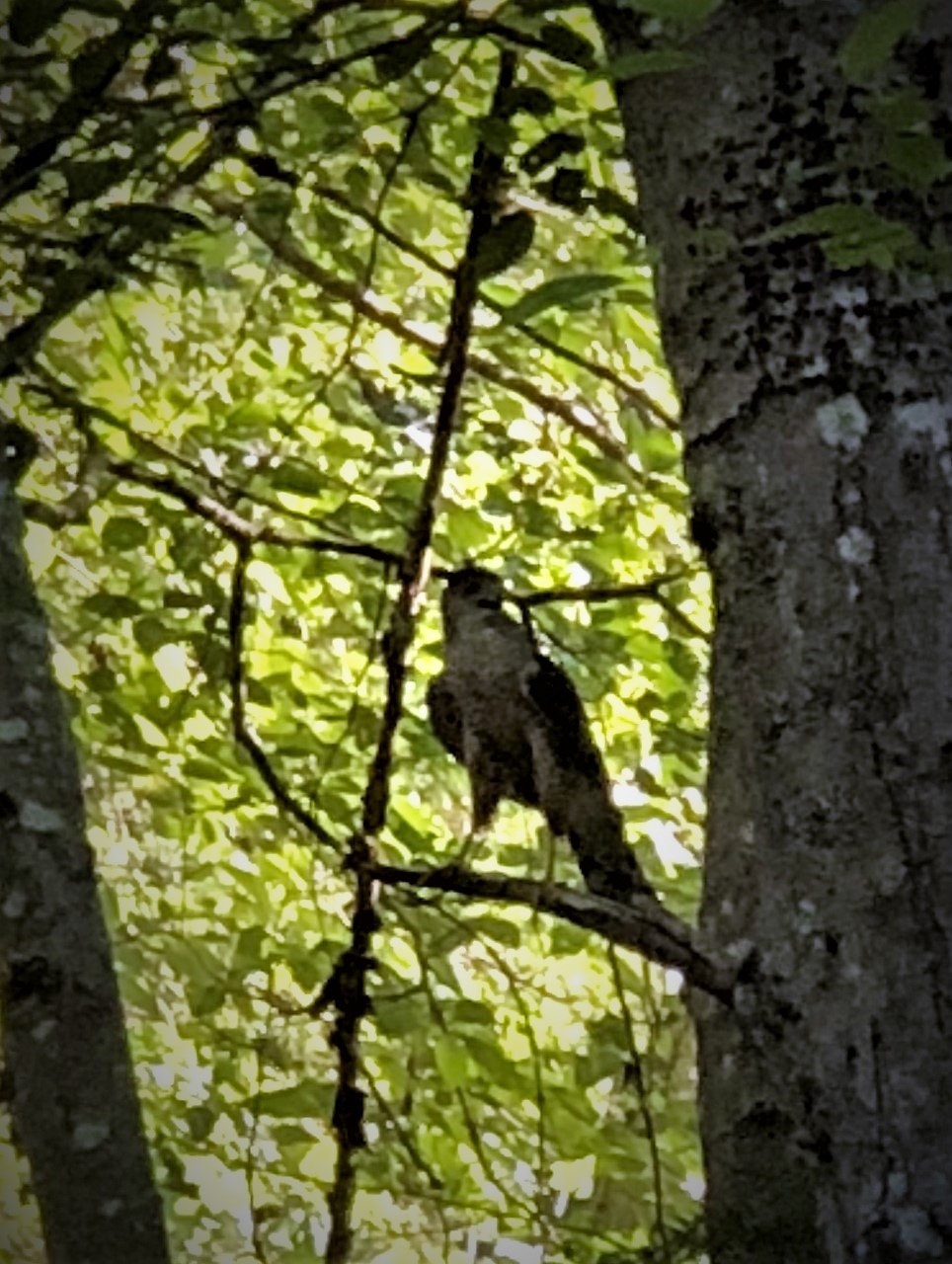
It didn’t feel right to take a picture of a grieving friend. That this image came out low-quality seems appropriate.Taken June 2018 when he was still a Juvenile.
At the start of year seven and he found a new mate. She surveyed the land and decided that this was not where she wanted to build their nest. They moved over to a stand of Douglas firs over to the open meadow one street over on the far side of that cul de sac. The male hawk would still come to visit sometimes spanning the out perimeter of his territory to swoop by and let me know he was still around. They were infrequent but appreciated.
Then an official looking letter arrived in the mail announcing a new development coming to the neighbor, nine new luxury homes on the nine-acre plot over on the far side of the cul de sac behind me. There would be a retention pond to satisfy the requirements of an environmental impact assessment. On paper it didn’t sound so bad. One fancy house per roughly one acre, minus a few feet each for the retention pond. I didn’t fight it. I didn’t want to be a NIMBY (Not In My Backyard.) Having worked for local government I know they’re required by the state to provide a percentage of new housing each year. The reasoning behind the mandate sounded fair enough; no one city should be forced to provide all the new housing in the state. It’s calculated by some formula based on the percentage of existing city population, jobs, and other data. There is no deny that my city 15 miles outside of Seattle is growing as people flee the inner city.
I know there are better ways, but politicians don’t like complicated muti-level strategies for complicated multi-level problems. It’s hard to win an election with a five-paragraph vision statement. It’s hard to boil down the essence of it into a catchy five words or less campaign slogan.
They started cutting down all the trees in October 2021. Not just all the trees on the nine-acre lot but all the along the road leading to it. A hundred-yard scar. It took those trees 80 to 150 years to get as big as they were, and I know they will be replaced with grass and generic landscaping plants purchased by the dozens. The endless rows of arbor vitae around here make my right eye twitch with rage.
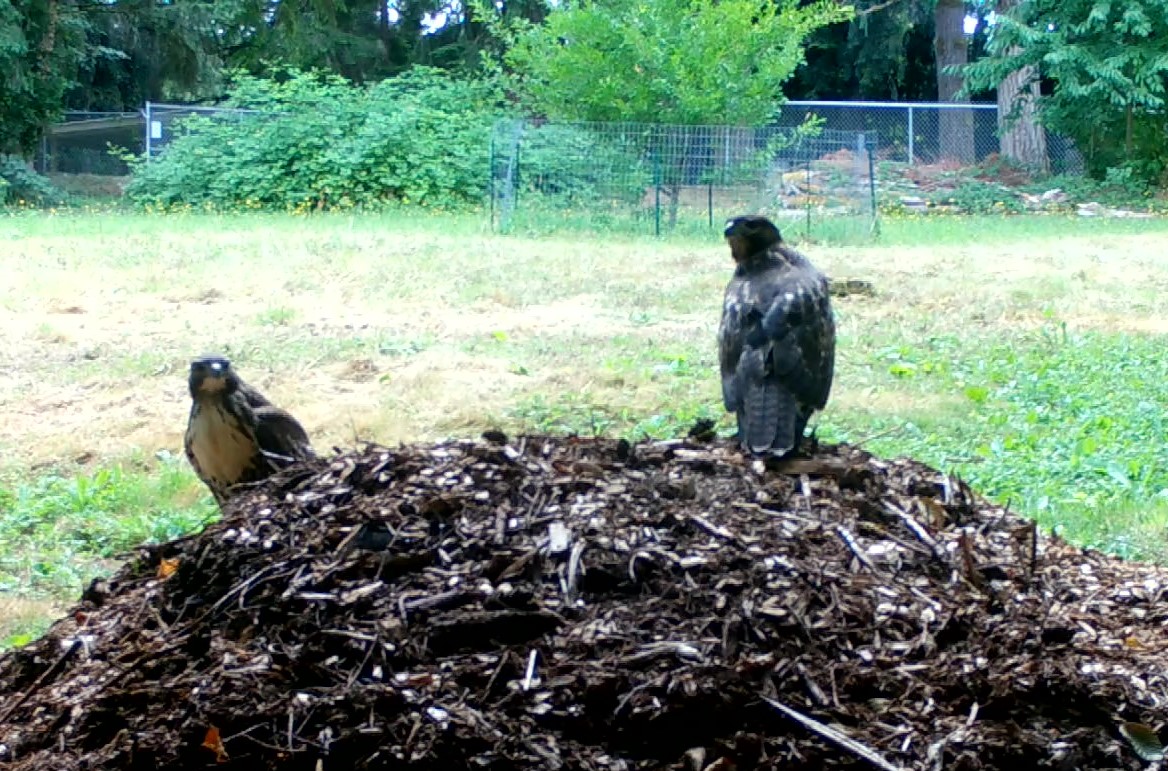
Red-Tailed Hawk Couple, 2021 – Hawk friend on the left as a full adult male, 2nd mate on the right.
The hawks came back here for awhile and feasted on the field mice once again. The constant drone of the earth movers permeated the air and ground as they rumbled to flatten the land. After several days of feasting the hawks left to find a quieter place and I don’t know if I’ll ever see my friend again.
This is the first Spring without their watchful eyes. The crows have come, one in particular, the one I’ve never liked. It likes to torture things. It’s one thing to kill to live, but some animals like to play with their food before they kill it. It’s a facet of nature struggle to tolerate. My attitude towards crows, domestic house cats, Killer Whales (aka Orcas) and hyenas is muted because of it. I’m human, I have opinions.
So this crow was watching and then one day it went around and ate all of the baby birds and eggs of all the nests I knew to be around me. At first, I tried to scare it off, then I put the dog outside to do it for me, but the crow is smart. It knew there was nothing me or the dog could do about it’s raid. One by one each nest was destroyed. I’ve watched this crow scare rabbits into the path of oncoming cars. Just this Wednesday my spouse and I watched as the coyote was about to miss the opportunity for a rabbit, but then the crow swooped down and kept swooping at the rabbit. The coyote stopped to watch. It was clear to us that the crow was trying to scare the rabbit in the direction of the coyote. This isn’t because the crow is concerned about how skinny the mange-infested coyote is, it only wants to use the coyote as a tool to get the rabbit. Sometimes, certain animals can be “stressed to death” rabbits and chickens in particular. I’ve seen a crow do this to a baby bunny before.
The commotion caught the attention of our dog who started barking. The coyote decided not to participate in the crow’s scheme. This is what it means to be a keystone species for an ecosystem. The hawks only take the mice and the occasional adult bird or a rabbit. The crow kills the eggs and baby birds before they can mate, denying any potential for replacement value. During the heyday of the hawks there was one morning I counted nineteen Robins in the field! Now the Robin count averages around five or six. The nest raids started last year when my hawk friend could only occasionally fly by. Now the crow has no true competitor except other crows wanting a piece of the action.
I can’t completely restore the balance that the hawks once provided, but I can do something. I am not just a passive observer of this micro-ecosystem; I’m integral part of it. Humans influence everything around them even when they try not to. Think about your own sphere of influence within own micro-ecosystem(s).
It’s time to build some birdhouse to counterbalance. Give the eggs and baby birds a fighting chance. It might be their fate in life to be food for something, but it doesn’t have to be today. I’ve been trying to build a better nesting layer into my landscape for years, but it takes so long for these shrubs to grow bushy enough to offer the protection the smaller birds need. Maybe by the time the nesting boxes are rotted away the bushes will be ready.
(The Cornell Lab is one of my favorite organizations that I try to donate to annually. Their website is a valuable resource, and they don’t spam my email with donation requests.)


 The Nature-led Life