Please help Shira Dest and others by joining their community project of creating a book and partnership to “Do Better” (formerly known as Baby Acres) Beta Readers are needed, a logo design is needed and more. See this landing page for more details to put a floor under poverty.
We need, still, a better central portal set up for the project (any volunteers to do that, please?). This temporary page works for now, I guess, maybe?
Oh, and a logo, please, although a friend of a friend may be working on this, not verified yet.
The sections, of my nonfiction WiP Do Better, every Wondering Wednesday, …
Not always in the rumor of the water we know her secrets.
Warm or cold, it floods us or bathes us in the course of her passage.
Not always, you are always there.
Inviting to drown sorrows walking towards your depths.
You sing or I sing in the emptiness of the sea shells.
Treasure chests that were lost in the bellies of two-legged squid, but never in those of the fisherman who seeks sustenance.
Wet maps that have erased their marks between salts of tears of pirates or conquerors who dreamed of setting foot on land and anchoring in castles.
I, who have seen you quench all thirsts, who have felt you moisten bare skin with scales.
I rise before you, serving as a relief to the passerby, who loaded goes with messages of stories that bind hearts or unleash wars.
I have been made of your stones, your sand and your murmurs.
I have shouted with the anguish of those who throw themselves into the emptiness of emptiness of your abysses, silencing the loneliness left by oblivion.
I have also fallen, through negligence or carelessness of man, that once was a fish and dreamed of connecting two worlds.
Maybe that’s why he comes back to you. With those same hands that were fins one day, tired of swimming, he started to walk, and came to the surface to build me and rest upon me.
He comes to remember how to breathe, and see the horizon in your immensity. Man thinks, yearns. He puts his fins in his pockets to get a coin, the one that gives value to the land. And he throws it to ask fate that in siren songs, they dive and from their ancient world, magically, human vanities can be satisfied.
Spanish version:
Lo que se murmura entre el puente y el agua
No siempre en el rumor del agua sabemos sus secretos.
Cálida o fría nos inunda o nos baña en el recorrer de su paso.
No siempre, siempre estás ahí.
Invitando a ahogar las penas caminando hacia tus profundidades.
Cantas tú o canto yo en el vacío de las conchas de mar.
Baúles de tesoros que se perdieron en las barrigas de calamares de dos patas, más nunca en las del pescador que busca sustento.
Mapas mojados que han borrado sus marcas entre sales de lágrimas de piratas o de conquistadores que soñaron pisar tierra y anclarse en castillos.
Yo, que te he visto saciar todas las sedes, que te he sentido mojar las pieles desnudas de escamas.
Me elevo ante ti sirviendo de alivio al transeúnte, quien cargado va con mensajes de historias que unen corazones o desatan guerras.
Me han hecho de tus piedras, de tu arena y tus murmullos.
He gritado con las angustias de quienes se lanzan al vacío del vacío de tus abismos, acallando la soledad que deja el olvido.
También he caído, por negligencia o descuido del hombre, ese que alguna vez fue pez y soñó conectar dos mundos.
Por eso quizás regresa a ti. Con esas mismas manos que fueron aletas un día, cansado de nadar se echó a andar, y salió a la superficie para construirme y posarse sobre mí. Viene cuando acaso recuerda cómo se respira, y puede divisar el horizonte en tu inmensidad.
Piensa el hombre, anhela. Mete sus aletas en los bolsillos para sacar una moneda, esa que le da valor a lo terreno. Y la lanza para pedirle a la suerte, que en cantos de sirenas, se sumerjan y que desde su antiguo mundo, mágicamente, se puedan satisfacer las vanidades humanas.
Photo by u0412u0430u0434u0438u043c u041cu0430u0440u043au0438u043d on Pexels.com
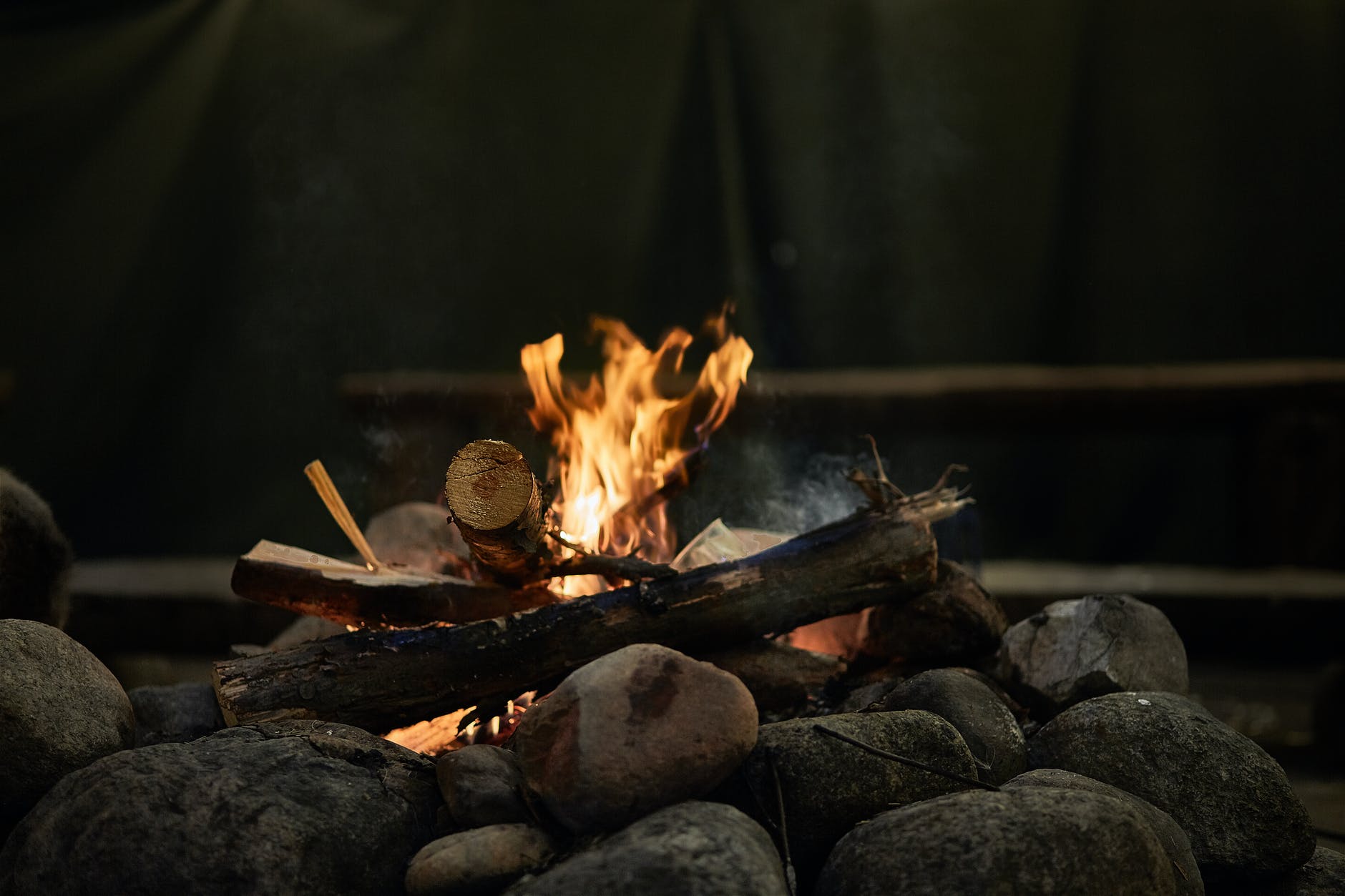
Wendigo (English translation of Ojibwe word wiindigoo) Cree language: wihtikow or wetiko. There are 21 other spellings of the name. The term is from the Proto-Algonquian family of languages. These First Nation tribes that carry the story of Wendigo inhabit the cold North American territories of Eastern Canada, the Plains region of the United States and the Great Lakes region of both the United States and Canada.
The story of Wendigo is often told during times of famine and starvation. It is a reminder that cannibalism, in particular, is wrong and evil in the eyes of the people. Historically, many indigenous tribes name themselves in their own language as “the people” to define themselves as different from the buffalo, bear, or other animals. Through generations of retelling, stories remain relevant when they are able to convey the social mores (aka values) of a people when dealing with adversity. While cannibalism has ceased to be a pressing concern for modern people, these stories are given new life in the hands of respected storytellers. The story of Wendigo now expresses a shared concern for a new metamorphosis of cannibalism in the form of greed, filth, and malevolence itself.
Original Story elements:
Wendigo is an anthropomorphic giant that uses treetops as snowshoes and eats humans. At other times Wendigo are humans inhabited by the Wendigo spirit and partake in cannibalism. Both the anthropomorphic giant and the human Wendigo share characteristic traits of being emaciated, skin and bones, their fate is to always crave more flesh and never be sated. They can grow in size by how much they have eaten but never fill full.
This last part is important as we consider the allegory of Wendigo, to have so much and never be satisfied, never be content or feel full. Now in modern North America where so few of us are like to die of starvation the parable takes on a new meaning when we think about greed. I think about Wendigo often. As a modern storyteller, I view the story of Wendigo a gift and a warning from the Proto-Algonquian speaking tribes. What more could we have learned if Colonialism and Manifest Destiny had not prompted my White ancestors to massacre, oppress, and enslave “the people” of so many tribes. Some North American tribes are extinct. We will never know their language or their stories.
Personally, I see Wendigo as a disease of greed that spreads through developed nations. We let people die for profit. We turn a blind eye, we redline or bar them from certain public spaces in society. It is not profitable to simply be a good person. The Millionaires and Billionaires of our nations became what they are at the expense of other people and once shared natural resources. When they finally have earned so much money as to become social elites, then they chose to donate back some of their wealth, and we’re all supposed to be grateful.
I distinctly remember sitting in a mall food court looking at the classified ads and being alarmed that there were several job postings for sociologists and psychologists to join advertising and marketing agencies. The idea of it made me sick to my stomach. I felt like any sociologist or psychologist that accepts such a position is committing an act of betrayal. Shouldn’t those of us that study the operations of society and the mind itself be required to take the Hippocratic Oath to, “do no harm?” Human psychology has become weaponized for the sake of selling products and services. Welcome to the world of Neuromarketing.
The language of advertising has changed over the years from “You should buy this product because it has x, y , z features.” to “You deserve to have this fine product because you work hard and your money and time is important.”
We also like a good deal. We like to feel like we’re savvy shoppers that know how to get a good bargain. It’s common in American supermarkets to see yellow tags calling out these bargains. The tag might read something like “2/$6.00” or “Buy 2 get 1 Free”. Because of the rise in current inflation one of the stores I shop at now regularly offers bargains of “Buy 4, Get 1 free”. I feed a family of three. I really don’t need five boxes of macaroni and cheese! Unless I’m rotating my disaster preparedness food supplies, I rarely need five of anything.
These “bargains” stay around month after month. If you find yourself increasing your portion sizes and buying more you aren’t really saving money. This also increase pressure on the food system and the workers involved in making the product to produce more. We find ourselves stuck in a cycle; our food portion sizes become bigger, our waistlines become bigger and eventually we become depressed and sometimes, we eat more because we are depressed and then we start running into health problems related to obesity and then we become customers for diet aids, diet apps, ubiquitous “healthy food” alternatives, books, podcasts and whatever else because our frustration grows and now we’re hungry for solutions, for acceptance, and validation and the advertisers answer are calls.
I’ve been trapped in this cycle myself for decades. I have clothes in three sizes for when I’ve lost some weight, for when I’ve gained some weight, but mostly I stay somewhere in the middle of the two. I save a lot of money by the mere fact that I hate to shop for anything, but also because I remember when I was poor. I grew up during a recession, we didn’t have a lot of food, but we were able to hunt and fish for our meals. Later as a young adult in the city and on my own I often had to skip meals to pay rent. I was stuck in low wage jobs, sometimes working two or three jobs in an effort to get enough money to save some of it. It took me nine years, but I got a bachelor’s degrees with only $10k in student loans. At my most desperate I was eating one small meal a day, every other day.
No one talks about hunger in America as an individual. It’s something to be ashamed of and you’re not supposed to admit that you’ve been there. It’s something that happens to other people. It’s often only talked about in broad terms. I’m not embarrassed though. I’ve got nothing to lose in admitting that I have been there. One time I was so hungry I went to McDonald’s hoping to take three ketchup packets to eat for the day. I just wanted a few calories. I just needed to get through one more day before I could get my paycheck. There were no ketchup packets for me to take though, because I was in a McDonald’s in a poor part of town where there were a lot of homeless people, and they didn’t want the homeless people taking all the ketchup packets. I cried walking home, salt tears I could barely afford to give. There was nothing else to do but curl up on my mattress on the floor and wait for the next day.
I carry the trauma of never wanting to be so desperately poor again. Some people in America who have never been are aware that it could happen to them and the thought alone terrifies them into certain behavior patterns. Both the fear of not knowing and the fear of going back can be harmful in their own ways. So we eat and eat. We wear fat on our bodies and never feel full. We are diseased like humans with the Wendigo spirit, starving for something to make us feel full and yet we continue to feel empty.
We search for fullness in food and we search for fullness in “stuff” like home furnishings, books, clothes or whatever. We let ourselves be convinced that we need to be upgraded to the latest and greatest phone, car or tv, because gosh darn it, we deserve it. The answer is not in “stuff”, its within us, within our connections to other people and an appreciation for the grand scale of nature itself.
Let me sell you hope for the low, low cost of free.
We can take a walk within nature and not be judged. The bees don’t care about skin color. The trees don’t care about the way you walk, and the birds don’t care if you have a speech impairment. None of them know the difference between an attractive human and an ugly human. Be not judged by superficial artifacts, but by spirit. Be kind to yourself and to others, not because it sounds like a nice Hippie bumper sticker, but because if you deserve anything, it’s to be accepted for who you are and not for the profits you can bring to a company or its advertisers. Wendigo. When is enough ever enough?
Many cultures and religions have stories about the dangers of greed. What other stories come to mind on the topic of Greed?




 The Nature-led Life